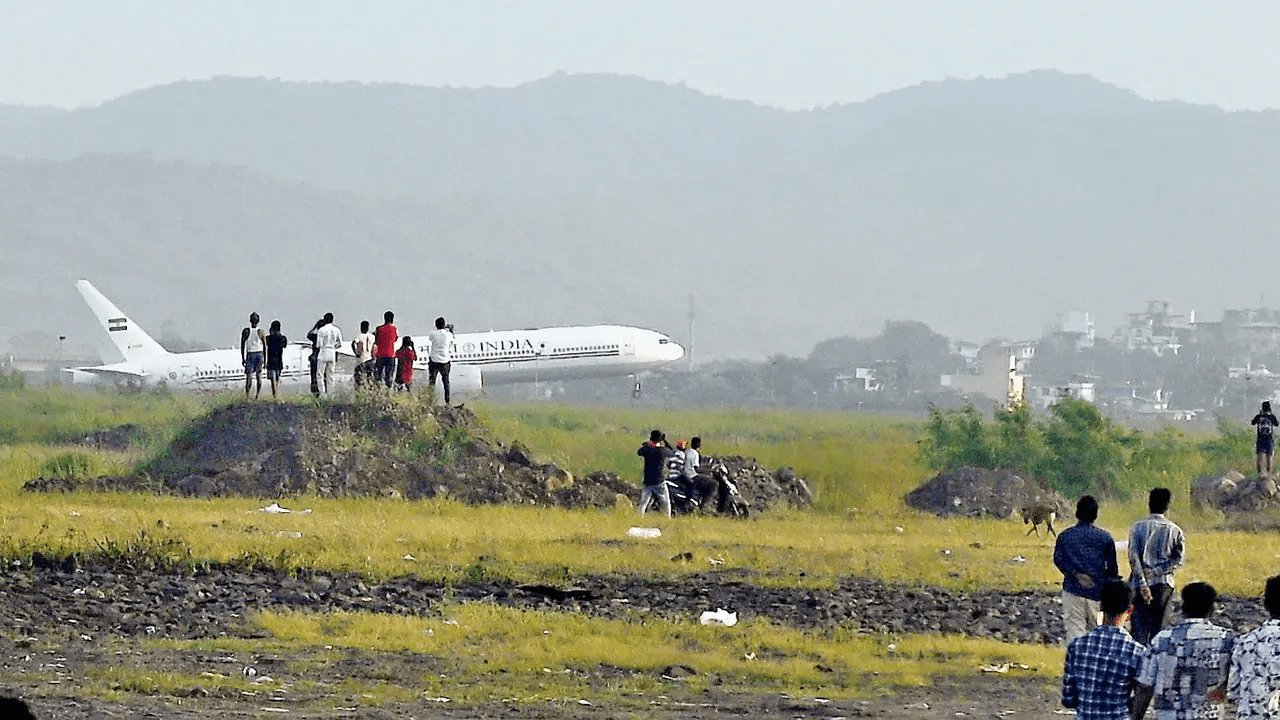
Planning authorities in the Mumbai Metropolitan Region have initiated a feasibility assessment for expanding runway capacity at Navi Mumbai’s upcoming international airport, signalling a proactive approach to managing long-term aviation demand. The study will evaluate the possibility of adding a third runway, even as the greenfield airport is still in its initial development phase. The move centres on a detailed techno-commercial analysis of the Navi Mumbai airport third runway, which will examine operational efficiency, land use requirements, environmental implications, and financial viability. Officials indicate that the study is expected to provide early clarity on whether additional capacity will be required sooner than originally planned, given projections of sharp growth in passenger traffic.
The Navi Mumbai airport project, designed as a complementary facility to Mumbai’s existing aviation hub, is a cornerstone of the region’s long-term infrastructure strategy. With the metropolitan population continuing to expand and air travel demand rising, authorities are working to avoid capacity bottlenecks that have historically constrained growth at legacy airports. Industry experts note that forward planning for infrastructure at this scale is critical. Airports typically require long lead times for expansion, particularly when land acquisition, environmental clearances, and airspace management are involved. Assessing the feasibility of a Navi Mumbai airport third runway at an early stage allows planners to integrate future needs into current development frameworks, potentially reducing disruptions later. The airport is being developed with multiple runways and terminal phases to accommodate growing demand over several decades. Once fully operational, it is expected to handle tens of millions of passengers annually, alongside substantial cargo volumes. Together with the existing airport in Mumbai, the dual system is intended to support one of India’s largest aviation markets.
However, expanding aviation infrastructure raises important sustainability considerations. Additional runway capacity can improve operational efficiency and reduce delays, but it also has implications for land use, emissions, and local ecosystems. Urban planners emphasise that future expansion must balance economic growth with environmental safeguards, particularly in ecologically sensitive coastal regions. The feasibility study is also expected to examine how additional infrastructure could influence regional connectivity and economic development. Improved airport capacity often drives real estate growth, logistics activity, and employment opportunities in surrounding areas. At the same time, it places greater pressure on supporting infrastructure such as roads, public transport, and utilities. Beyond Navi Mumbai, discussions continue around the need for additional aviation capacity in the wider region, including potential new airport sites. Yet, strengthening the operational scope of the upcoming facility remains an immediate priority.
As the study progresses, its findings will shape the next phase of planning for one of India’s most significant infrastructure projects. The challenge for policymakers will be to align expansion with sustainable urban development, ensuring that capacity growth supports both economic opportunity and environmental resilience.