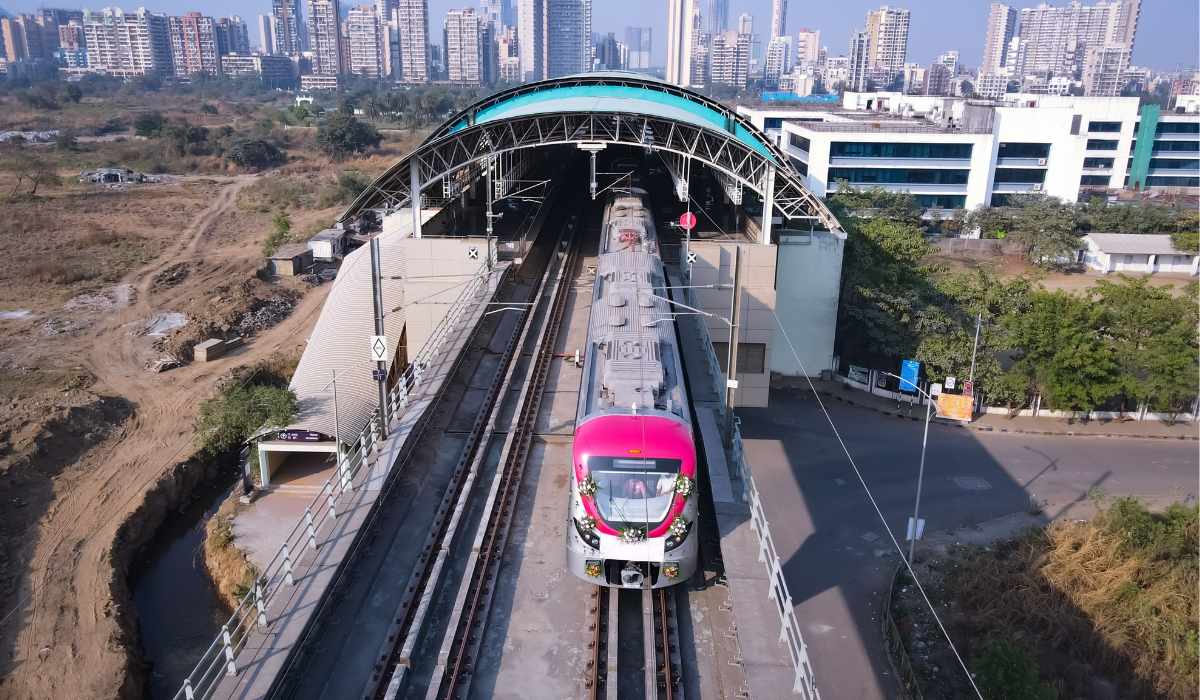
Surat has entered a critical phase in its urban transit journey, with trial runs of the city’s metro system now underway—marking a significant step toward reshaping daily commutes, particularly for students and young professionals navigating one of India’s fastest-growing urban economies. The trials, currently being conducted along priority corridors, are designed to assess operational readiness, safety systems, and integration with existing transport networks.
For a city long dependent on road-based mobility, the metro introduces a structured, high-capacity alternative that could reduce congestion, cut travel time, and improve air quality over time. Surat’s rapid expansion—driven by textiles, diamond processing, and emerging service sectors—has intensified pressure on its transport infrastructure. Young commuters, who often rely on shared autos, buses, or two-wheelers, face unpredictable travel times and safety concerns. The metro, once operational, is expected to offer a more reliable and climate-efficient mode of transport, particularly for those commuting between educational institutions, industrial hubs, and residential clusters. Urban mobility experts highlight that trial runs are not merely technical exercises but a critical phase for system calibration. Factors such as train frequency, passenger flow management, and last-mile connectivity are being tested to ensure that the system can handle peak demand while maintaining efficiency. “The success of metro systems increasingly depends on how well they integrate with buses, cycling infrastructure, and pedestrian networks,” noted a transport planner familiar with the project. For younger populations, the implications extend beyond convenience. Affordable and predictable transit can influence access to education, internships, and employment opportunities—especially in a city where distances between residential zones and economic centres are widening. The metro also has the potential to reduce reliance on private vehicles, aligning with broader goals of lowering urban emissions and promoting sustainable mobility. However, challenges remain. Experts point out that metro adoption depends heavily on pricing strategies and last-mile connectivity. Without seamless links to neighbourhoods through feeder buses or safe walking routes, high-capacity systems risk underutilisation. Additionally, ensuring accessibility for all—including women, persons with disabilities, and low-income groups—will be key to making the system truly inclusive. From an infrastructure standpoint, the metro signals a shift in how Surat is planning for future growth. Transit-oriented development, where residential and commercial spaces are built around metro corridors, could redefine land use patterns and real estate dynamics in the coming years.
As trials progress, the focus will gradually move from engineering performance to user experience. For Surat’s young commuters, the metro represents more than just a new mode of transport—it signals a transition toward a more organised, equitable, and environmentally conscious urban mobility system. The coming months will determine how effectively this promise translates into everyday reality.