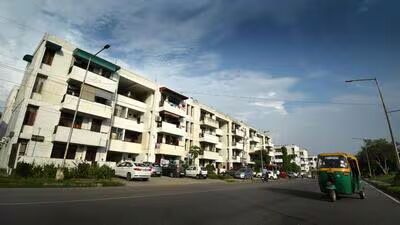
Chandigarh Housing Policy Shift Enables Higher Density Living
A policy shift in Chandigarh allowing higher floor area ratios (FAR) for group housing projects is set to reshape the city’s residential landscape, with authorities aiming to improve housing affordability while optimising limited urban land. The move signals a gradual departure from restrictive planning norms in favour of controlled vertical growth.
Under the revised framework, permissible FAR for select housing developments has been increased significantly—from earlier limits of around 1.2 to approximately 2.4—allowing buildings of up to six floors in designated areas. This effectively doubles the built-up space that developers can construct on a given plot, enabling a higher number of dwelling units within the same land footprint. The decision is closely linked to stalled housing supply in the city. Previous group housing projects struggled to attract buyers due to high per-unit costs, driven in part by low-density regulations and rising land prices. By permitting more units per project, planners expect a reduction in per-unit pricing, making housing more accessible to middle-income buyers. The Chandigarh FAR increase is also aligned with broader urban planning objectives outlined in long-term city frameworks, which advocate more efficient land use in non-heritage sectors. With limited scope for horizontal expansion, vertical densification is increasingly being seen as a necessary tool to accommodate population growth without expanding the city’s footprint.
However, the shift raises critical questions around infrastructure readiness. Urban planners caution that increasing density without parallel upgrades in civic infrastructure—such as water supply, sewage systems, parking, and public transport—can strain existing systems. The success of the policy will depend on whether infrastructure capacity evolves alongside built density. There are also environmental considerations. While vertical development can reduce urban sprawl and preserve peripheral land, it must be balanced with adequate open spaces, ventilation, and urban heat mitigation strategies. Experts emphasise that FAR reforms should be accompanied by design guidelines that ensure liveability, not just density. The policy excludes heritage sectors—particularly the core areas designed by modernist planners—which remain protected under legal frameworks that restrict structural changes. This reflects an attempt to balance preservation with growth, allowing flexibility in newer sectors while safeguarding the city’s architectural identity. From a real estate perspective, the Chandigarh FAR increase is expected to revive interest in group housing projects and potentially attract private investment. Higher development potential improves project viability, especially in a market where regulatory constraints have historically limited supply.
Yet, experts underline that affordability gains are not automatic. Without mechanisms to ensure that cost reductions are passed on to buyers, increased FAR could primarily benefit developers rather than end-users. Transparent pricing frameworks and regulatory oversight will be key to ensuring equitable outcomes. As Chandigarh navigates the tension between preservation and expansion, the FAR reform marks a pivotal step towards recalibrating its urban growth model. The coming years will reveal whether increased density can be effectively aligned with infrastructure, sustainability, and inclusive housing goals—core elements of a resilient urban future.