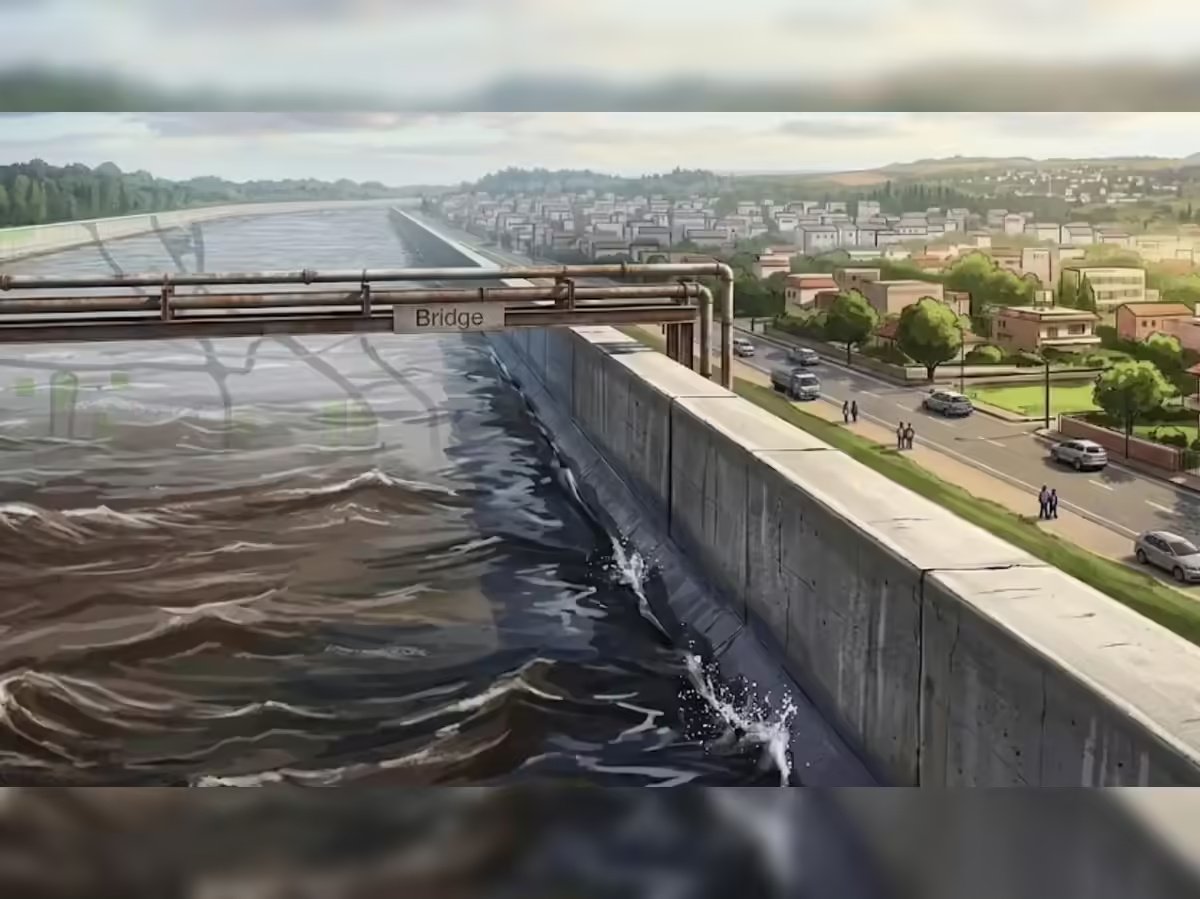
Delhi authorities have approved plans to construct a 4.7-kilometre flood defence structure along the Yamuna River in an effort to reduce the risk of seasonal inundation in vulnerable parts of the capital. The proposed Delhi Yamuna flood wall will stretch between Majnu Ka Tila and the Old Railway Bridge, an area that has repeatedly experienced waterlogging and river overflow during periods of high discharge. The project is intended to shield several low-lying neighbourhoods in North Delhi, including Civil Lines, Kashmere Gate and Yamuna Bazaar, where past monsoon floods disrupted transport networks, damaged property and displaced residents. Officials involved in the planning say the structure is designed to function as a permanent barrier preventing rising river levels from entering adjacent residential zones.
Urban administrators have indicated that the Delhi Yamuna flood wall project has been included in the city’s infrastructure spending plans, with construction targeted for completion ahead of the 2027 monsoon season. The timeline reflects growing concern among authorities following a series of recent flood events that highlighted the vulnerability of riverfront areas and key transport corridors such as Ring Road. Technical recommendations for the intervention emerged from a multi-agency flood assessment carried out by government engineers and hydrology specialists. Their evaluation concluded that reinforcing this stretch of the riverbank could significantly reduce flood risks in nearby urban districts, particularly during years of unusually high river discharge. The Yamuna’s behaviour during intense rainfall events has increasingly become a planning concern for Delhi. Rapid urbanisation across the river basin, combined with changing rainfall patterns linked to climate variability, has heightened pressure on the city’s flood management systems. As a result, policymakers are exploring a combination of structural infrastructure and long-term resilience strategies.
However, the proposed Delhi Yamuna flood wall has triggered debate among environmental planners and river ecology experts. Some specialists warn that large engineered barriers along riverbanks can alter natural floodplain dynamics. They argue that restricting the natural spread of floodwaters may transfer risks downstream or reduce the ecological health of river systems. Environmental researchers also emphasise the importance of maintaining functional floodplains that absorb excess water during heavy rainfall. Such natural buffers, they say, can play a crucial role in mitigating floods while preserving biodiversity and groundwater recharge systems. Urban policy analysts suggest that effective river management in rapidly expanding cities often requires a hybrid approach combining engineered flood protection with ecological restoration measures. Strategies such as restoring wetlands, protecting floodplain zones and improving drainage infrastructure can complement structural defences.
For Delhi, where millions of residents live near the Yamuna corridor, balancing urban safety with environmental sustainability remains a critical challenge. As the Delhi Yamuna flood wall project progresses through detailed design and implementation stages, authorities will likely face increasing scrutiny over how flood resilience measures interact with the river’s fragile ecosystem. The project therefore highlights a broader question confronting many fast-growing cities: how to safeguard urban infrastructure and communities while preserving the natural systems that help regulate climate and water flows.