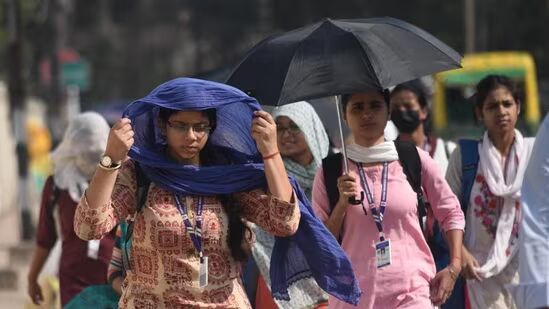
A sharp rise in temperatures across Uttar Pradesh is signalling the early onset of summer stress, with dry weather conditions pushing daytime highs closer to heatwave thresholds in several districts. The emerging Uttar Pradesh heatwave conditions are raising concerns around urban resilience, public health preparedness, and infrastructure capacity in fast-growing cities such as Lucknow.
Meteorological trends indicate that temperatures across the state have risen rapidly over the past few days, with several districts nearing or crossing the 40°C mark. Dry winds and clear skies have accelerated the warming trend, with forecasts suggesting a further increase of 3–5°C in the coming days.
In Lucknow, daytime temperatures are already climbing steadily, with projections indicating a continued upward trajectory through the week. Weather data suggests that the city could see temperatures touching the low-40s shortly, reflecting a broader regional pattern of intensifying heat.
The escalation of Uttar Pradesh heatwave conditions is closely linked to the absence of active weather systems, combined with persistent westerly winds that limit cooling effects. According to meteorological assessments, this stable atmospheric pattern is likely to sustain dry and hot conditions across the state, particularly in central and eastern districts.
For urban centres, the implications extend beyond rising temperatures. Cities like Lucknow, characterised by dense built-up areas and limited green cover, are particularly vulnerable to the urban heat island effect. This phenomenon intensifies heat retention in concrete-heavy environments, leading to higher local temperatures compared to surrounding rural areas.
The Uttar Pradesh heatwave conditions are expected to place immediate pressure on urban infrastructure systems. Electricity demand typically surges during such periods due to increased cooling needs, while water consumption rises sharply, exposing gaps in supply networks. In parallel, public health systems must prepare for a rise in heat-related illnesses, including dehydration and heatstroke.
Urban planners point out that such recurring heat events underscore the need for climate-responsive city planning. Measures such as expanding urban tree cover, promoting reflective building materials, and improving water-sensitive infrastructure are increasingly being viewed as essential rather than optional. Without such interventions, heat stress could disproportionately affect vulnerable populations, including informal workers and low-income households.
From an economic perspective, sustained high temperatures can disrupt productivity, particularly in sectors dependent on outdoor labour such as construction and logistics. Reduced working hours and health-related disruptions can delay project timelines and increase operational costs, affecting broader urban growth trajectories.
The current trend also reflects a larger climate pattern, where extreme weather events are becoming more frequent and intense across northern India. While short-term advisories—such as limiting outdoor exposure and maintaining hydration—remain critical, experts emphasise that long-term resilience will depend on integrating climate adaptation into infrastructure planning.
As temperatures continue to rise, the coming weeks will test the preparedness of cities across Uttar Pradesh. The evolving Uttar Pradesh heatwave conditions highlight an urgent need to move beyond reactive responses towards proactive, climate-resilient urban strategies that can sustain both population health and economic activity.
Patna is witnessing a sharp rise in temperatures, with heatwave-like conditions beginning to take hold earlier than usual, raising concerns over urban resilience and public health preparedness. The emerging Patna heatwave conditions come as daytime temperatures approach or exceed 40°C, significantly above seasonal norms, signalling the onset of an intense summer across Bihar.
Meteorological trends indicate that temperatures in the region are climbing faster than historical averages for April, when the city typically records highs between 36°C and 38°C. The current spike suggests a shift towards more frequent and prolonged heat events, a pattern increasingly associated with climate variability in northern India. The intensification of Patna heatwave conditions is placing pressure on urban systems, particularly electricity demand, water supply, and healthcare services. Higher temperatures often lead to a surge in power consumption due to cooling needs, straining already stretched distribution networks. In parallel, water demand rises sharply, exposing vulnerabilities in supply infrastructure, especially in densely populated neighbourhoods. Urban planners note that cities like Patna, with expanding built-up areas and limited green cover, are especially prone to the urban heat island effect—where concrete surfaces absorb and retain heat, amplifying ambient temperatures. This can result in significantly higher temperatures in city centres compared to surrounding rural areas, increasing health risks for vulnerable populations, including the elderly, children, and outdoor workers.
The Patna heatwave conditions also highlight the growing need for climate-responsive urban planning. Experts emphasise interventions such as increasing tree cover, promoting reflective building materials, and integrating water bodies into city design to mitigate heat absorption. Without such measures, rising temperatures could exacerbate existing inequalities, disproportionately affecting low-income communities with limited access to cooling solutions. Public health systems are also being placed on alert. Heatwaves are known to increase the incidence of dehydration, heatstroke, and cardiovascular stress. Authorities have begun issuing advisories urging residents to limit outdoor exposure during peak hours and maintain hydration levels, while hospitals are preparing for a potential increase in heat-related cases. From an economic standpoint, prolonged heat conditions can disrupt productivity, particularly in sectors reliant on outdoor labour such as construction and logistics. Reduced working hours and health-related absences can slow project timelines and impact local economies, underscoring the broader implications of extreme weather events.
The situation also intersects with long-term climate trends. Data indicates that Patna’s climate risk profile has been worsening over recent years, with increasing frequency of extreme weather events. This reinforces the need for cities to integrate climate adaptation into infrastructure planning, rather than treating heatwaves as isolated seasonal occurrences. As temperatures continue to rise, the coming weeks will test the city’s preparedness across multiple fronts. While short-term measures such as advisories and emergency responses are critical, the growing intensity of Patna heatwave conditions points to a deeper structural challenge—one that will require sustained investment in climate-resilient infrastructure and inclusive urban design.