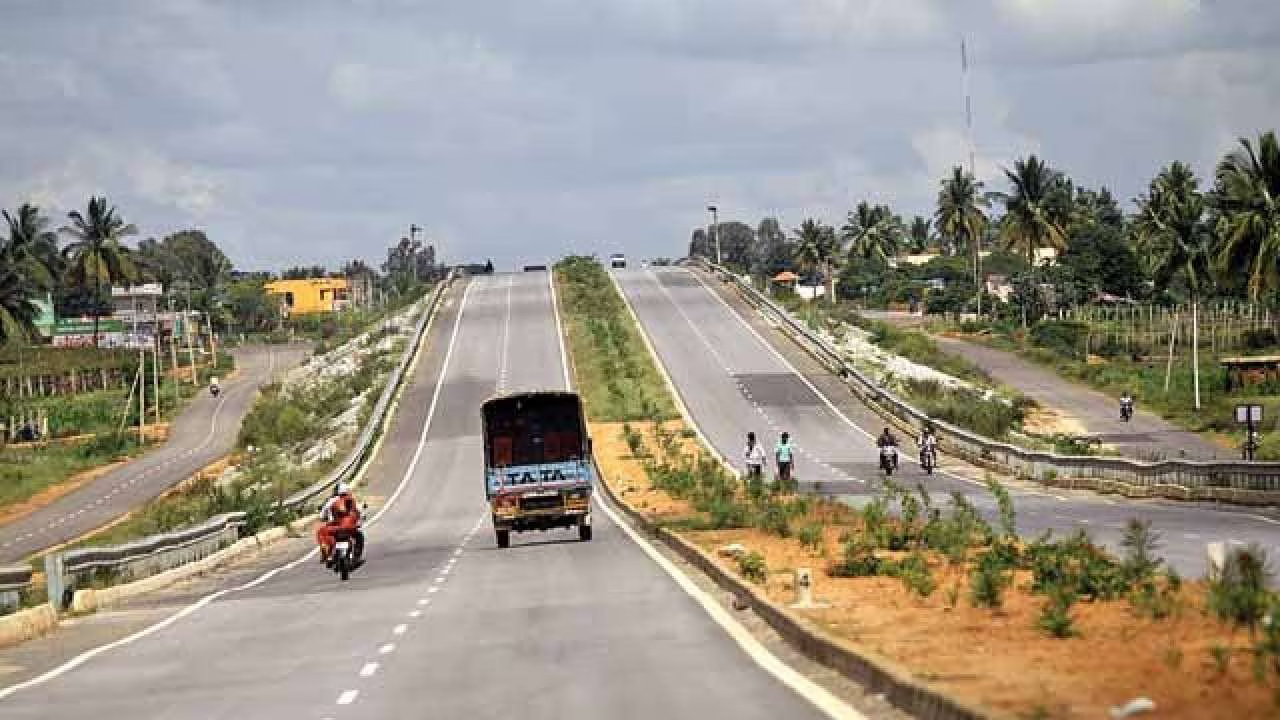
Rajasthan Expressway Corridor Set To Transform Delhi Jaipur Travel
Construction of a new high-speed road link between Delhi and Jaipur is advancing rapidly, with authorities moving closer to completing a major section designed to reduce travel time and strengthen regional connectivity across northern India. The project involves an approximately 86-kilometre expressway corridor linking Paniyala in the Kotputli region with Barodameo in Alwar district. Once operational, the road will connect directly with the larger Delhi–Mumbai Expressway network, forming a critical transport link that could significantly reshape travel patterns between Delhi, Rajasthan and western India.
Infrastructure officials indicate that civil works along the expressway corridor are progressing in phases, with several structural components already visible on the ground. The project includes six traffic lanes built on a greenfield alignment, meaning the route has been constructed on entirely new land rather than expanding an existing highway. Engineers involved in the project say the road design supports vehicle speeds of up to 120 kilometres per hour, which could shorten the road journey between Delhi and Jaipur to around two hours under normal traffic conditions. At present, the same journey can take between two-and-a-half to three hours depending on congestion and route conditions. The corridor will pass through several towns and transport nodes in Rajasthan, including areas around Behror, Bansur, Khairthal, Alwar and Ramgarh. Multiple junctions are being integrated into the design to connect surrounding districts with the high-speed road network, allowing local traffic to access the route while maintaining uninterrupted long-distance travel. A key engineering feature under construction is a large spiral-style interchange near the Gajuki area. This circular junction structure, often referred to by engineers as a multi-level loop interchange, is designed to facilitate smooth traffic movement between connecting roads without signal interruptions.
Such interchanges are increasingly used in high-speed highway systems to manage heavy traffic flows efficiently. The estimated project investment is about ₹2,000 crore, covering road construction, bridges, interchanges and supporting infrastructure such as underpasses and service roads. Officials overseeing the project say structural work including flyovers, drainage systems and grade separators is currently underway across multiple locations. Urban planners note that projects like this expressway corridor play a growing role in shaping regional development patterns. Improved connectivity between major cities can influence housing demand, logistics networks and industrial development along the route. Towns located near expressway interchanges often see increased investment in warehousing, residential townships and commercial facilities. However, experts also caution that expressway-led growth must be balanced with sustainable land use planning, environmental safeguards and integrated public transport networks. Without coordinated planning, high-speed road infrastructure can encourage car-dependent urban expansion and fragmented development.
For the Delhi–Jaipur region, the emerging corridor represents another step in the broader transformation of North India’s transport landscape. With several expressways now under construction or nearing completion, policymakers are increasingly focused on ensuring that new highways support economic development while maintaining climate resilience and balanced urban growth across connected regions.