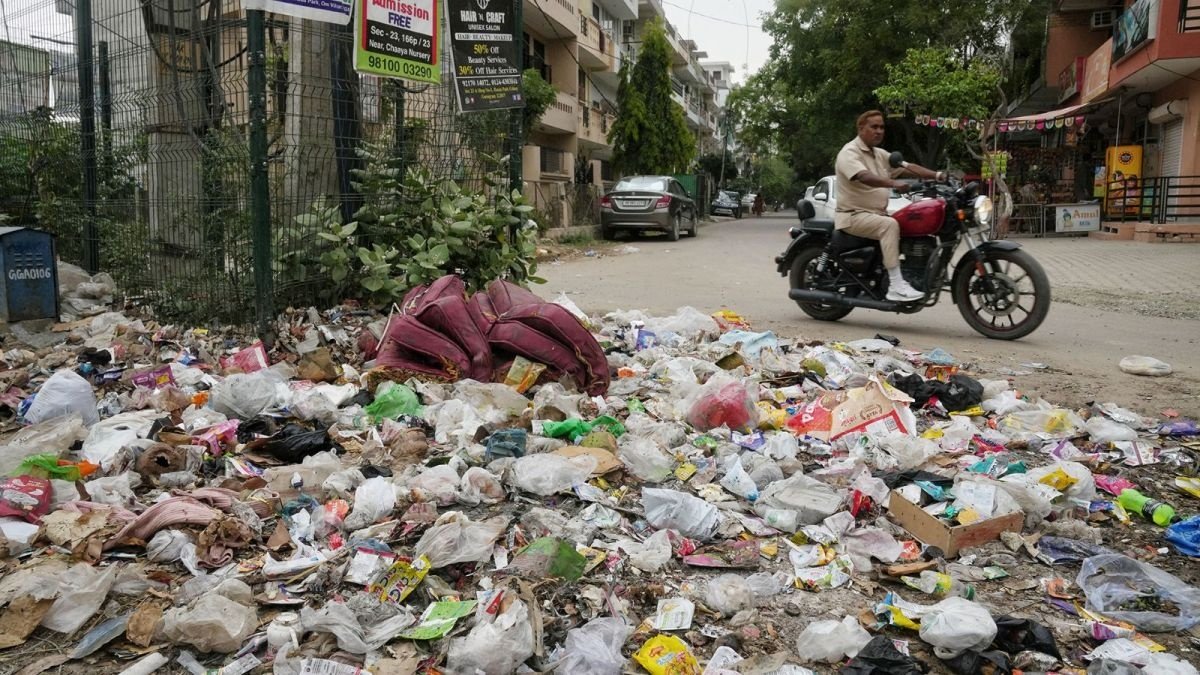
A prolonged disruption in waste collection services in a low-income housing cluster in Sector 23A has triggered growing concern among residents, highlighting persistent gaps in municipal sanitation systems across rapidly expanding Indian cities. Residents of the economically weaker section (EWS) colony say door-to-door waste collection services have been irregular or absent for several months, leaving households with few options other than dumping garbage at informal roadside points. The accumulation of refuse in open spaces has raised concerns over public health, sanitation, and environmental quality in a neighbourhood that houses hundreds of families.
Local residents say the absence of consistent municipal services has forced households to adapt their own informal disposal practices. Many families now carry household waste to community bins or temporary collection carts, while others leave garbage along street corners due to limited alternatives. According to residents, this pattern has resulted in scattered waste, unpleasant odours, and increased risk of pests and contamination. Community representatives say the sanitation gap is particularly concerning because the colony falls within a high-density urban area where effective waste management is essential to prevent disease outbreaks and environmental degradation. Informal dumping has begun to appear along internal streets, creating an unsanitary environment that affects daily life, local commerce and mobility. Residents also claim that some households have begun paying private collectors to remove garbage. However, the arrangement often requires residents to carry waste to designated collection points rather than receiving direct doorstep service, creating inconvenience and additional cost for families already facing economic constraints. Urban planners say such breakdowns in waste collection services expose the broader challenge of maintaining equitable municipal infrastructure in fast-growing cities like Gurugram.
While the city has expanded rapidly as a corporate and residential hub, civic systems such as sanitation, drainage and local road maintenance have struggled to keep pace with population growth and spatial expansion. Experts note that inclusive urban development requires reliable municipal services across all neighbourhoods, particularly in lower-income housing clusters where public health risks are higher. Poor waste management can also worsen air and water pollution, undermining broader efforts to build cleaner and more climate-resilient urban environments. Municipal representatives have acknowledged operational challenges affecting sanitation services in some areas, including temporary workforce shortages linked to seasonal migration and external events. Officials indicated that inspections are being planned and contractors responsible for the service may be asked to explain lapses in collection schedules. For Gurugram, which continues to attract large-scale real estate investment and new residential development, the situation underscores a key urban governance challenge: ensuring that infrastructure and essential services evolve alongside the city’s economic growth.
Urban policy experts say strengthening local waste management systems, improving monitoring of contractors, and investing in decentralised waste processing will be crucial for maintaining liveable neighbourhoods. Without reliable sanitation networks, they warn, the promise of sustainable and inclusive urban growth risks remaining uneven across the city.