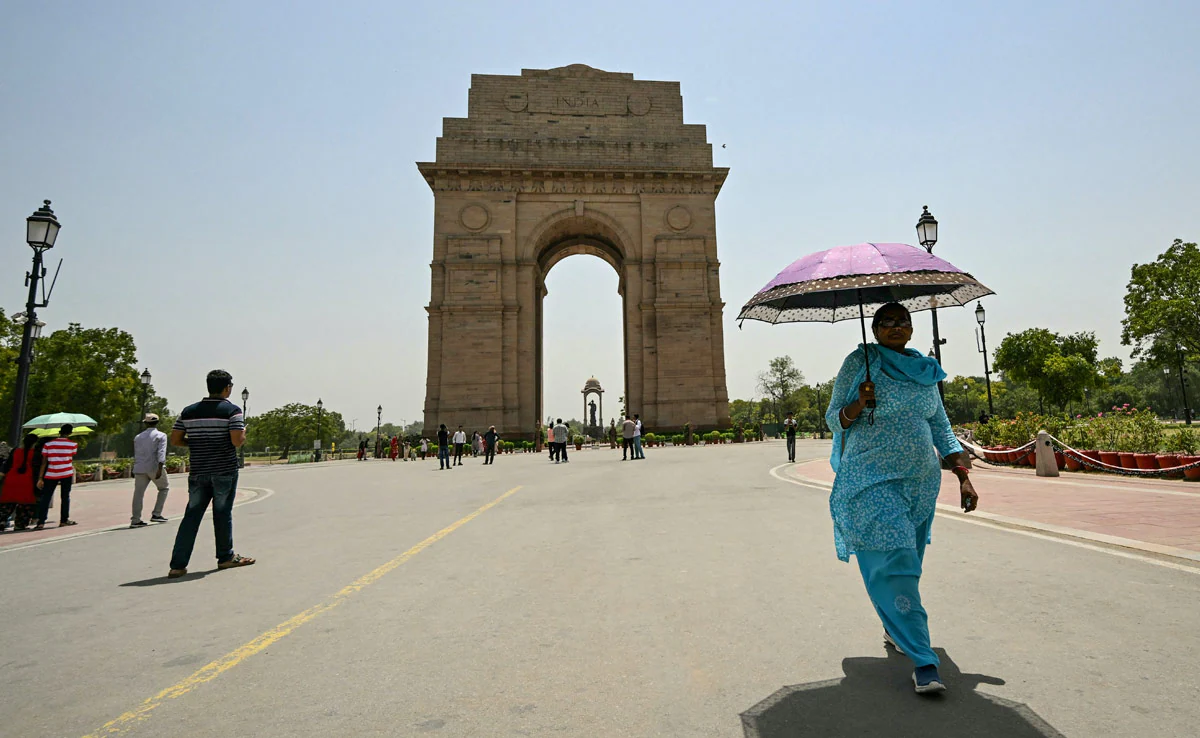
Delhi is likely to experience a sharp rise in temperatures this week, with meteorological forecasts indicating that daytime heat could approach 40°C within days. The warming trend follows a relatively mild early April, and the shift highlights growing concerns around Delhi rising temperatures and their impact on urban heat stress, public health and city infrastructure. Weather observers report that the capital recorded a warm but manageable day recently, with maximum temperatures slightly below seasonal averages. However, meteorologists expect conditions to change rapidly as atmospheric systems that previously moderated temperatures move away from northern India. According to officials tracking regional weather patterns, the absence of active western disturbances—a weather system that often brings cooler conditions and occasional rainfall to north India—will allow heat to intensify steadily across the National Capital Region.
Forecast models suggest the Delhi rising temperatures trend could push daytime highs toward 40°C within the next few days, with the possibility of reaching or exceeding 41°C later in the week. Such levels typically signal the early onset of summer heat conditions in the city. Urban climate specialists note that the capital’s built environment often amplifies heat through the “urban heat island” effect. Large expanses of concrete, asphalt and dense construction trap and re-radiate heat, causing metropolitan areas to remain significantly warmer than surrounding rural regions. While daytime winds have recently provided temporary relief by circulating cooler air through the city, meteorologists say these conditions are unlikely to offset the overall warming trend expected over the coming week. Minimum night temperatures are also projected to increase gradually, potentially rising to the mid-20s Celsius later in the week. Higher night-time temperatures can worsen heat stress by limiting the body’s ability to cool after sunset. The Delhi rising temperatures trend also coincides with a deterioration in the city’s air quality.
Environmental monitoring systems recently recorded air quality levels in the moderate range, with forecasts suggesting that pollution levels may fluctuate between moderate and poor categories over the coming days. Urban planners warn that heat and pollution often interact in ways that intensify health risks, particularly for vulnerable populations such as outdoor workers, the elderly and children. As cities expand, managing extreme heat is becoming an increasingly important component of urban planning. Infrastructure specialists emphasise that rising temperatures can also place pressure on energy demand. Increased use of air conditioning and cooling systems typically leads to higher electricity consumption, raising the risk of peak power loads during heat events. Experts say cities like Delhi must increasingly invest in climate-resilient infrastructure, including shaded public spaces, improved urban tree cover, heat-resistant building materials and water-sensitive urban design to reduce heat absorption.
With summer conditions approaching earlier each year, policymakers and urban planners are likely to focus more closely on long-term strategies to mitigate the impacts of Delhi rising temperatures while ensuring the city remains liveable, resilient and economically productive during prolonged heat periods.