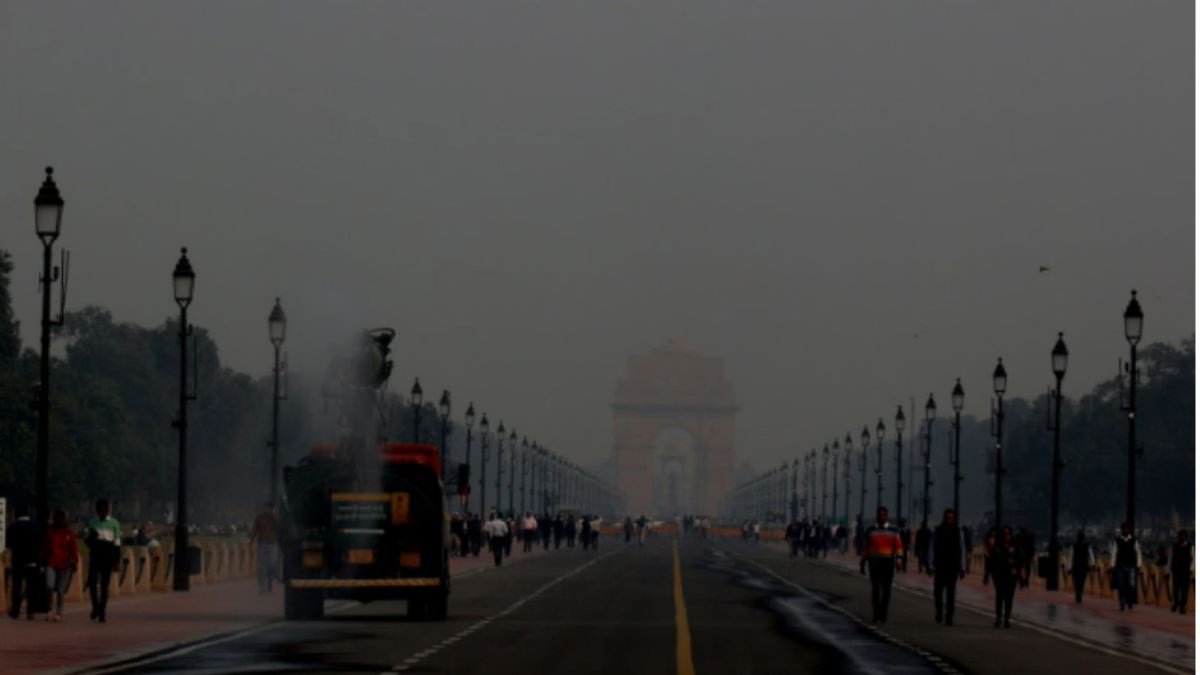
Delhi Tests New Technologies To Reduce Air Pollution
Delhi has accelerated the testing of new technologies aimed at reducing urban pollution, with authorities pushing forward field trials for 22 shortlisted innovations under the city’s air quality innovation programme. The initiative, designed to identify scalable solutions for tackling particulate pollution, reflects a growing shift towards evidence-based urban environmental management in India’s most pollution-challenged metropolitan region. Officials overseeing the programme said the selected technologies will now undergo multi-location trials across the capital, supported by public agencies responsible for transport, municipal services, health infrastructure and emergency response. The move signals a coordinated effort to move beyond policy announcements and into real-world experimentation with deployable technologies.
The air pollution innovation challenge attracted 284 proposals from researchers, start-ups and technology developers across India. After technical screening by pollution control authorities and a review by an independent panel of scientists and engineers, 22 solutions were shortlisted for demonstration and evaluation. These include 13 technologies focused on reducing emissions directly from vehicles, such as retrofit pollution control devices for older engines, vehicle-mounted filtration systems and roadside dust capture equipment. The remaining nine innovations aim to improve ambient air quality using methods such as large-scale filtration towers, particulate aggregation technologies and urban air purification systems. Urban planners say such pilot projects are essential for identifying solutions that can operate effectively in dense city environments where pollution sources are complex and widely dispersed. “Cities require technologies that are scalable, cost-efficient and adaptable to existing infrastructure,” noted a senior urban environment expert involved in the programme’s advisory process.
To facilitate the testing phase, government agencies have been directed to assist technology providers with site permissions, installation logistics, power supply connections and operational approvals. Trial installations are planned at several high-footfall urban locations including transport hubs, healthcare facilities and major traffic corridors. Each project will receive financial support to conduct these demonstrations, allowing developers to test their technologies in varied environmental conditions. Independent monitoring teams from leading research institutions will collect performance data during the trials, ensuring that evaluation remains scientifically robust and transparent. Results from the air pollution innovation challenge are expected to be compiled later this year after a period of data analysis and technical review. Authorities will then identify the most promising technologies for wider adoption across the city.
For Delhi, where air quality continues to pose major health and economic challenges, the programme represents an attempt to bridge innovation and governance. If even a handful of the tested technologies prove effective at scale, experts say they could help shape a new generation of urban pollution management tools that complement policy measures, transport reforms and clean energy transitions.