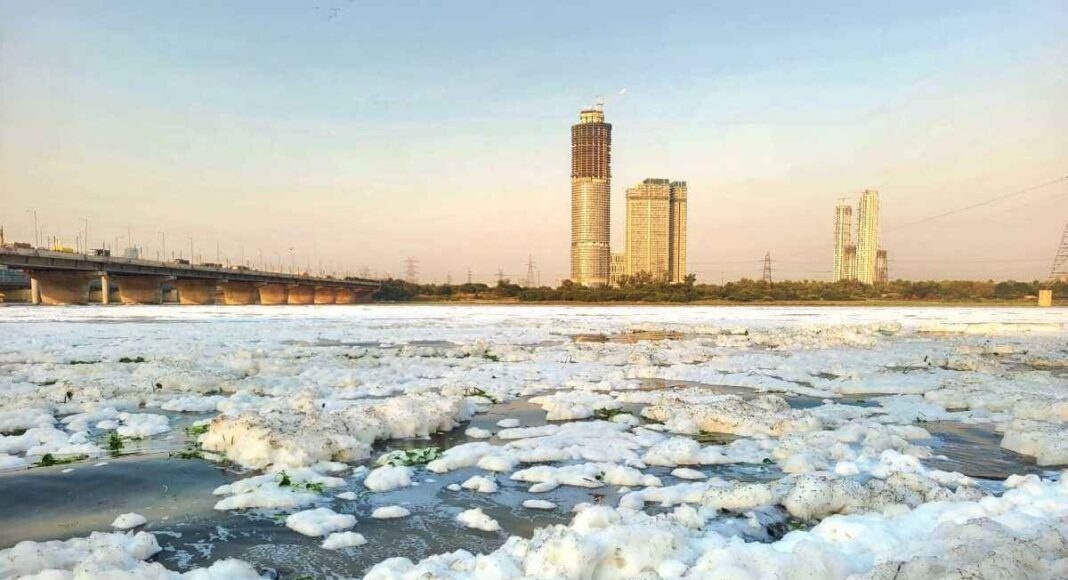
Authorities in Delhi are preparing to introduce a real-time Yamuna river monitoring system to track pollution levels and assess water quality across the capital’s most stressed river stretch. The initiative, expected to begin in the coming months, aims to generate continuous environmental data from the Yamuna and major drains entering the river. Officials say the system could improve transparency and help policymakers understand pollution patterns, but experts caution that monitoring alone will not resolve the underlying causes of contamination. The proposed Yamuna river monitoring network will measure multiple indicators linked to water quality. These include temperature, water flow, pH balance, dissolved oxygen, and pollutants such as biological oxygen demand and chemical oxygen demand. Additional parameters will track nutrient loads and suspended solids that often signal untreated wastewater entering the river system.
Environmental scientists say such monitoring technologies can offer valuable insights into how pollution fluctuates across seasons and locations. In dense urban areas, rivers often receive wastewater from multiple drains, making it difficult to identify the scale and source of contamination without consistent data. However, some experts point out that several monitoring systems already exist for other environmental indicators in Delhi, particularly air pollution. While these networks provide detailed real-time information, the data has not always translated into measurable improvements without parallel enforcement and infrastructure reforms. Urban water specialists emphasise that the Yamuna’s deterioration is driven primarily by untreated sewage discharged from residential areas and informal settlements through a network of drains. Without addressing the inflow of raw sewage, monitoring systems risk functioning as diagnostic tools rather than solutions. Another recurring contributor is religious and ceremonial waste. Flowers, idols and other materials frequently enter the river through ritual practices along its banks.
Urban planners say simple interventions such as collection systems at ghats, recycling initiatives for floral waste and designated immersion tanks could significantly reduce the daily load of organic debris entering the water. Solid waste management remains another critical challenge along the river corridor. Plastic waste and other debris accumulate along floodplains and drainage channels before eventually entering the Yamuna. Experts suggest that installing floating waste barriers and improving routine riverbank cleaning could prevent significant quantities of plastic from spreading downstream. Industrial discharge also requires closer scrutiny. Although industrial waste represents a smaller share of total pollution compared to sewage, it often contains hazardous chemicals. Regular inspections of effluent treatment systems and stronger compliance mechanisms are widely seen as essential for preventing toxic discharges. Urban governance analysts say the effectiveness of the Yamuna river monitoring programme will ultimately depend on how the data is used. Continuous monitoring can support enforcement, guide infrastructure investments and identify illegal connections if authorities act on the information generated.
For Delhi, the river’s revival remains a complex urban challenge tied to sanitation infrastructure, waste management and regulatory oversight. As the monitoring network begins to take shape, environmental experts suggest the real test will be whether data leads to faster interventions on the ground rather than becoming another digital dashboard in the city’s environmental governance framework.