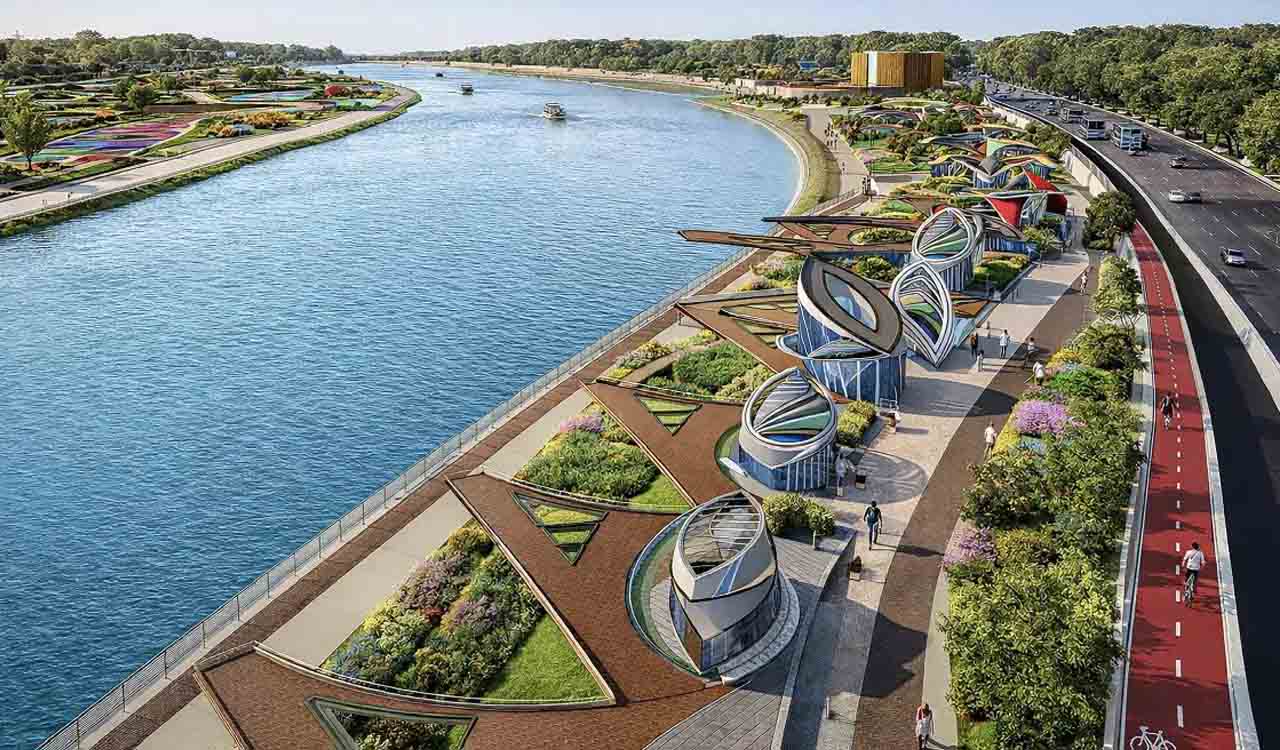
The proposed Musi riverfront redevelopment in Hyderabad has triggered a wider policy debate after the state leadership acknowledged that real estate development forms a key component of the project’s economic rationale. The initiative, anchored around a detailed project blueprint for a 21-km stretch, is being positioned as a long-term urban transformation effort, but it has also raised questions around land use, inclusivity, and development priorities.
Officials associated with the project indicated that the Musi redevelopment is designed not only as an environmental restoration exercise but also as an urban growth catalyst. The plan envisages a mix of public infrastructure, commercial zones, and recreational assets along the riverbanks. According to senior government functionaries, integrating real estate into the Musi redevelopment model is seen as essential to attract capital, create jobs, and strengthen the city’s economic base. However, the Musi redevelopment has become a focal point of public concern, particularly among communities residing along the river. Urban planners note that riverfront projects in Indian cities often face tension between ecological restoration and commercial exploitation. In Hyderabad’s case, apprehensions have emerged over potential displacement and the conversion of low-income settlements into high-value real estate corridors.
Government representatives maintain that the project is not intended to undermine vulnerable communities, and that long-term benefits such as improved flood management, sanitation, and urban mobility will outweigh short-term disruptions. The redevelopment is also being framed as part of a broader strategy to position Hyderabad as a global investment destination, alongside its established strengths in information technology, pharmaceuticals, and medical tourism.The Musi redevelopment is estimated to involve an investment in the range of ₹6,500–₹7,000 crore for the core stretch, with additional components likely to evolve as the project progresses. Experts suggest that such large-scale urban interventions must be evaluated not only through financial returns but also through climate resilience metrics, given the increasing frequency of extreme rainfall events and urban flooding across Indian cities. Critically, the project’s design includes proposed commercial attractions and urban amenities that could significantly alter land values along the river corridor.
While this may boost municipal revenues and private investment, it also intensifies the need for transparent land acquisition processes and equitable rehabilitation frameworks.Urban policy analysts emphasise that the success of the Musi redevelopment will depend on balancing economic ambitions with social safeguards and environmental integrity. As the project moves towards legislative and public consultation stages, its trajectory could set a precedent for how Indian cities integrate river restoration with real estate-led urban expansion. The coming months are likely to determine whether the Musi redevelopment evolves into a model of inclusive, climate-sensitive urban renewal or reinforces existing challenges around displacement and speculative development.