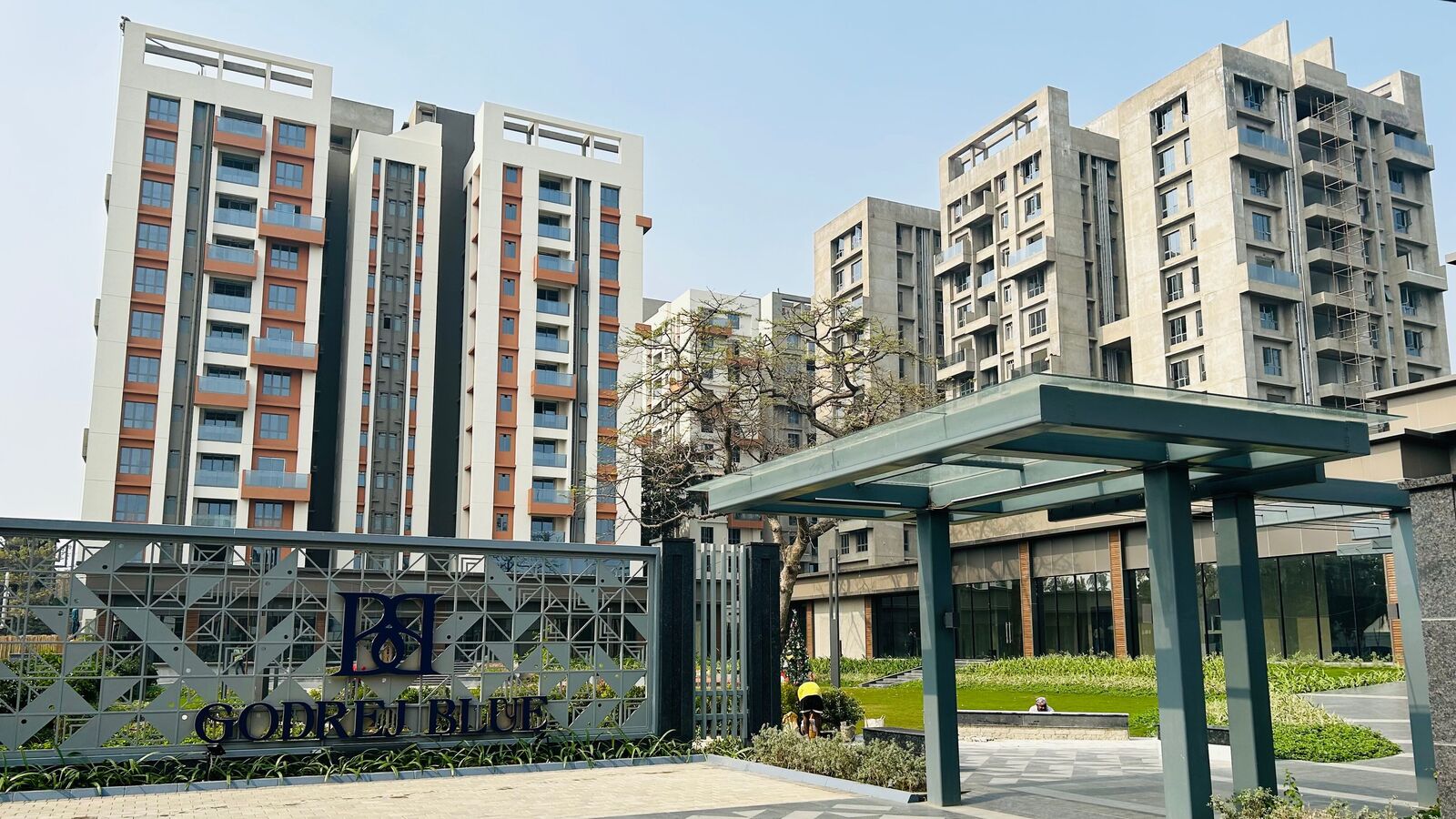
Godrej Properties Pre Sales Rise Highlights City Demand
India’s residential property cycle is showing renewed depth as Godrej Properties reported a sharp rise in annual sales bookings, signalling sustained end-user demand across major urban centres. The company’s performance, driven by strong absorption in key metropolitan regions, reflects broader confidence in organised real estate and the continued shift towards branded, compliance-led housing development.
The reported increase in Godrej Properties pre sales growth to ₹34,171 crore in FY26 marks one of the highest annual booking values recorded by a listed developer in India. This growth, supported by the sale of over 17,000 homes and a steady rise in transacted area, indicates that demand is not limited to premium segments alone but is spread across mid-income and upper-mid housing categories in large cities.Regional data shows a concentration of demand in the Mumbai Metropolitan Region, Bengaluru, and the National Capital Region. These markets continue to attract both end-users and investors due to infrastructure expansion, employment hubs, and improved connectivity. Industry observers note that such concentration also reflects how urban migration patterns are reinforcing housing demand in cities with stronger economic fundamentals.
The momentum in Godrej Properties pre sales growth also points to a structural consolidation underway in India’s housing sector. Larger developers with access to capital, stronger governance frameworks, and faster project execution are gaining market share, while smaller players face increasing regulatory and financing constraints. This transition is expected to reshape the urban housing supply pipeline, with implications for pricing, delivery timelines, and quality benchmarks. Urban planners highlight that while strong sales numbers indicate economic vitality, they also underline the pressure on city infrastructure. Increased housing absorption must be matched by parallel investments in public transport, water systems, and climate-resilient infrastructure. Without this alignment, high-density growth risks exacerbating congestion, resource stress, and environmental vulnerability.
The rise in housing demand also intersects with evolving buyer preferences. Post-pandemic shifts have prioritised larger homes, integrated townships, and developments with open spaces and energy-efficient design. Developers are increasingly responding with projects that incorporate sustainability features, although experts suggest that wider adoption of green building standards remains uneven. Looking ahead, the trajectory of India’s residential market will depend on interest rate stability, urban employment growth, and the pace of infrastructure delivery. For cities, the challenge will be to translate strong real estate momentum into inclusive and climate-responsive urban expansion, ensuring that growth in housing supply does not outpace the capacity of civic systems to support it.