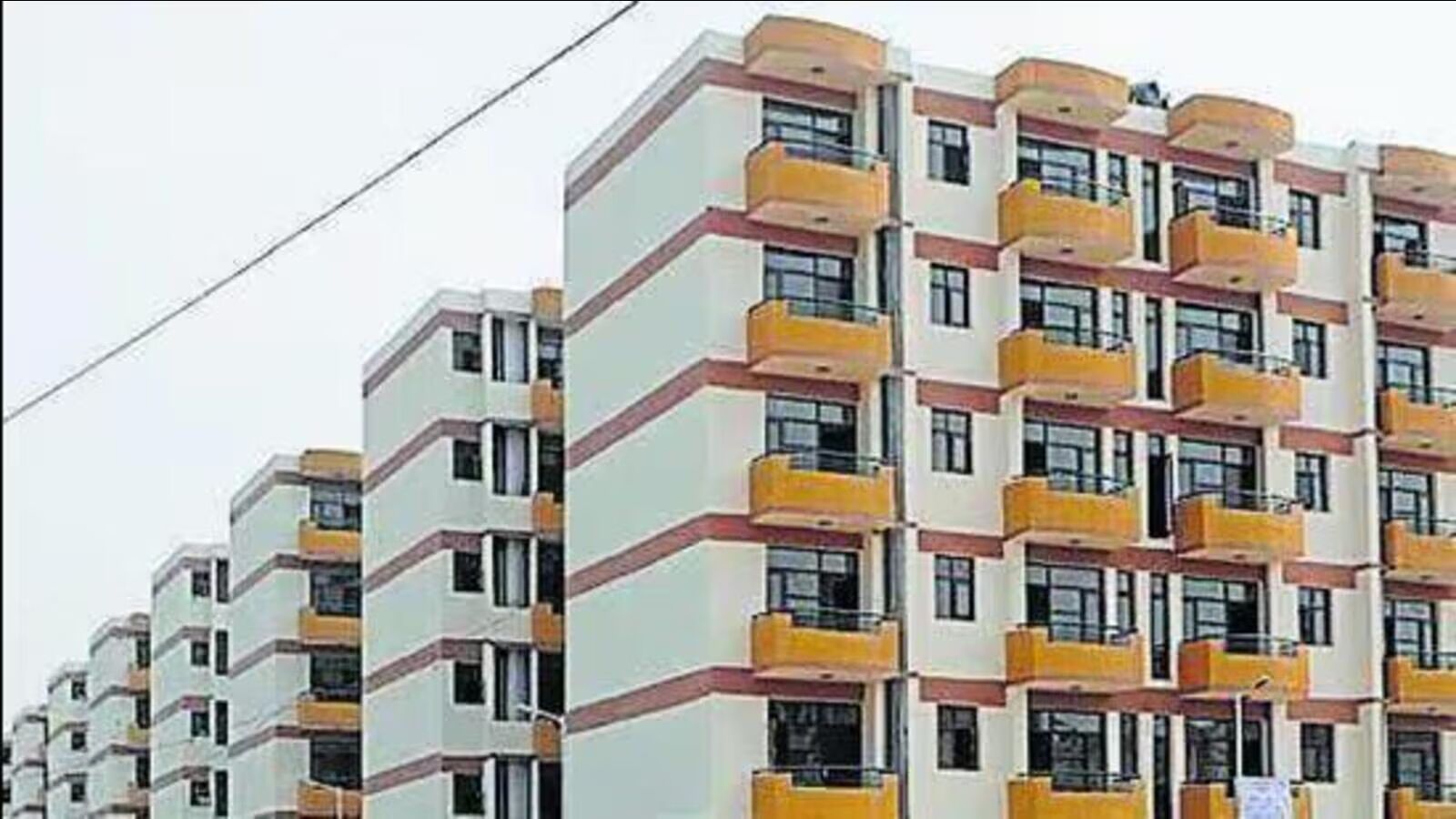
Chandigarh’s administration has approved a significant increase in permissible building density, allowing residential projects to rise up to six floors in a move aimed at improving housing affordability and unlocking land efficiency. The decision, centred on revising Floor Area Ratio (FAR) norms, marks a calibrated shift in the city’s tightly regulated urban planning framework.
Under the revised policy, FAR for group housing projects has been raised to 2.4—double the earlier baseline—enabling developers to construct more dwelling units within the same land parcel. The change is expected to directly impact a long-pending housing scheme in Sector 53, where high per-unit costs had previously dampened buyer response despite strong demand. Officials indicate that the Chandigarh FAR hike will allow a maximum of six storeys, with ground coverage capped at 40% and building height restricted to approximately 74 feet. While these limits preserve the city’s low-rise character, the increased vertical capacity is designed to reduce land cost per unit—one of the primary drivers of high housing prices. The move reflects a broader recalibration in Chandigarh’s development approach, where land scarcity and rising demand are forcing a reconsideration of historically conservative planning norms.
Unlike neighbouring cities such as Mohali and Panchkula, which permit higher densities, Chandigarh has long prioritised architectural uniformity and controlled growth, guided by its master plan and judicial safeguards. Urban economists note that the Chandigarh FAR hike could improve project viability by spreading land costs across a larger number of units. This, in turn, may help moderate prices in upcoming housing projects, particularly in the mid-income segment where demand remains strong. Recent application trends—running into several thousand applicants for a limited number of units—underscore the scale of unmet housing demand in the city. From a planning perspective, the policy also signals a shift towards more efficient land use without fully transitioning to high-rise development. By allowing moderate vertical expansion, authorities aim to balance affordability with the preservation of Chandigarh’s planned urban fabric, especially in non-heritage sectors.
However, the reform sits within a complex regulatory environment. Heritage zones in the city’s core sectors remain protected under judicial directives, limiting any changes to density or built form. As a result, future growth is likely to be concentrated in peripheral and redevelopment zones where planning flexibility is greater. Experts suggest that while the Chandigarh FAR hike addresses supply-side constraints, its success will depend on complementary infrastructure upgrades. Higher density housing increases pressure on utilities such as water supply, sewerage, and transport networks. Without parallel investments, densification risks creating service bottlenecks.
The policy also aligns with emerging national trends where cities are moving towards compact, transit-supportive development models to reduce urban sprawl and improve sustainability outcomes. By enabling more housing within existing footprints, Chandigarh’s approach could contribute to more efficient land use and lower per-capita infrastructure costs. As the city navigates competing priorities of heritage conservation and growth, the FAR revision represents a cautious but consequential step. Its implementation will determine whether Chandigarh can evolve its planning model to meet contemporary housing needs while retaining the principles that define its urban identity.