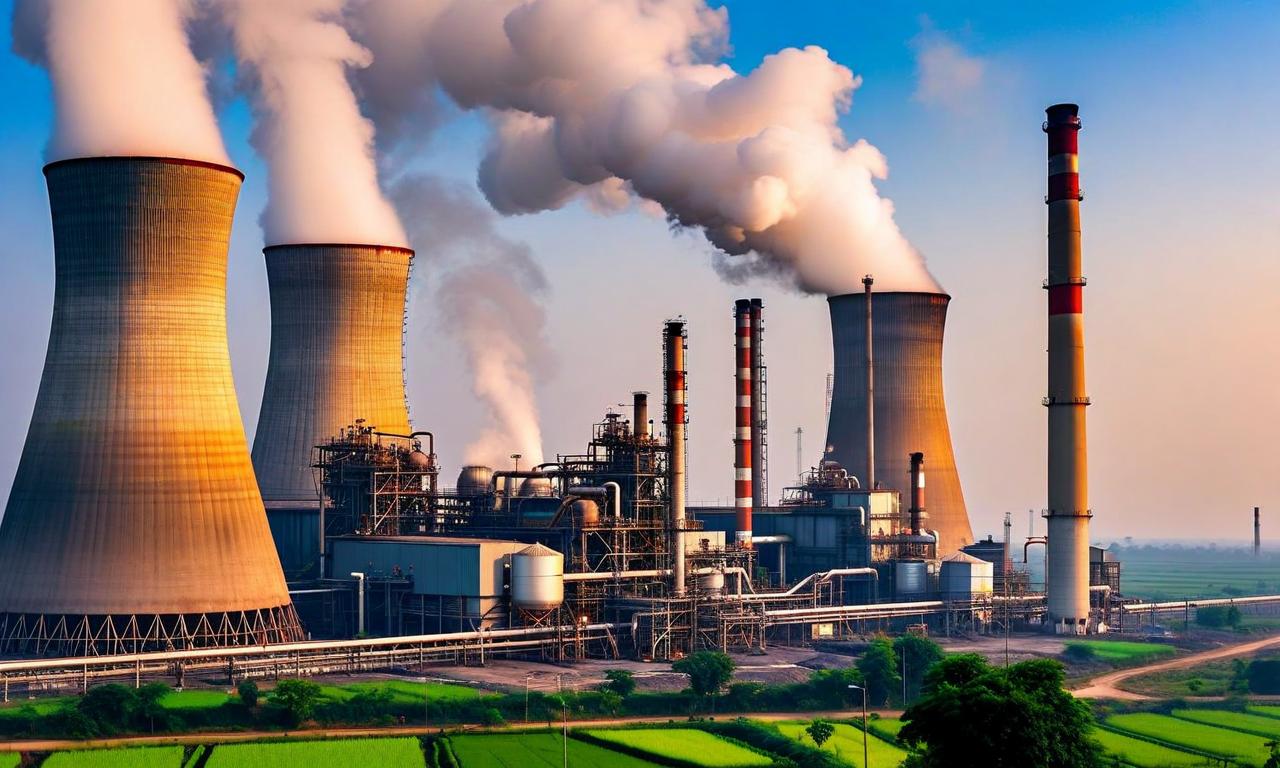
Buxar Thermal Project Gains Momentum After Inspection
A high-level review of the Buxar Thermal Power Project has renewed focus on execution timelines and inter-agency coordination, as Bihar looks to stabilise its long-term energy supply amid rising demand. The inspection, conducted by the state’s top energy official, signals an administrative push to accelerate one of eastern India’s most critical power infrastructure projects.
Located in the Chausa region of Buxar, the project is designed with a planned capacity of 1,320 MW, positioning it as a key contributor to the state’s electricity mix. With industrial activity and urbanisation steadily increasing across Bihar, the timely completion of this facility is seen as essential to reducing power deficits and enabling more reliable supply for both households and businesses. During the site visit, officials reviewed progress across core operational zones, including coal handling systems and control infrastructure, while also assessing bottlenecks that could delay commissioning. Discussions with executing agencies highlighted the need for tighter coordination across contractors and government departments to maintain construction momentum. The Buxar thermal power project forms part of a broader shift in Bihar’s infrastructure strategy, where energy security is increasingly linked to economic growth. Experts point out that consistent power supply is foundational to attracting manufacturing investments, supporting small enterprises, and improving service delivery in urban areas. Without adequate generation capacity, cities risk facing constraints that limit both productivity and quality of life.
While thermal power continues to play a central role in India’s energy landscape, projects like Buxar are also being evaluated through the lens of efficiency and environmental impact. The adoption of supercritical technology—designed to improve fuel efficiency and reduce emissions intensity—reflects an attempt to balance immediate energy needs with longer-term sustainability goals. Urban development specialists note that large-scale power infrastructure has a cascading impact on regional planning. Reliable electricity supply enables the expansion of transit systems, affordable housing, and digital infrastructure, all of which are critical for inclusive and climate-resilient urban growth. In this context, the progress of the Buxar thermal power project extends beyond energy—it influences how cities in Bihar will evolve over the next decade.
However, challenges remain. Infrastructure of this scale often faces delays linked to logistics, financing, and multi-agency coordination. Ensuring timely delivery will require continuous monitoring and adaptive project management, particularly as demand projections continue to rise. As Bihar positions itself for industrial expansion and urban transformation, the completion of the Buxar project will serve as a litmus test for its ability to deliver complex infrastructure efficiently. The coming months are likely to determine whether the state can translate policy intent into operational capacity at scale.