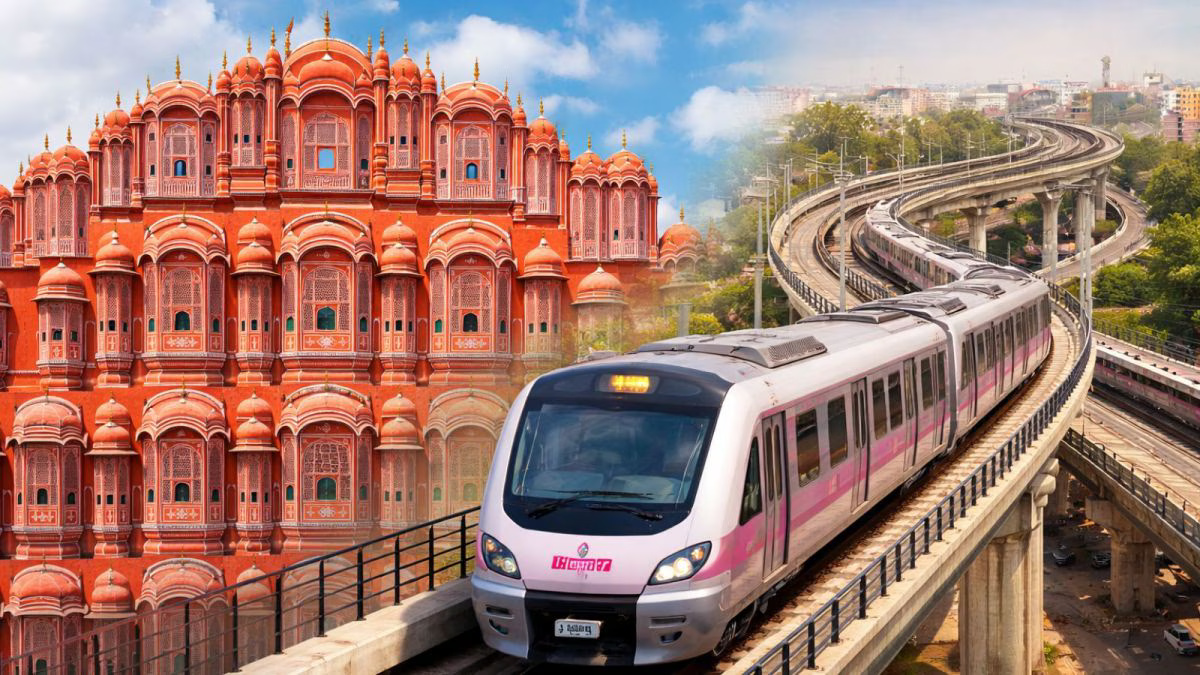
Jaipur Metro Phase Two Boosts City Transport Network
Jaipur is set for a major transformation in its urban transport system after the Union government cleared a large-scale metro expansion designed to strengthen connectivity across the city. The approved project introduces a new north–south rail corridor that is expected to significantly reshape commuting patterns in Rajasthan’s capital while supporting sustainable mobility in one of India’s fastest-growing tourism and commercial centres. The proposed Jaipur Metro Phase Two expansion will add a 41-kilometre corridor stretching from Prahladpura in the south to Todi Mod in the north. The alignment will include 36 stations and is estimated to require an investment of about ₹13,037 crore. Authorities expect the project to create a backbone transit route linking residential clusters, employment zones and transport hubs across the metropolitan area.
The metro expansion will be implemented by the state’s metro rail corporation, a joint entity backed by both the central and state governments. Officials said the project structure follows national metro policy guidelines, combining public equity contributions with institutional borrowing and multilateral financing support. Urban mobility planners view Jaipur Metro Phase Two as a critical step toward balancing the city’s growing transport demand. Jaipur has experienced steady population growth alongside expanding industrial and service-sector activity, particularly along corridors such as Sitapura and the Vishwakarma Industrial Area. These zones generate significant commuter traffic, much of which currently depends on private vehicles or road-based transport. By connecting industrial districts, healthcare institutions, major commercial corridors and the airport zone, the new metro line is expected to create a continuous public transport spine through the city. Transit experts note that integrating these activity centres could reduce road congestion and encourage more residents to shift toward rail-based commuting.
The proposed alignment also includes underground stations in sections near the airport area, a design choice intended to minimise surface disruption in dense urban zones. Interchange arrangements with the existing east–west corridor will allow passengers to move seamlessly across the broader network, improving travel efficiency across Jaipur’s expanding urban footprint. Jaipur’s current metro network, which began operations along its first corridor nearly a decade ago, records tens of thousands of daily riders. With the addition of Jaipur Metro Phase Two, transport authorities expect ridership to rise sharply as the network becomes more comprehensive and connects previously underserved areas. Urban development analysts say the project could also influence land use patterns along the corridor. Large metro investments often stimulate transit-oriented development, encouraging higher-density housing, commercial activity and mixed-use urban districts near stations. Such development models can help reduce travel distances while supporting more compact and efficient cities.
Environmental considerations are also central to the project’s planning. Expanding mass transit capacity is expected to lower dependence on private vehicles, potentially reducing fuel consumption and urban emissions over time. Construction timelines indicate that the corridor may take several years to complete once groundwork begins. When operational, the expanded metro system could play a central role in shaping Jaipur’s next phase of urban growth by improving mobility while supporting more sustainable city planning.