Delhi Studies Yamuna Floodwater Diversion For Flood Control
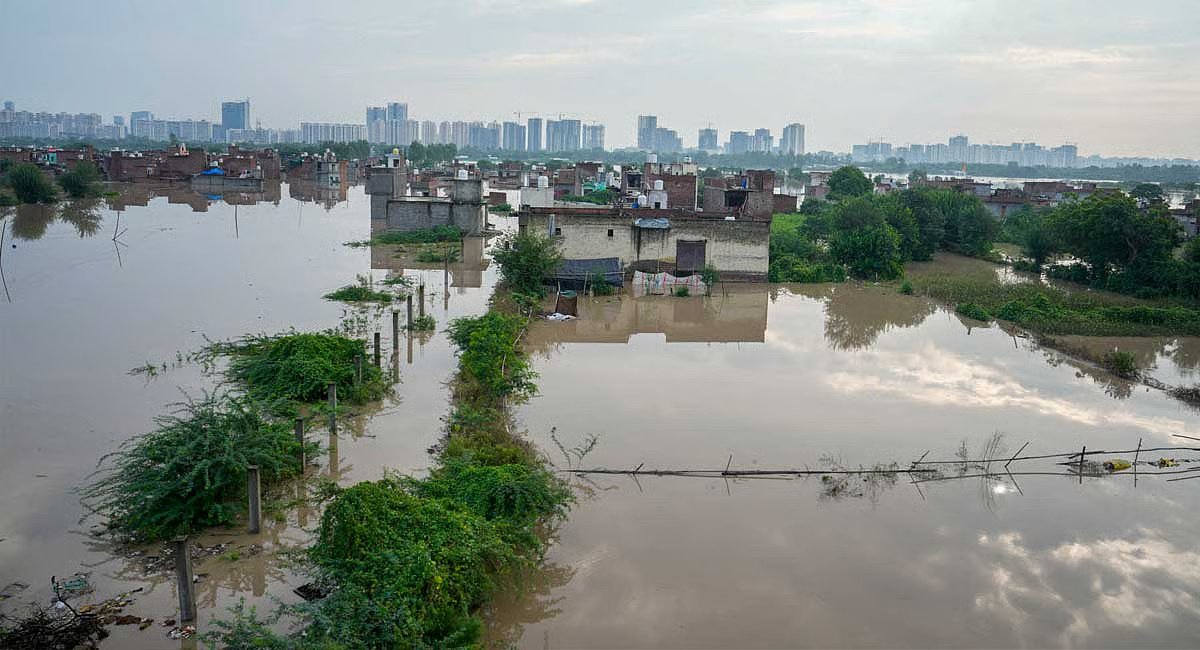
Delhi authorities are examining a large-scale Yamuna floodwater diversion strategy that could redirect excess monsoon flows into abandoned mining pits and designated floodplain zones to reduce urban flooding and improve groundwater recharge. The proposal emerges as the capital continues to reassess flood resilience following the severe river overflow that disrupted large parts of the city in 2023. Officials involved in flood management planning say the concept focuses on temporarily storing high monsoon discharge rather than allowing it to overwhelm riverbanks and surrounding neighbourhoods. Under the plan, surplus river water would be channelled to former quarry pits located in the Bhatti Mines area in south Delhi as well as several identified floodplain pockets along the Yamuna corridor.
The mining pits, remnants of quarrying activity that took place decades ago, are being evaluated for their potential to function as large storage basins. Hydrogeological assessments suggest that multiple pits together could hold millions of cubic metres of water during peak monsoon flows. If managed effectively, these reservoirs could also support groundwater recharge in nearby aquifers once floodwater gradually infiltrates the soil.vAlongside the Bhatti Mines sites, engineers have mapped multiple floodplain areas capable of storing additional river water during extreme rainfall events. These low-lying zones naturally act as overflow buffers for rivers, and urban planners increasingly view them as critical infrastructure for climate-resilient cities. The Yamuna floodwater diversion proposal is part of a broader shift in urban flood management that prioritises natural storage systems rather than relying only on concrete embankments or drainage channels. Experts note that global cities facing climate-driven rainfall extremes are increasingly integrating wetlands, floodplains and artificial reservoirs to absorb temporary water surges.
However, environmental specialists caution that the approach will require strict safeguards. The Yamuna carries large quantities of silt and, during much of the year, polluted water from upstream drains and urban sewage outfalls. Introducing contaminated water into groundwater recharge systems could risk long-term aquifer pollution if appropriate filtration and monitoring mechanisms are not implemented. Hydrogeologists also point out that the geology of the Bhatti Mines region includes fractured quartzite rock formations where underground water pathways are exposed. This means any recharge project would require careful design to ensure that only treated or relatively clean floodwater enters the ground. Infrastructure experts additionally highlight the logistical complexity of diverting river water across the city’s terrain. Pumping water away from the river channel may require substantial energy and carefully engineered pipelines or channels to avoid disrupting natural drainage patterns.
Despite these challenges, planners see the Yamuna floodwater diversion concept as part of Delhi’s evolving climate adaptation toolkit. As extreme rainfall events become more frequent, cities may increasingly rely on hybrid solutions that combine engineered flood defences with natural landscape-based water management. If detailed feasibility studies confirm its viability, the proposal could shape future strategies aimed at protecting urban communities from flood risk while strengthening groundwater security in one of India’s fastest-growing metropolitan regions.