Delhi Pink Line Double Decker Flyover Nears Completion
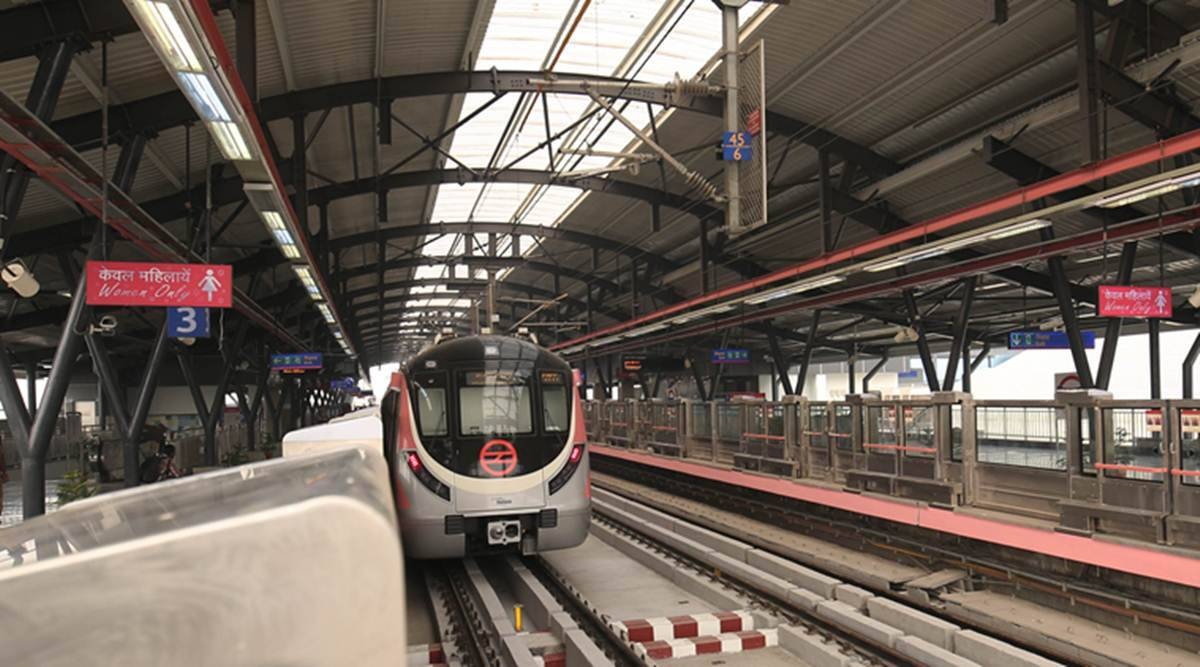
Delhi’s expanding metro network is set to add a new layer to the capital’s transport infrastructure as work resumes on the Pink Line double decker flyover, a hybrid structure designed to carry road traffic beneath an operational metro viaduct. Authorities expect the long-delayed project in northeast Delhi to move towards completion by the end of the year, signalling renewed momentum in the city’s push to optimise limited urban space through integrated mobility infrastructure. The Pink Line double decker flyover stretches roughly 1.4 kilometres between Bhajanpura and Yamuna Vihar and forms part of the Majlis Park–Maujpur metro corridor expansion. While metro trains are already operating on the elevated deck above, the road component below has remained incomplete due to pending structural work and earlier environmental clearances required along the alignment.
Transit officials have now initiated a fresh procurement process to complete the remaining construction, including road access ramps at both ends of the structure and reinforcement work associated with retaining systems. The contract for the unfinished portion of the flyover is estimated at about ₹11.7 crore and will involve completing earth stabilisation and final structural elements that allow vehicles to use the lower deck. Urban planners view the Pink Line double decker flyover as a critical experiment in layered infrastructure design for dense Indian cities. Instead of expanding transport corridors horizontally — which often requires large land acquisition and tree removal — the project stacks metro and road systems vertically along the same alignment. This approach allows transport capacity to expand without widening already congested urban corridors. The project also sits within a broader metro expansion programme underway across the capital. Several corridors are under construction as part of the ongoing expansion phase, while additional routes have received approvals for future development.
With more than 400 kilometres of operational network and over 300 stations, the metro system has become the backbone of daily mobility for millions of residents across Delhi and its neighbouring urban clusters. Infrastructure experts say double-decker transport corridors can play an important role in reducing surface-level congestion in high-density neighbourhoods. By integrating road and rail infrastructure in the same footprint, cities can improve mobility efficiency while limiting environmental disruption. This model is increasingly being considered in areas where land constraints and rising traffic volumes intersect. Two other similar multi-level viaduct projects are also progressing in different parts of Delhi as part of the wider metro expansion plan. These structures are intended to demonstrate how compact infrastructure design can support growing commuter demand while preserving urban land and ecological buffers.
Once operational, the Pink Line double decker flyover is expected to streamline traffic movement in the Bhajanpura–Yamuna Vihar stretch while strengthening last-mile connectivity to nearby metro stations. For residents in northeast Delhi — an area historically challenged by road congestion and limited transit options — the project may mark an important shift toward more integrated and space-efficient urban mobility.