Delhi Dehradun Corridor Wildlife Underpasses Support Biodiversity
New scientific observations from the Himalayan foothill region suggest that engineered wildlife passages along the Delhi Dehradun Corridor wildlife underpasses are enabling animals to move safely across a major highway alignment, offering an example of how transport infrastructure can be designed to minimise ecological disruption. A recent ecological assessment conducted along a forested stretch between Ganeshpur and Asharodi in the Shivalik landscape has documented extensive wildlife activity using dedicated underpass structures constructed beneath the highway corridor. The findings provide early evidence that carefully planned mitigation measures can help preserve ecological connectivity even as road infrastructure expands.
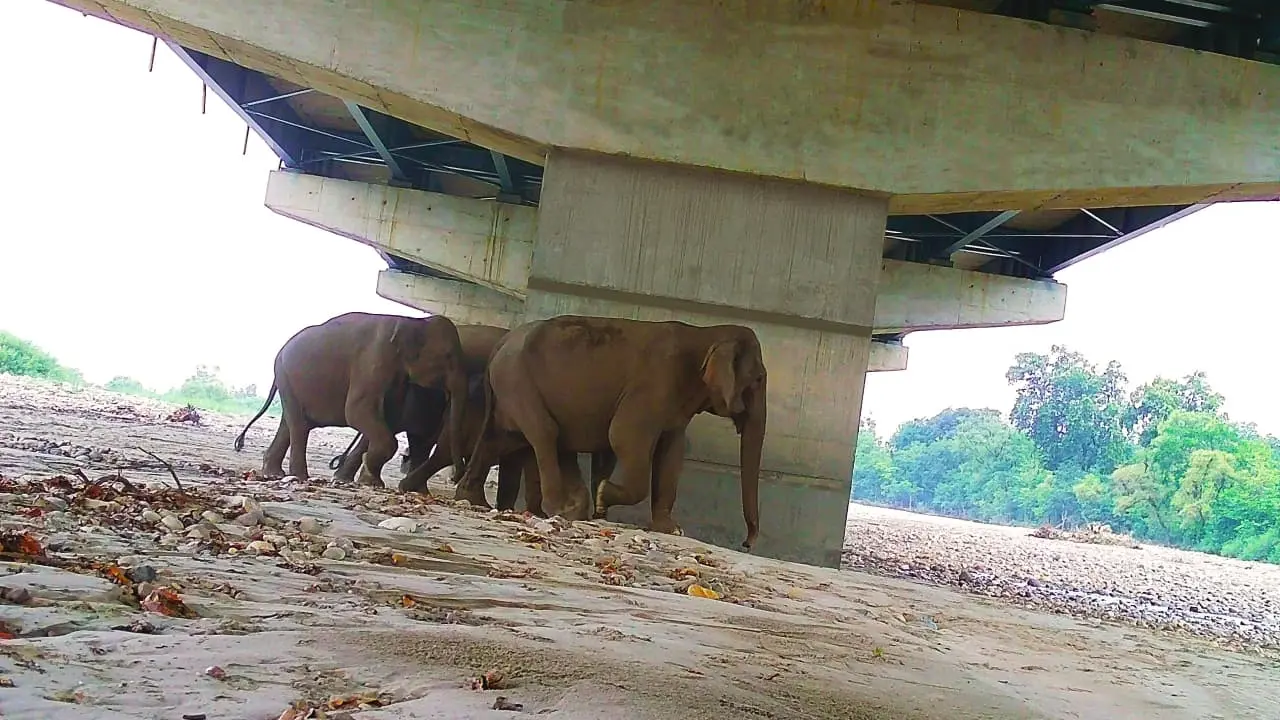
The monitored section of the corridor runs through a biodiversity-rich zone known to support species such as elephants, deer, jackals and several reptile and bird species. To reduce the barrier effect typically created by highways, the project incorporated a series of animal passage structures covering nearly 11 kilometres within a roughly 20-kilometre stretch of the route. Researchers studying the Delhi Dehradun Corridor wildlife underpasses used a combination of camera traps and acoustic monitoring devices to observe activity over a period of several weeks. The survey produced more than 100,000 photographic records, including over 40,000 images of wildlife moving through the engineered passages. Among the species most frequently recorded were golden jackals, spotted deer, sambar and nilgai. Smaller mammals such as hares were also captured on camera, indicating that the structures are accessible to a wide range of animals. Significantly, researchers documented dozens of instances of elephants using the underpasses—an important indicator that even large mammals are adapting to the infrastructure. The corridor also includes one of the region’s largest elevated wildlife crossings, designed to maintain uninterrupted animal movement across the landscape.
Elevated road segments allow animals to pass beneath traffic while maintaining natural habitat connectivity between forest patches. Environmental scientists note that highways built across wildlife habitats often lead to habitat fragmentation and increased roadkill incidents. Integrating wildlife passages into road design can reduce these risks by providing safe crossing points that maintain migration routes and feeding patterns. The study also analysed how traffic noise affects wildlife behaviour around the corridor. Monitoring results suggested that some species are able to tolerate moderate sound levels, while others prefer quieter segments of the passage structures. Researchers recommend additional mitigation measures such as noise barriers in areas with high wildlife activity to further enhance the effectiveness of the Delhi Dehradun Corridor wildlife underpasses. Transport infrastructure experts say such findings reinforce the value of data-driven environmental planning. As India continues to expand its highway network to support economic growth and regional connectivity, integrating ecological safeguards is becoming increasingly important in environmentally sensitive landscapes.
The corridor’s design illustrates a broader shift toward infrastructure models that attempt to balance development with environmental stewardship. If long-term monitoring continues to confirm positive outcomes, the project could influence future highway planning standards across the country, encouraging more widespread adoption of wildlife crossings and habitat-friendly engineering solutions.