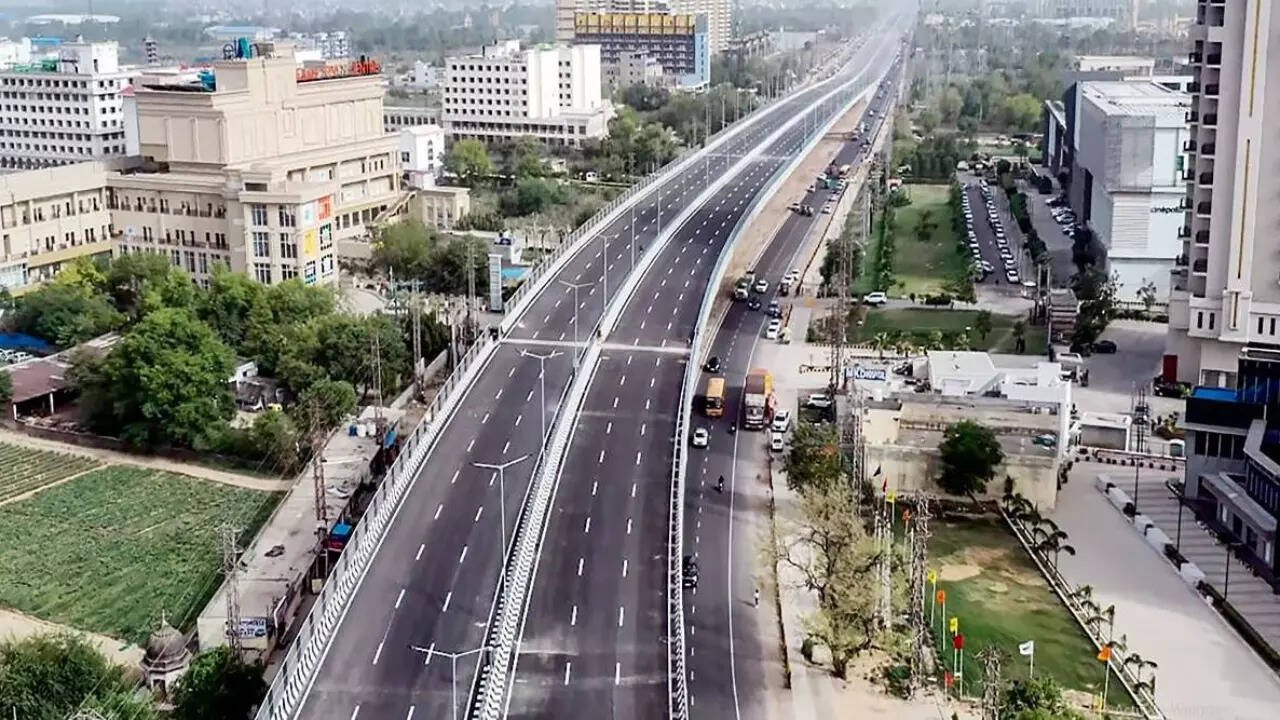
Delhi’s public works authorities have initiated an accelerated rollout of multiple South Delhi road projects aimed at easing long-standing congestion across some of the capital’s most densely populated neighbourhoods. The infrastructure push focuses on improving east–west and north–south connectivity in areas that have struggled with traffic bottlenecks due to rapid urban growth and limited road expansion. Officials involved in the planning process indicate that three key corridors have been prioritised for faster execution following a recent review of transport conditions in the southern districts of the city. Together, these interventions are expected to improve movement between residential clusters, institutional zones and major arterial routes, while reducing pressure on overstretched local roads.
One of the largest interventions involves the development of a new master plan road linking the Indira Gandhi National Open University area with the Tughlakabad shooting range corridor. The proposed alignment is expected to pass through Neb Sarai, Sainik Farms and Deoli Bandh Road, neighbourhoods that have experienced significant residential expansion over the past decade. Urban planners note that the corridor could serve as an alternate route for thousands of daily commuters currently relying on narrower internal roads. A second proposal centres on an elevated structure along the busy Chhatarpur stretch popularly known as the 100-foot road. This section has long been identified as a congestion hotspot, particularly during peak commuting hours when traffic from surrounding colonies converges onto the corridor. Transport analysts say grade-separated infrastructure in this area could help separate through traffic from local movement, improving travel reliability for both commuters and public transport vehicles. The third intervention focuses on improving road connectivity beneath an elevated metro alignment between Harkesh Nagar and Maa Anandmayee Marg.
Officials believe the one-kilometre road segment could significantly streamline vehicular flow in the surrounding industrial and residential zones by utilising underused urban space beneath transit infrastructure. The South Delhi road projects are being prioritised after repeated concerns from residents and transport planners about mounting congestion in neighbourhoods such as Deoli, Sangam Vihar, Chhatarpur and Tughlakabad. These areas have seen rapid population growth and housing development, but road capacity and planned infrastructure have struggled to keep pace. Urban mobility experts emphasise that while new road capacity can ease immediate bottlenecks, long-term congestion management will require integrating these projects with public transport, pedestrian infrastructure and sustainable mobility solutions. Delhi’s expanding metro network and growing adoption of electric mobility may also shape how these corridors evolve over time.
If executed on schedule, the road upgrades could provide short-term relief for commuters navigating southern Delhi’s crowded transport network. However, planners caution that sustained investment in multimodal transport planning will remain essential to support the city’s continued urban expansion while ensuring mobility systems remain efficient, inclusive and environmentally resilient.