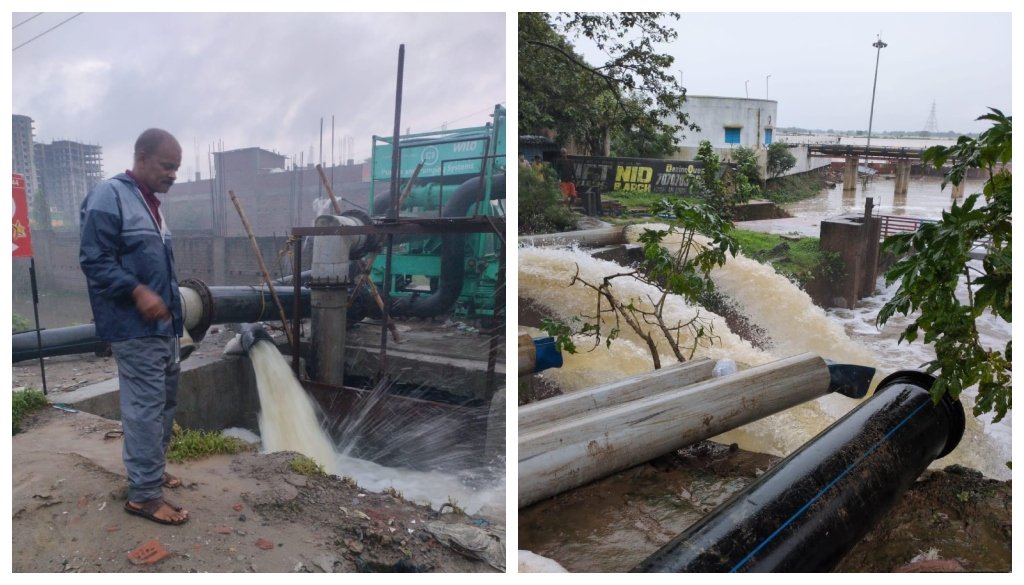
As Patna prepares for another monsoon season marked by recurring urban flooding, authorities have finalised plans to install eight new high-capacity drainage pumping stations across the city—an intervention aimed at strengthening flood resilience in one of India’s most waterlogging-prone urban centres. The move signals a shift towards more engineered, system-level responses to seasonal climate stress.
The new installations form part of a broader drainage strategy led by state infrastructure agencies to improve stormwater evacuation capacity in low-lying and densely populated areas. Officials involved in the planning indicate that these pumping stations are designed to accelerate the removal of rainwater during peak downpours, reducing the duration and severity of water accumulation on roads and in residential neighbourhoods. Patna has historically struggled with inadequate drainage networks, where ageing infrastructure, encroachments, and rapid urban expansion have combined to exacerbate flooding risks. During intense rainfall events, several parts of the city experience prolonged waterlogging, disrupting mobility, economic activity, and public health. The new drainage pumping stations are expected to complement existing systems by increasing discharge capacity and improving response times during heavy rainfall. Urban planners emphasise that such infrastructure is becoming critical as rainfall patterns grow more unpredictable due to climate change. Short bursts of intense rain—rather than prolonged showers—are placing pressure on conventional drainage systems that were not designed for such variability. In this context, decentralised pumping infrastructure can act as a buffer, helping cities manage sudden surges in stormwater.
The initiative builds on an already extensive drainage network in Patna, where multiple permanent and temporary pumping stations are operational during the monsoon. Recent administrative reviews suggest that dozens of such stations, supported by backup power systems and real-time monitoring, are deployed across the city to maintain continuous drainage operations during peak rainfall periods. However, experts caution that infrastructure additions alone may not fully resolve flooding challenges. Effective outcomes will depend on parallel measures such as regular desilting of drains, removal of encroachments, and integration of drainage planning with land-use decisions. Without these, even high-capacity pumping systems risk being overwhelmed by blocked or poorly maintained channels. From a governance perspective, the expansion of drainage pumping stations also reflects a more coordinated approach to urban risk management. Multiple agencies—including municipal bodies, infrastructure corporations, and utility providers—are being required to work in tandem, with increased emphasis on accountability during the monsoon period.
The economic implications are equally significant. Frequent flooding imposes hidden costs on cities, from damage to property and infrastructure to lost productivity and disrupted supply chains. By reducing these risks, investments in drainage systems can enhance urban reliability—an increasingly important factor for businesses and real estate markets. As Patna continues to grow, the success of these drainage pumping stations will depend on sustained maintenance, data-driven monitoring, and long-term planning. With climate pressures intensifying, the city’s approach to monsoon management may well shape how similar mid-sized urban centres across India respond to the challenge of building flood-resilient infrastructure.