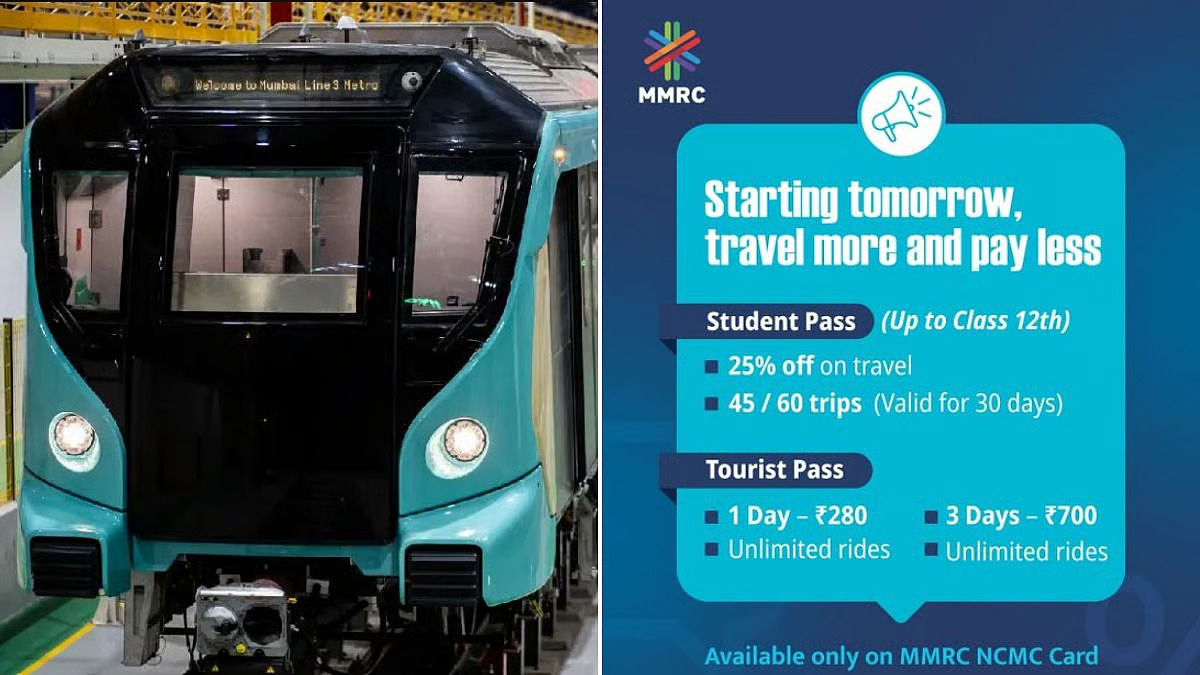
Mumbai’s underground metro corridor is introducing a new fare strategy aimed at widening access and encouraging digital ticketing, as the city continues to transition towards integrated, cashless public transport systems. The move focuses on discounted multi-trip and short-duration passes designed for students, tourists, and frequent commuters using the Aqua Line.
The newly rolled out Mumbai Metro Aqua Line passes offer concessional pricing for school students and flexible travel options for visitors, alongside existing benefits for regular users. Officials indicate that the initiative is intended to improve affordability while promoting the use of contactless payment systems linked to the National Common Mobility Card. From an urban mobility perspective, the introduction of targeted fare products reflects a shift towards demand-responsive pricing in public transport. Transport economists note that discounted passes for students can support equitable access to education by lowering commuting costs, while tourist-oriented passes can enhance the usability of metro systems for short-term visitors navigating unfamiliar cities.
The Mumbai Metro Aqua Line passes also align with broader efforts to build a seamless digital ecosystem across transport networks. By integrating fare payment with mobile applications and smart cards, authorities aim to reduce dependency on physical ticketing infrastructure and improve passenger flow within stations. This approach is increasingly seen as essential for high-capacity systems operating in dense urban environments. For regular commuters, tiered discounts on multi-trip passes are expected to incentivise repeated usage and reduce per-trip costs. Urban planners highlight that such pricing strategies can help shift travel behaviour away from private vehicles, contributing to reduced congestion and lower emissions. In cities like Mumbai, where transport demand continues to grow, encouraging modal shift remains a critical policy objective.
The inclusion of concessional benefits for persons with disabilities further underscores the need for inclusive transport systems. Experts emphasise that affordability must be complemented by accessibility in station design, last-mile connectivity, and service reliability to ensure that public transport serves diverse user groups effectively. Beyond fare structures, the initiative reflects a broader transformation in how metro systems position themselves within the urban economy. As infrastructure investments scale up, operators are increasingly focusing on user experience, digital integration, and service flexibility to attract and retain ridership.
However, analysts caution that pricing innovations alone may not be sufficient. Sustained ridership growth will depend on network expansion, interconnectivity with suburban rail and bus systems, and consistent service quality. The success of initiatives like the Mumbai Metro Aqua Line passes will ultimately be measured by their ability to increase adoption across different commuter segments. As Mumbai continues to invest in high-capacity transit, such measures signal a gradual shift towards more user-centric and technology-driven mobility solutions. The coming months will reveal whether these incentives translate into higher ridership and a stronger public transport culture in one of India’s most transit-dependent cities.
Mumbai Metro Aqua Line Introduces Discounted Travel Passes