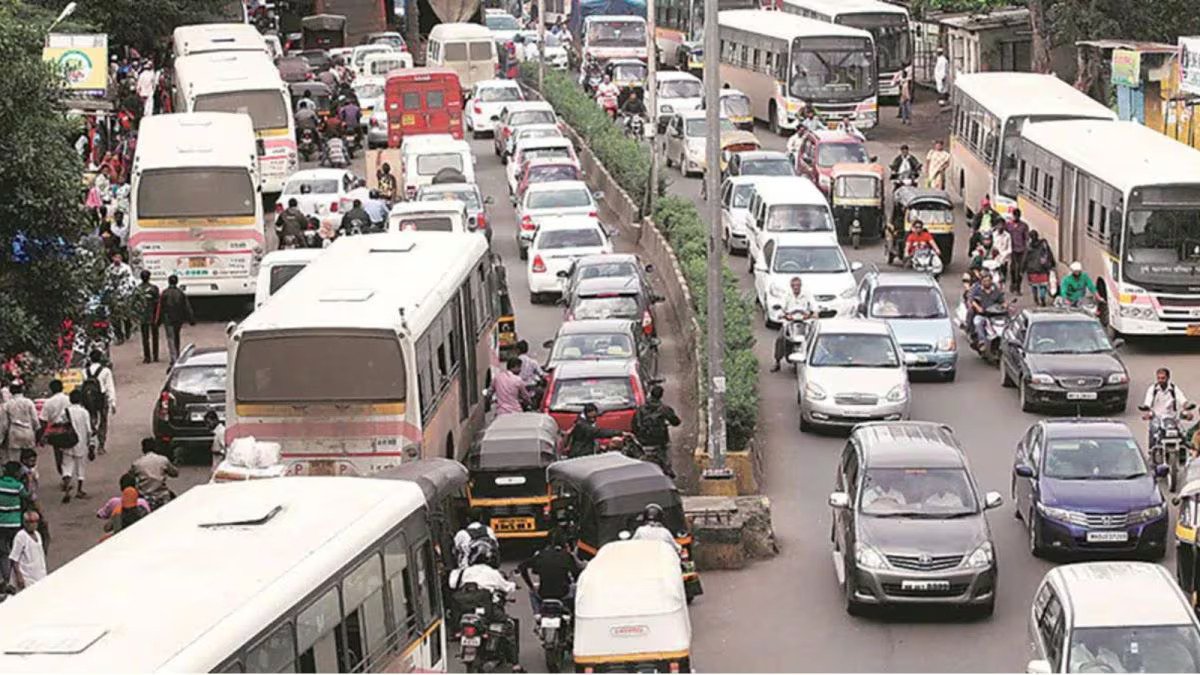
Pune’s civic administration is advancing plans to build new grade separators along one of its busiest corridors, aiming to reduce congestion triggered by ongoing metro construction and rising vehicular pressure. The proposal focuses on key junctions along Karve Road, a critical link connecting residential zones to the Mumbai–Bengaluru highway, with long-term implications for mobility and urban growth in the western part of the city.
The proposed Karve Road flyovers are being evaluated at two major intersections in Karvenagar, where traffic bottlenecks have intensified due to infrastructure work and increasing commuter volumes. Officials say the initiative is part of a broader strategy to synchronise road upgrades with the expansion of Pune’s metro network, ensuring that future transit systems and road infrastructure can coexist without limiting each other’s capacity. Urban planners note that once elevated metro corridors become operational, opportunities for major road modifications diminish significantly. This has prompted authorities to consider parallel infrastructure solutions in advance, particularly on corridors expected to see sustained growth in residential and commercial activity. The Karve Road flyovers are expected to complement an existing elevated structure in the area, creating a multi-layered mobility network.
To inform the design, the municipal body is initiating a comprehensive traffic assessment that goes beyond basic vehicle counts. The study will include travel pattern analysis, origin-destination mapping, congestion modelling, and delay assessments across different times of the day. Experts suggest that such data-driven planning is essential to avoid under- or over-building infrastructure, which can either fail to resolve congestion or lead to inefficient capital expenditure. In addition to traffic analysis, authorities are examining land requirements and potential displacement impacts. A detailed mapping of land parcels, including ownership and built-up areas, is being undertaken to assess acquisition needs. Urban development specialists highlight that integrating resettlement planning at an early stage is critical to ensuring that infrastructure expansion does not disproportionately affect vulnerable communities.
Environmental considerations are also part of the planning framework. The project will undergo an impact assessment to evaluate potential effects on air quality, noise levels, and local ecosystems. With transport infrastructure being a significant contributor to urban emissions, experts emphasise the importance of aligning projects like the Karve Road flyovers with broader sustainability goals, including reducing congestion-related fuel consumption and improving traffic flow efficiency. Financial viability is another key component under review, with cost estimates covering construction, land acquisition, utility relocation, and long-term maintenance. Analysts note that while flyovers can provide immediate congestion relief, their long-term success depends on integration with public transport systems and non-motorised mobility options.
As Pune continues to expand, balancing road infrastructure with mass transit investments will be central to shaping a resilient and inclusive urban transport system. The outcome of the current planning exercise will likely influence how the city approaches similar high-pressure corridors in the future, particularly in areas undergoing rapid transformation due to metro expansion.
Pune Plans Two New Flyovers On Karve Road To Cut Traffic Delays