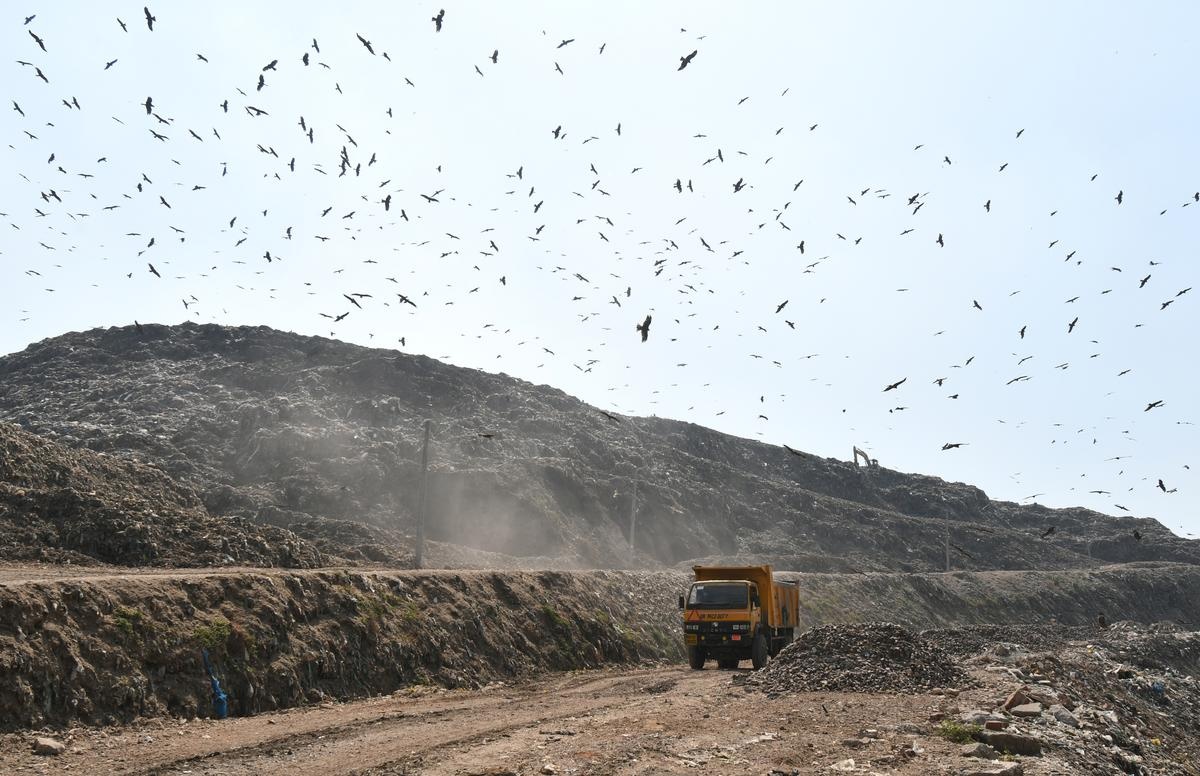
Delhi Ordered To Submit Ghazipur Landfill Clearance Plan
Delhi’s long-standing solid waste challenge has come under renewed scrutiny after the environmental court directed civic authorities to present a comprehensive strategy for addressing the massive waste accumulation at the Ghazipur dumpsite. The order requires the municipal body to submit a detailed and time-bound plan for clearing legacy waste and managing daily garbage flows at the Ghazipur landfill, one of the capital’s largest waste disposal locations. The directive follows ongoing legal proceedings examining the environmental and safety risks posed by the Ghazipur landfill, which has become a symbol of the city’s mounting waste crisis. Authorities have been asked to outline how existing waste will be processed while ensuring that fresh garbage reaching the site is treated more efficiently.
Environmental experts have long warned that the landfill’s scale poses serious risks for nearby communities. Over the years, the site has grown into a towering mound of untreated waste, raising concerns related to methane emissions, groundwater contamination and periodic fires. A major blaze that broke out in the landfill area in 2024 intensified attention on the site’s environmental hazards and triggered closer monitoring by regulatory bodies. According to submissions reviewed during the proceedings, several thousand tonnes of municipal waste arrive in the vicinity of the Ghazipur landfill every day. While a waste-to-energy facility located nearby processes a portion of this material, a significant share continues to be deposited at the landfill itself. This has resulted in a steady increase in waste volumes despite ongoing remediation efforts. Urban waste management specialists say that clearing decades-old garbage at such landfills requires complex engineering processes, including biomining, methane control and improved leachate treatment systems. Leachate—the contaminated liquid that seeps through decomposing waste—can infiltrate soil and water bodies if not properly contained.
The tribunal has also been urged to consider recommendations from environmental advisors calling for independent monitoring of waste reduction efforts at the site. These proposals include third-party verification of landfill height reduction, better tracking of methane emissions and improved fire-prevention systems. For Delhi, the landfill challenge highlights a broader issue facing rapidly growing cities: how to manage increasing volumes of urban waste while protecting environmental and public health. Urban planners say long-term solutions require strengthening waste segregation, expanding recycling infrastructure and improving decentralised processing facilities across neighbourhoods. The upcoming action plan is expected to outline measures to accelerate landfill remediation while ensuring that daily waste generation is handled through more sustainable systems. If implemented effectively, these steps could help reduce the environmental burden on surrounding communities and gradually shrink one of the capital’s most visible urban waste mountains.
For residents living near the Ghazipur landfill, the next phase of planning could determine whether Delhi finally moves toward a cleaner, safer and more climate-resilient waste management framework.