


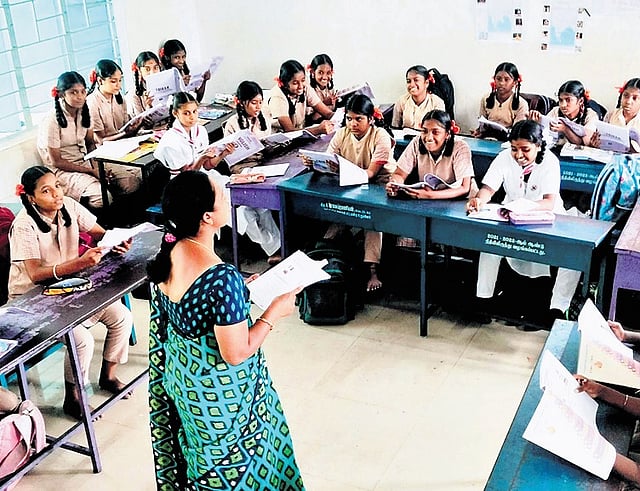
Chennai’s school education system is set for a performance review as authorities initiate an assessment of the Thiran initiative, a programme aimed at strengthening foundational learning and student outcomes.
The move reflects a growing emphasis on measuring the effectiveness of public education interventions in rapidly evolving urban environments.Education officials indicate that the review will examine how far the initiative has improved learning levels, particularly in core subjects.The exercise is expected to involve data analysis, feedback from schools, and evaluation of classroom-level implementation.Such assessments are increasingly seen as essential to ensure that policy objectives translate into measurable outcomes.The Thiran initiative was introduced to address gaps in foundational skills, especially among students in government schools. In cities like Chennai, where socio-economic diversity shapes educational access, targeted programmes play a crucial role in bridging learning disparities. However, experts note that sustained impact depends on continuous monitoring and adaptive strategies.From an urban development perspective, the review highlights the link between education quality and long-term city growth. Strong foundational learning systems contribute to a more skilled workforce, supporting economic resilience and social mobility. In this context, evaluating programmes like the Thiran initiative is critical to aligning education outcomes with broader urban goals.
Education analysts point out that large-scale initiatives often face implementation challenges, including variations in teaching quality, resource availability, and student engagement. Periodic reviews help identify such gaps and enable course corrections, ensuring that investments in education deliver intended benefits.The assessment also underscores a shift towards data-driven governance in the education sector. By leveraging performance metrics and evidence-based insights, authorities can refine programme design and allocate resources more effectively. This approach is particularly relevant in metropolitan regions, where scale and complexity demand robust monitoring mechanisms.There are also implications for inclusivity. Programmes targeting foundational skills are essential for supporting first-generation learners and students from underserved communities. Ensuring that such initiatives are effective can reduce educational inequalities and improve long-term opportunities for disadvantaged groups.Urban policy observers suggest that integrating digital tools and teacher training into programmes like Thiran could enhance their impact. Technology-enabled learning platforms and continuous professional development for educators are increasingly seen as key drivers of improved learning outcomes.
As Chennai moves forward with the review, the focus will be on identifying actionable insights that can strengthen the programme’s effectiveness. The exercise represents a broader commitment to improving education quality through accountability and innovation, reinforcing the role of schools as critical pillars of sustainable urban development.
Also Read:Chennai Future Tech Skills Training Boosts Student Workforce

