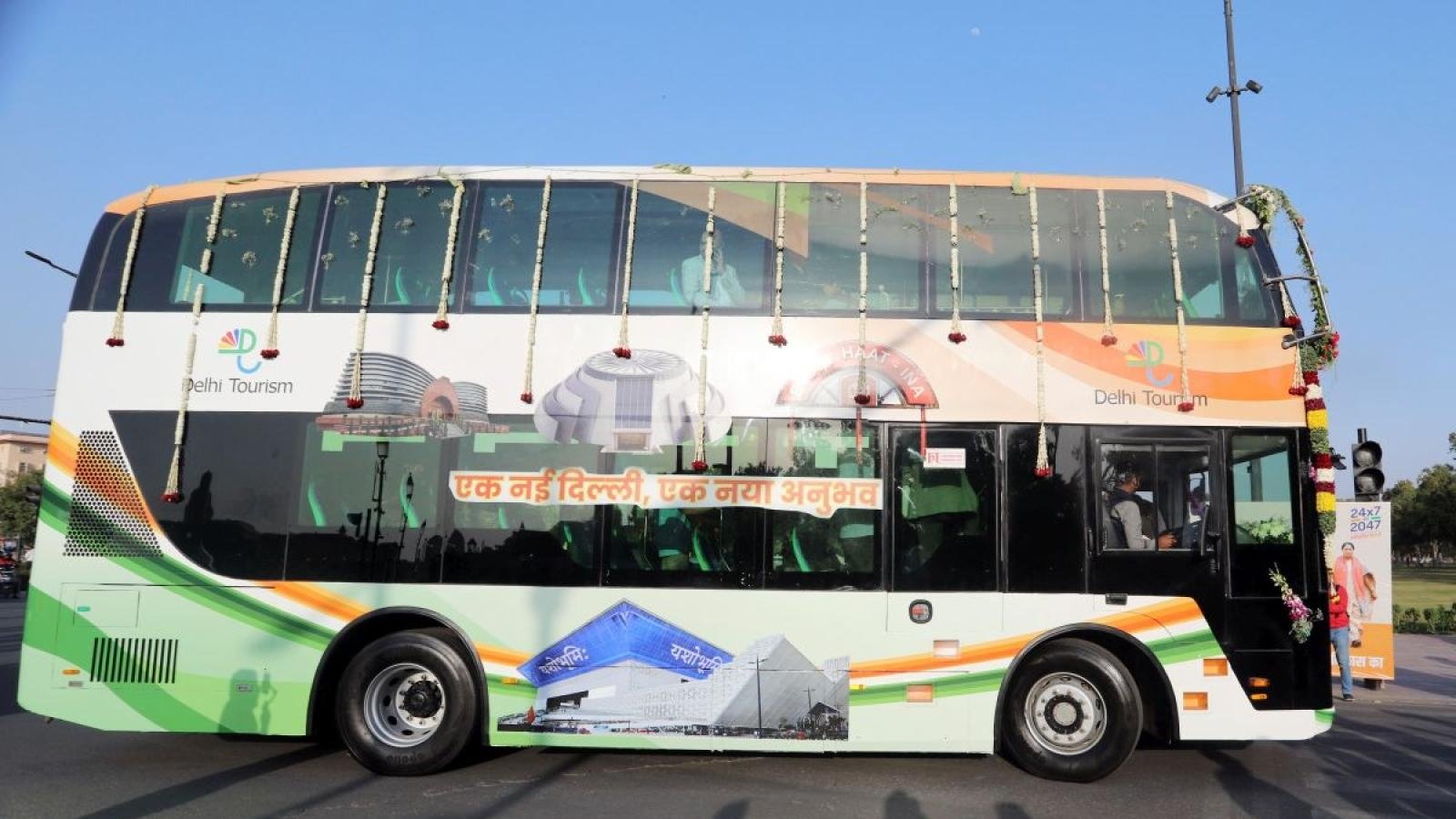
Delhi Electric Double Decker Bus Boosts Urban Tourism
A new tourism initiative built around an electric double decker bus is beginning to draw attention in the national capital, offering residents and visitors a different perspective of the city’s historic core. Since its introduction earlier this year, hundreds of passengers have travelled along a curated route through central Delhi, highlighting how urban mobility infrastructure can also support cultural tourism and public engagement with heritage spaces. Officials overseeing the programme indicate that roughly 800 passengers have taken the ride during its first month of operations. The electric double decker bus tour has seen stronger demand during weekends, suggesting it is gaining traction among leisure travellers and families seeking guided city experiences.
The service runs along a fixed circuit that passes several of Delhi’s major civic and cultural landmarks within the Lutyens’ Delhi zone. These include prominent public institutions, cultural centres and national memorials located along the wide avenues of the capital’s administrative district. Urban planners note that curated mobility experiences are increasingly being used by cities worldwide to combine tourism with sustainable transport solutions. The electric double decker bus concept aligns with this approach by using battery-powered vehicles designed to reduce emissions while providing panoramic views from an elevated passenger deck. The buses have been engineered to operate within the tree-lined boulevards and heritage precincts of central Delhi, where overhead wires and dense foliage can present operational challenges. Transport engineers say the design ensures safe clearance while maintaining passenger comfort and accessibility. Each journey includes an onboard guide who provides contextual information about the city’s historical and architectural landmarks. This approach reflects a growing trend in urban tourism where transport itself becomes part of the storytelling experience, linking mobility infrastructure with cultural interpretation.
Urban development experts say such initiatives can strengthen the relationship between citizens and public spaces. By making historic districts more accessible through organised tours, cities encourage residents to engage with civic landmarks that might otherwise remain part of everyday commuting routes. The electric double decker bus service also signals a return of a transport format once common on Delhi’s streets. Double-decker buses were part of the capital’s public transport network several decades ago before gradually disappearing due to ageing fleets and evolving road conditions. Tourism planners are now exploring additional routes and time slots, including evening circuits that would allow visitors to experience illuminated monuments and public spaces after sunset. Such extensions could broaden the service’s appeal and help distribute tourist activity more evenly across the day. Beyond leisure travel, urban mobility specialists see the initiative as a small but symbolic step in the evolution of city transport. Electric vehicles used for tourism, public transport or last-mile connectivity are increasingly central to India’s efforts to reduce urban emissions and transition toward cleaner mobility systems.
If passenger interest continues to grow, the electric double decker bus programme could expand into a broader network of heritage mobility routes, blending sustainable transport with the capital’s rich cultural landscape.