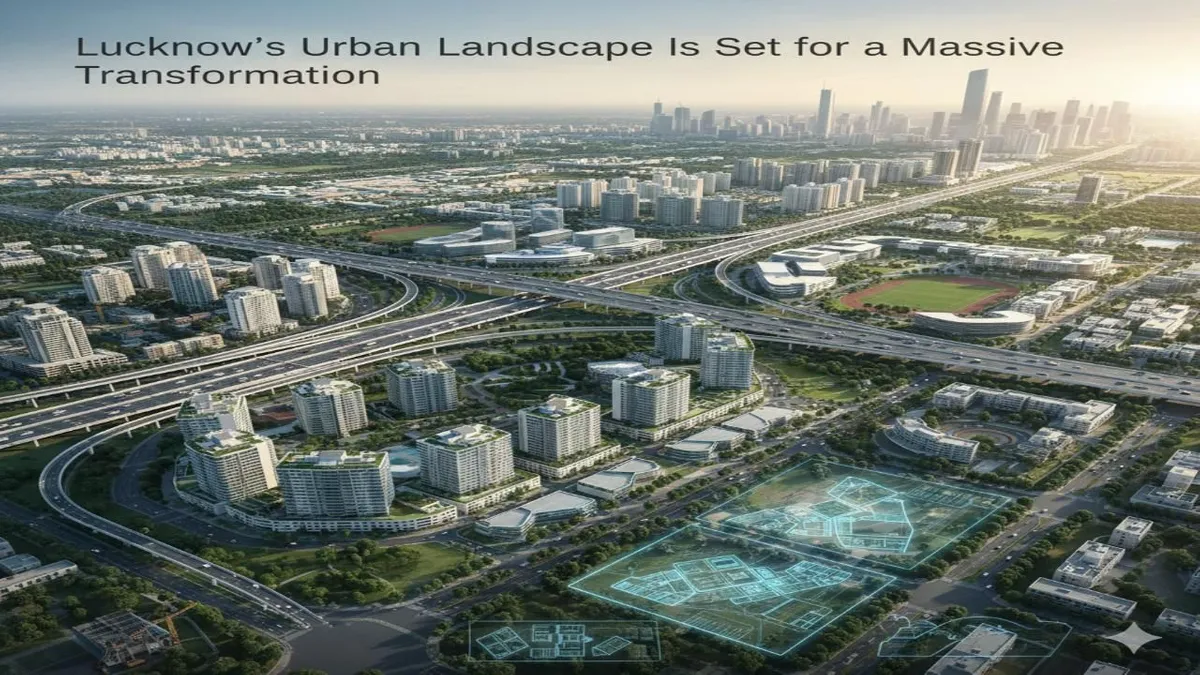
Lucknow’s real estate landscape is entering a new phase of premiumisation, with the Lucknow Development Authority preparing to roll out three high-end residential projects aimed at meeting rising demand for luxury housing in the city. The proposed developments are part of a broader strategy to diversify housing supply beyond affordable and mid-income segments, as the city witnesses increasing demand from higher-income buyers, professionals and investors.
Industry estimates suggest that Lucknow’s expanding urban footprint, improved connectivity and growing institutional base are driving interest in premium residential formats. These upcoming projects are expected to feature modern amenities, high-rise configurations and integrated residential environments—marking a shift in the city’s built environment from low-rise, plot-based housing to vertical, amenity-driven living. The move aligns with recent trends where urban authorities are repositioning themselves not only as providers of basic housing but also as facilitators of aspirational urban lifestyles. The push for premium housing comes alongside continued investments in affordable segments. The authority’s recent budget allocations indicate parallel spending on both high-end and mass housing, suggesting a dual-track development strategy aimed at balancing inclusivity with market demand.
The emerging Lucknow luxury housing segment is also closely tied to infrastructure upgrades across the city. Corridors such as Gomti Nagar Extension, Sultanpur Road and the IT City region are witnessing integrated development, combining residential, commercial and institutional uses. These areas are increasingly being positioned as growth nodes, supported by improved road networks, metro connectivity and proximity to employment hubs. Recent launches—including high-rise apartment complexes and premium gated developments—indicate a shift in buyer preferences towards secure, amenity-rich communities. Features such as clubhouses, green spaces, power backup and dedicated parking are becoming standard expectations in the upper segment of the market. This reflects a broader transformation in urban consumption patterns, where housing is viewed not just as shelter but as a lifestyle asset.
Urban planners suggest that the expansion of the Lucknow luxury housing market could have wider implications for city planning. Higher-density developments can optimise land use and reduce urban sprawl, provided they are supported by adequate infrastructure and public services. However, the concentration of premium projects in select corridors may also widen spatial inequalities if not balanced with equitable infrastructure distribution. The timing of these projects is significant. Lucknow is undergoing rapid urbanisation, with new townships, industrial clusters and institutional zones reshaping its economic geography. As incomes rise and migration patterns evolve, demand for differentiated housing typologies is expected to increase.
At the same time, experts caution that sustained demand in the luxury segment will depend on affordability thresholds, financing access and long-term economic stability. Oversupply in premium housing markets has been a concern in several Indian cities, making calibrated project planning essential. For Lucknow, the rollout of these projects represents more than a real estate expansion—it signals a transition towards a more layered urban housing market. The challenge ahead will be to ensure that this growth remains aligned with infrastructure capacity, environmental considerations and inclusive urban development goals.