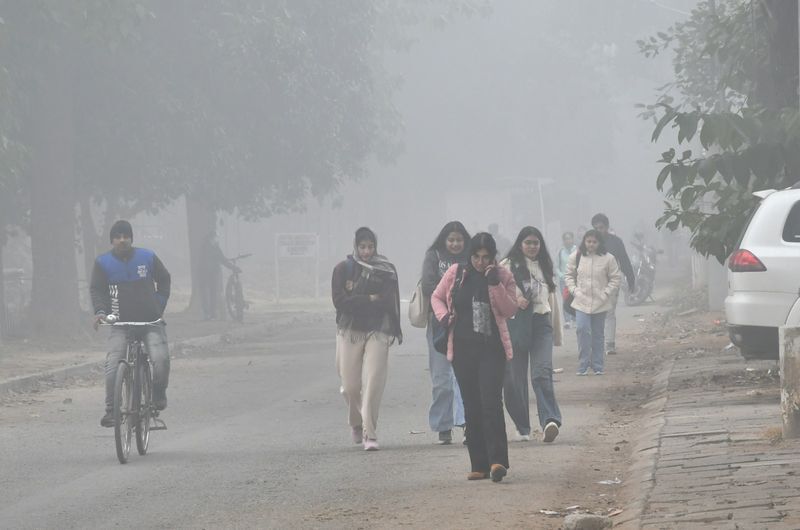
An unusual drop in daytime temperatures has disrupted Chandigarh’s typical summer transition, with the city recording one of its coldest April days in decades. The anomaly highlights growing climate variability in northern India, raising questions about how cities are adapting to increasingly unpredictable weather patterns.
Meteorological data shows that daytime temperatures fell sharply below seasonal norms, marking the second coldest April day recorded in the city in nearly six decades. Such deviations are significant, given that April in Chandigarh typically sees average daytime temperatures exceeding 34°C, reflecting a steady shift towards peak summer conditions. The sudden cooling has been attributed to active western disturbances and cloud cover, which reduce solar radiation and suppress daytime heating. Weather experts note that these systems, while not uncommon during the transition from winter to summer, are becoming more erratic in their intensity and timing. The latest Chandigarh April weather anomaly underscores a broader pattern of seasonal instability. In recent years, the region has experienced multiple temperature extremes—from unseasonal cold spells to prolonged heatwaves—often within short timeframes. These fluctuations complicate urban planning, particularly in sectors such as energy demand, water management and public health.
For city infrastructure, such abrupt weather shifts can create operational challenges. Lower-than-expected temperatures can alter electricity consumption patterns, while intermittent rainfall and cloud cover can affect construction schedules and outdoor economic activity. Urban systems designed around predictable seasonal cycles may struggle to respond efficiently to such variability. The impact is also felt at the household level. Residents often experience discomfort due to sudden temperature swings, which can increase vulnerability to seasonal illnesses. For informal workers and those dependent on outdoor livelihoods, unpredictable weather can disrupt daily income patterns. Urban planners and climate experts emphasise that cities like Chandigarh—designed with relatively stable climatic assumptions—must now integrate flexibility into infrastructure and policy frameworks. This includes adaptive building design, improved weather forecasting systems and responsive public services capable of adjusting to rapid environmental changes. The current Chandigarh April weather event also raises questions about long-term climate resilience. While a single cold day does not define a trend, the increasing frequency of such anomalies points to deeper shifts in regional climate systems. Experts link these patterns to broader climatic influences, including changing atmospheric circulation and global warming-driven disruptions.
Authorities have not issued major alerts, but meteorological agencies indicate that such fluctuations may continue through the transitional season. The immediate outlook suggests gradual warming, though intermittent disturbances could still influence short-term conditions. As Chandigarh navigates this evolving climate landscape, the challenge will be to align urban infrastructure with emerging weather realities. From energy systems to public health preparedness, the ability to anticipate and respond to such anomalies will play a crucial role in ensuring resilient and liveable urban environments.