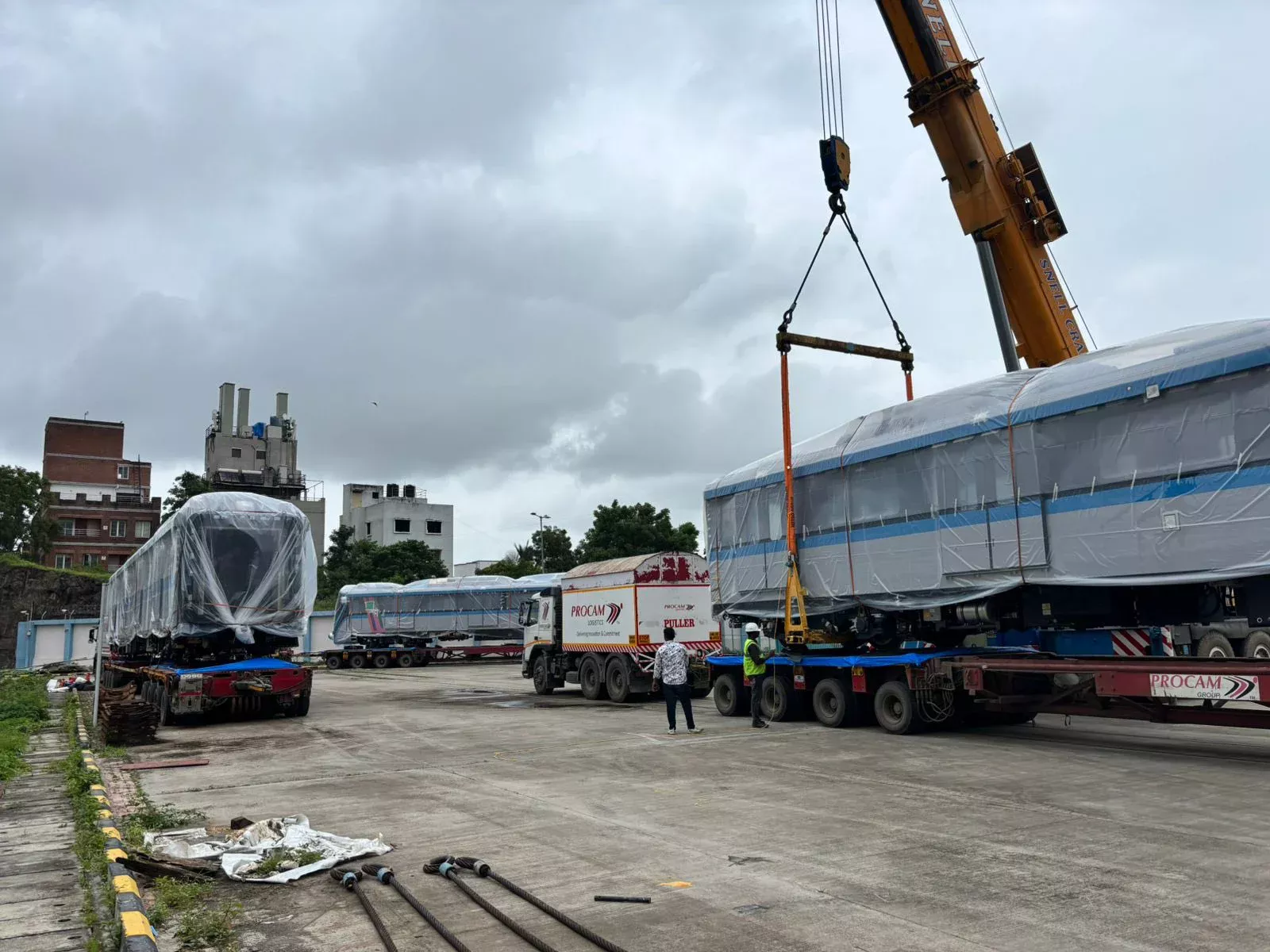
Construction activity at the Mithapur metro station in Patna is accelerating, signalling steady progress in the city’s expanding rapid transit network and reinforcing expectations of improved urban mobility in the coming years. The station, part of the city’s east–west metro corridor, is emerging as a critical node in the evolving transport system. Structural work has advanced significantly, with authorities pushing for faster execution timelines to align with broader project milestones.
The development reflects a transition from early-stage civil works to visible station infrastructure, indicating momentum in one of Bihar’s most ambitious urban transport projects. The Mithapur station is strategically located along a corridor designed to connect major residential, commercial and transit hubs. Once operational, it is expected to serve as an important interchange point, particularly for commuters travelling between dense inner-city areas and emerging peripheral zones. This integration is central to improving accessibility in a city where road congestion continues to constrain mobility. The broader metro project in Patna is being developed in phases, combining elevated and underground sections to navigate the city’s spatial constraints. A limited priority stretch is already operational, marking the city’s entry into rail-based mass transit, while several additional stations—including Mithapur—are under active construction.
The Patna metro station development at Mithapur highlights a shift in infrastructure planning—from road-centric expansion to multimodal transit systems. Urban planners note that such investments are essential in cities experiencing rapid population growth and increasing vehicle ownership, where conventional road widening offers diminishing returns. Beyond easing congestion, the metro network is expected to influence land-use patterns and real estate development. Areas around upcoming stations typically witness increased demand for housing and commercial spaces, driven by improved connectivity and reduced travel times. In this context, Mithapur’s emergence as a transit hub could reshape adjacent neighbourhoods, supporting higher-density, transit-oriented development.
However, experts caution that the long-term success of the Patna metro station development will depend on integration with last-mile connectivity systems such as buses, auto-rickshaws and pedestrian infrastructure. Without seamless access to and from stations, the full potential of metro systems often remains underutilised. There are also broader sustainability implications. Metro systems offer a lower-emission alternative to private vehicles, contributing to reduced air pollution and more efficient energy use. For a city like Patna, where vehicular emissions and traffic congestion are rising concerns, expanding public transport infrastructure is increasingly tied to climate resilience goals.
Officials have emphasised adherence to quality and safety standards while maintaining construction speed, aiming to minimise disruption in densely populated areas. The coming months will be critical as station finishing works, systems installation and integration phases begin. As construction progresses, Mithapur is poised to become a key link in Patna’s evolving transit ecosystem. The challenge ahead will be ensuring that infrastructure delivery is matched by operational readiness and urban integration—determining whether the metro can effectively transform mobility patterns in the city.