Bihar Village Roads Get Safety Infrastructure Push
Bihar is extending structured road safety interventions across its rural network, with a statewide rollout of traffic-calming and pedestrian protection measures aimed at reducing accidents near schools, markets and public facilities. The initiative marks a shift in how rural mobility is being planned—moving beyond connectivity to prioritise safety, particularly for vulnerable road users.
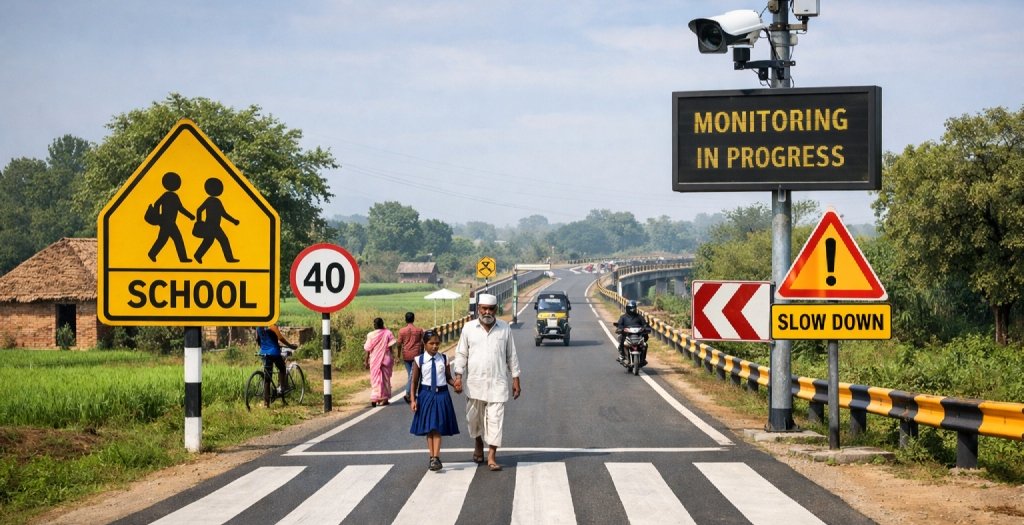
The programme introduces crash barriers, zebra crossings, speed breakers and traffic signage at identified high-risk locations across village roads. These include stretches near educational institutions, healthcare centres and local marketplaces—areas that typically experience heavy pedestrian movement but lack basic safety infrastructure. Officials estimate that tens of thousands of such sites have been mapped, with a significant share already covered in initial phases. This expansion reflects a broader recalibration in rural infrastructure planning. Historically, investments in village roads have focused on access—linking habitations to markets and services. However, rising accident rates, particularly involving pedestrians and two-wheeler users, have exposed gaps in safety design. Recent assessments indicate that a majority of road incidents in the state occur outside urban centres, often linked to overspeeding and the absence of traffic control measures. By embedding safety features into rural road design, the state is effectively aligning village infrastructure with urban traffic management principles. Nearly 50,000 zebra crossings are planned over the next two years, signalling a long-term commitment to pedestrian-friendly mobility systems.
Urban planners note that such interventions are critical in regions where road expansion has outpaced governance mechanisms. Rural roads, though narrower, often carry mixed traffic—ranging from tractors and buses to pedestrians and livestock—making them particularly prone to accidents. The absence of visual cues such as crossings and signage further increases risk, especially during night-time or fog conditions common in the region. The current strategy integrates both engineering and behavioural components. Physical measures such as speed breakers and crash barriers are expected to enforce speed discipline, while signage and markings improve visibility and predictability for drivers. Officials indicate that all newly constructed and ongoing rural road projects will now be required to incorporate standardised safety features as part of their design and execution. From a governance perspective, the initiative also reflects compliance with national and judicial directives on road safety, embedding accountability into infrastructure delivery. More importantly, it underscores a shift towards inclusive mobility—recognising pedestrians, schoolchildren and elderly residents as central stakeholders in transport planning rather than afterthoughts.
For a state undergoing rapid rural transformation, the implications extend beyond safety. Improved road design can enhance economic participation by making daily commutes safer, particularly for women and children, while also reducing long-term healthcare and social costs associated with road accidents. The effectiveness of this rural road safety push will ultimately depend on sustained maintenance, enforcement and community awareness. As Bihar scales up its infrastructure footprint, the integration of safety into every kilometre of road could define whether mobility gains translate into safer, more resilient settlements.