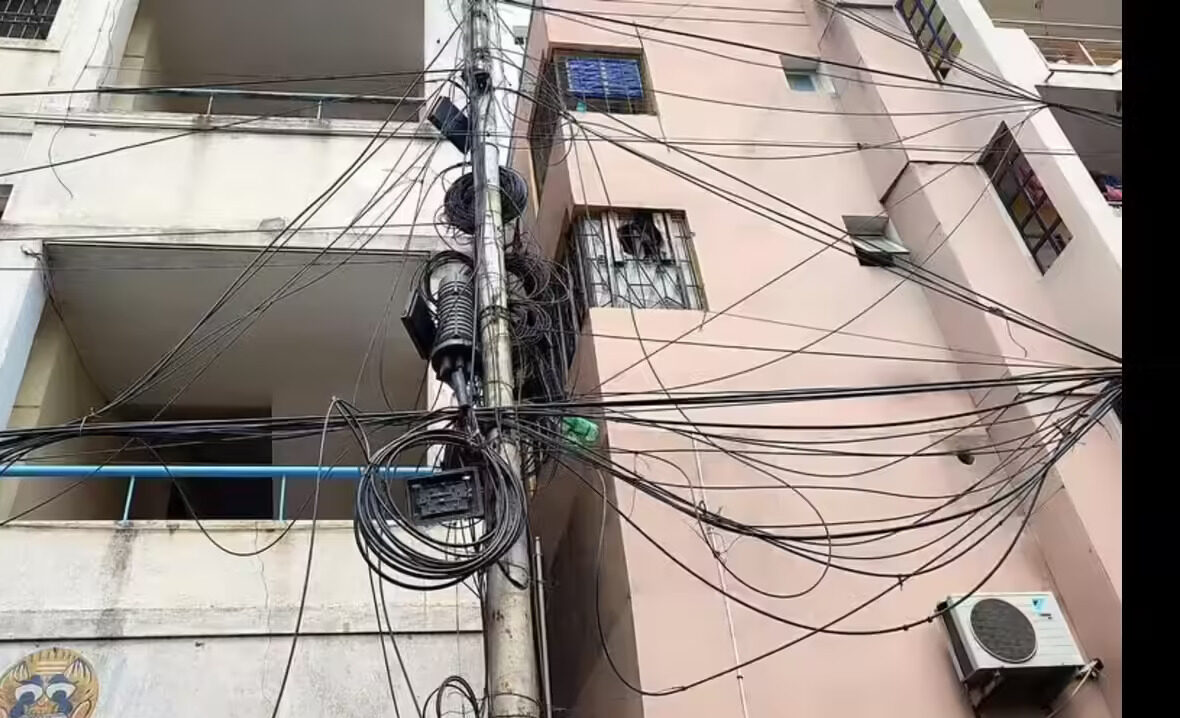
The civic administration in Pune has formalised an underground cable policy aimed at eliminating overhead wiring across major roads, marking a shift towards safer and more visually organised urban infrastructure. The move is expected to address long-standing concerns around public safety, service reliability, and the visual clutter that has accompanied rapid urban expansion.
Under the new underground cable policy, all future utility installations—including telecom and electricity lines—must be routed beneath the surface using advanced techniques such as micro-trenching and horizontal directional drilling. Permissions for overhead cabling will now be restricted to exceptional cases, signalling a near-total transition to underground networks in designated zones. Urban planners view the policy as a critical step in modernising city infrastructure, particularly in high-density corridors where exposed wiring has often led to accidents, service disruptions, and maintenance challenges. Low-hanging or damaged cables have historically posed risks to pedestrians and motorists, especially during monsoon conditions when waterlogging can exacerbate electrical hazards.
To ensure systematic implementation, the city will be mapped into compliance zones, enabling authorities to prioritise high-risk or high-visibility areas. Early enforcement efforts have already resulted in the removal of extensive stretches of unauthorised overhead wiring, highlighting the scale of the issue. Surveys indicate that thousands of kilometres of informal or unregulated cables currently exist within municipal limits, reflecting years of fragmented infrastructure development. Experts note that while undergrounding utilities improves safety and aesthetics, it also enhances network resilience. Subsurface systems are less vulnerable to weather-related damage, accidental breakage, and vandalism, making them better suited for climate-resilient urban planning. Additionally, coordinated underground corridors can reduce repeated road excavations, a common cause of congestion and surface degradation in Indian cities.
However, the transition is not without challenges. Implementation requires significant capital investment, coordination between multiple service providers, and robust monitoring to prevent unauthorised installations. Industry observers also point out that enforcement must extend beyond physical removal to include accountability mechanisms for operators and officials responsible for non-compliance. From a regulatory standpoint, unauthorised overhead cabling falls under provisions related to defacement of public property, exposing violators to penalties and legal action. Authorities have indicated that stricter enforcement will continue alongside the rollout of the underground cable policy, with a focus on deterring repeat violations.
The initiative also aligns with broader goals of creating cleaner, more liveable urban environments. By decluttering skylines and reducing infrastructure-related hazards, cities can improve both public safety and quality of life. For Pune, which continues to witness rapid real estate and population growth, such measures are increasingly seen as essential to sustainable urban management. As the policy moves into execution, its success will depend on sustained enforcement, inter-agency coordination, and public cooperation. If effectively implemented, it could serve as a model for other Indian cities grappling with similar infrastructure challenges, setting a precedent for integrated and future-ready utility networks.
Pune Enforces Underground Cable Policy Across City