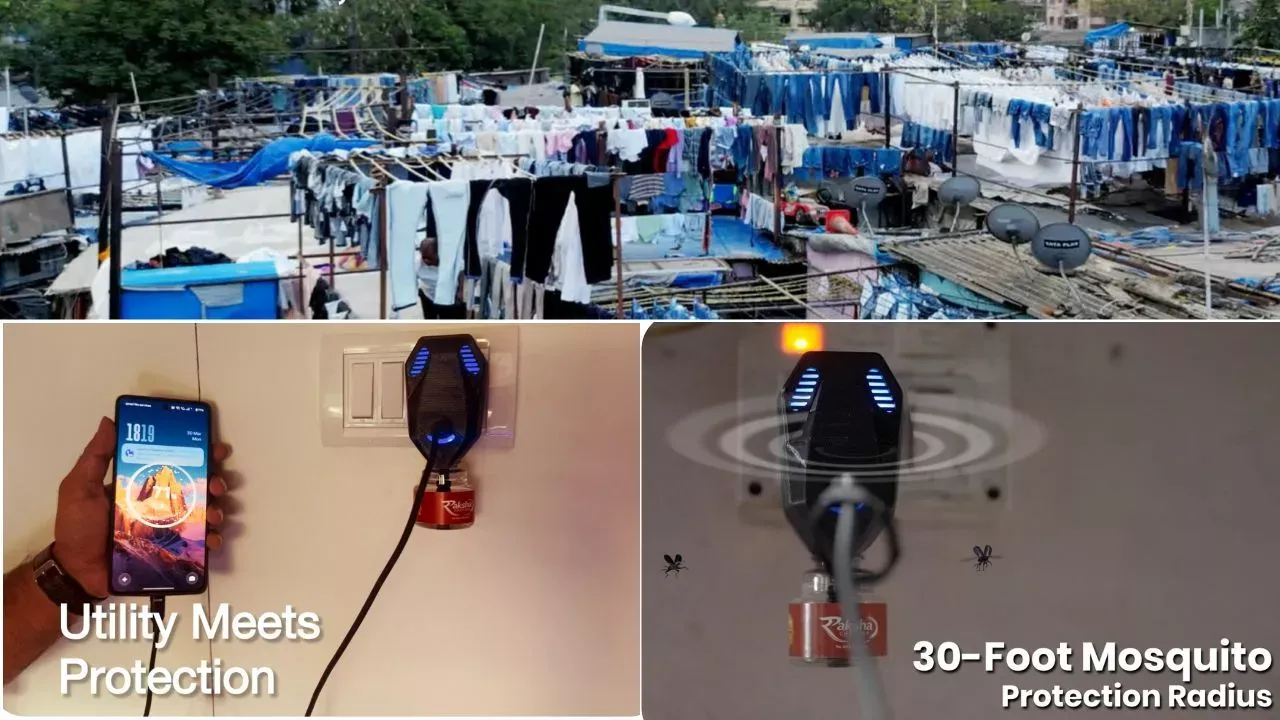
A new mosquito protection device has been introduced at Dhobi Ghat, marking an unconventional attempt to address persistent public health risks in one of the city’s most densely active labour clusters. The initiative targets the intersection of sanitation, worker safety, and environmental conditions in a space where water stagnation and humidity create a year-round breeding ground for disease-carrying mosquitoes.
Dhobi Ghat, often described as one of the world’s largest open-air laundries, supports the livelihoods of thousands of workers who operate in close proximity to open water channels and damp surfaces. These conditions, while integral to the nature of the work, also heighten exposure to vector-borne diseases such as dengue and malaria. Public health experts have long flagged such micro-environments as high-risk zones within otherwise well-serviced urban regions. The newly deployed mosquito protection device integrates a mobile charging function with a built-in repellent mechanism, offering a dual-purpose solution tailored to everyday usage patterns. By embedding protection within a commonly used utility, the intervention aims to ensure consistent usage without requiring behavioural change—an approach that urban planners say is critical in informal or labour-intensive settings.
Distributed across worker households and operational zones, the device operates passively while in use, providing continuous protection during charging cycles. This model reflects a broader shift in urban health strategies, where design-led interventions are increasingly being explored to complement traditional public health measures such as fogging and chemical treatment. Experts note that cities like Mumbai face recurring challenges in managing mosquito populations due to high population density, inadequate drainage in older precincts, and seasonal flooding. In such contexts, decentralised and user-friendly solutions can help bridge gaps in municipal capacity, particularly in informal economies that operate beyond standard regulatory frameworks.
However, urban policy specialists caution that such innovations should not substitute systemic infrastructure upgrades. Long-term mitigation of mosquito-borne diseases depends on improved drainage networks, regular waste clearance, and better water management systems. In areas like Dhobi Ghat, where water use is intrinsic to economic activity, balancing occupational needs with environmental health remains a complex challenge. From a sustainability standpoint, embedding health-focused technologies into everyday infrastructure aligns with the broader goal of building climate-resilient cities. As rising temperatures and erratic rainfall patterns intensify mosquito activity, adaptive solutions that are low-energy, accessible, and scalable are likely to gain relevance.
The deployment of the mosquito protection device at Dhobi Ghat highlights how targeted, context-specific interventions can enhance urban resilience at the micro level. Going forward, the effectiveness of such initiatives will depend on their ability to integrate with larger civic systems, ensuring that innovation complements, rather than replaces, foundational urban infrastructure improvements.
Mumbai Dhobi Ghat Adopts Mosquito Protection Innovation