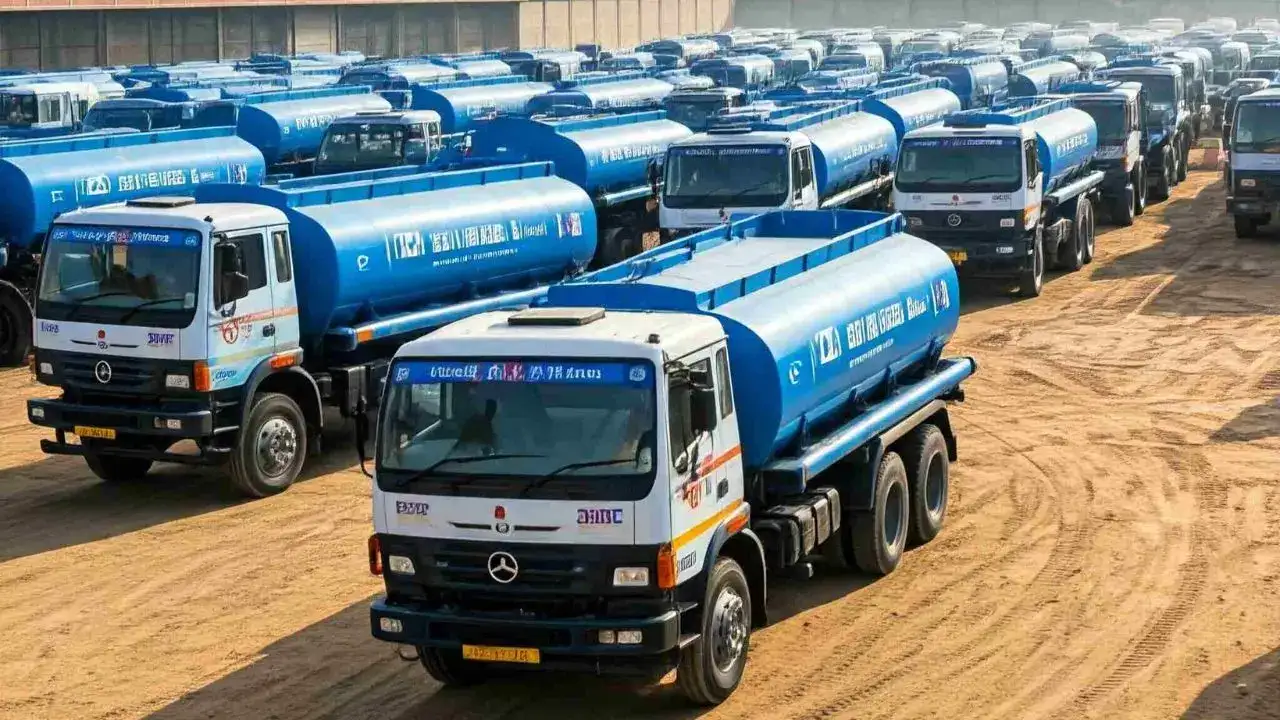
Delhi GPS Tracking Mandated For Treated Water Tankers
Regulators have expanded oversight of water distribution logistics in the national capital after directing that all vehicles transporting treated wastewater must comply with the city’s Delhi water tanker GPS rule, a measure designed to strengthen monitoring of urban water supply chains and prevent misuse of groundwater resources. The clarification was issued by the country’s environmental adjudication authority, which stated that the requirement for GPS-enabled tankers applies not only to commercial water suppliers but also to vehicles transporting treated water from sewage treatment facilities. The directive aims to ensure greater transparency in the movement and distribution of recycled water within the capital.
The tribunal noted that the Delhi water tanker GPS rule was originally introduced in 2025 to curb the unauthorised extraction and commercial sale of groundwater. Illegal borewell operations and unregulated tanker supply had become a persistent concern in several parts of the city, contributing to groundwater depletion and undermining formal water distribution systems. Officials overseeing the matter indicated that exempting tankers carrying treated wastewater could create regulatory gaps that may be exploited to bypass monitoring mechanisms. As a result, the tribunal clarified that all tankers involved in commercial water transport must operate within the same digital tracking framework. Beyond the GPS requirement, the order also pointed to administrative weaknesses in the monitoring systems of the city’s water utility. The tribunal observed that key documentation processes were not consistently maintained, including the absence of detailed operational records and insufficient verification of tanker drivers.
To address these gaps, the utility has been instructed to introduce stricter documentation procedures. Each tanker transporting treated water must now be issued both entry and transit authorisations before leaving treatment facilities. Drivers will also be required to carry these records during transportation so that enforcement authorities can verify shipments during inspections. Urban water management specialists say such documentation systems are essential in large metropolitan regions where tanker-based supply plays a significant role in bridging infrastructure gaps. Even treated wastewater, which is increasingly used for construction, landscaping and non-potable urban purposes, requires reliable tracking to ensure it reaches authorised destinations. The tribunal further directed the water utility to maintain a chronological database of tanker operations, including ownership details, driver information, vehicle identification numbers and the volume of water transported. Experts say this type of record keeping could help urban agencies analyse water distribution patterns and identify irregularities more effectively. Environmental planners have also emphasised the broader importance of regulating tanker-based water supply in rapidly expanding cities. Unchecked extraction of groundwater can accelerate aquifer depletion, while unmonitored distribution systems complicate efforts to build resilient urban water cycles.
Non-compliance with the directive could invite penalties under multiple environmental and criminal statutes, reinforcing the seriousness of the order. Observers say the move signals a broader shift toward digital oversight and stronger governance of water logistics in the capital, as authorities attempt to align resource management with long-term sustainability goals.