


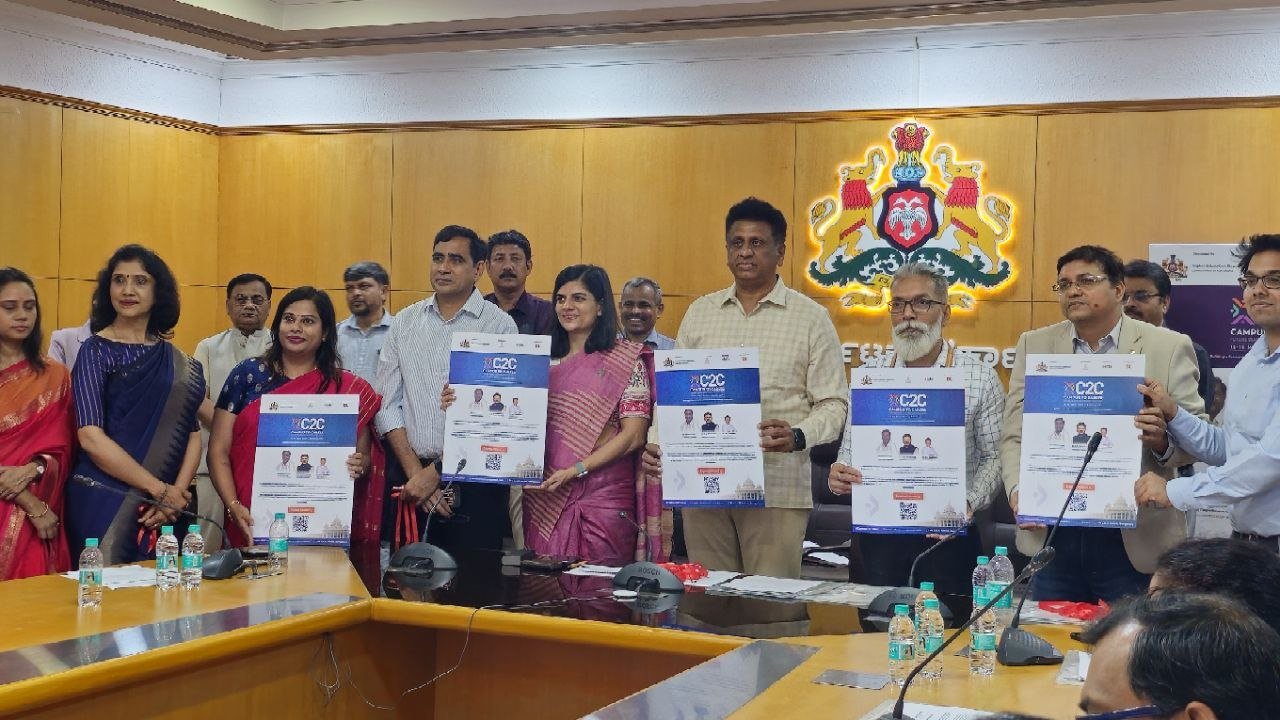
Bengaluru is set to host a two-day summit aimed at bridging the gap between academic learning and industry expectations, as institutions and employers increasingly focus on improving job readiness among graduates.
The initiative reflects a growing emphasis on aligning education systems with evolving workforce demands.The event, supported by stakeholders including All India Council for Technical Education, is central to the Bengaluru campus to career summit, which will bring together students, educators, and industry representatives. The platform is designed to facilitate dialogue on employability, skill development, and career pathways.Experts note that the Bengaluru campus to career summit addresses a critical challenge in India’s education landscape: the gap between theoretical knowledge and practical skills. While universities produce a large number of graduates each year, employers often report a shortage of industry-ready talent.The summit is expected to focus on areas such as digital skills, communication, problem-solving, and emerging technologies. These competencies are increasingly essential in a knowledge-driven economy, particularly in a city like Bengaluru, which serves as a hub for technology and innovation.From an economic perspective, improving employability has direct implications for productivity and growth. A skilled workforce can attract investment, support business expansion, and enhance competitiveness. For Bengaluru, strengthening the talent pipeline is key to maintaining its position as a leading economic centre.There is also a social dimension. Enhancing job readiness can improve employment outcomes for young people, reducing underemployment and supporting upward mobility. This is particularly important in a rapidly urbanising environment where access to opportunities can shape long-term livelihoods.
Urban planners highlight the importance of integrating education and employment strategies into broader city development plans. As cities expand, aligning skill development with industry needs can help create balanced and inclusive growth.The summit is also expected to encourage collaboration between academia and industry.Partnerships can lead to curriculum updates, internship opportunities, and hands-on training programmes that better prepare students for real-world challenges.Technology is likely to play a central role in discussions.With the rise of artificial intelligence, data analytics, and digital platforms, the nature of work is changing rapidly. Preparing students for these shifts requires continuous adaptation in both teaching methods and skill development frameworks.However, experts caution that one-off events must be complemented by sustained efforts. Long-term impact will depend on ongoing engagement, policy support, and institutional reforms that embed employability into the education system.There is also a need for inclusivity. Ensuring that students from diverse backgrounds have access to skill development opportunities is essential for equitable growth. Targeted initiatives and support systems can help bridge disparities.As Bengaluru prepares to host the summit, the focus will be on translating discussions into actionable outcomes. The Bengaluru campus to career summit represents a step towards addressing structural challenges in education and employment.
Looking ahead, fostering stronger connections between campuses and workplaces will be crucial in building a future-ready workforce. For Bengaluru, such initiatives not only support economic growth but also contribute to creating a more inclusive and opportunity-driven urban ecosystem.
Also Read:Bengaluru STRR Project Progress Nears Tamil Nadu Link
