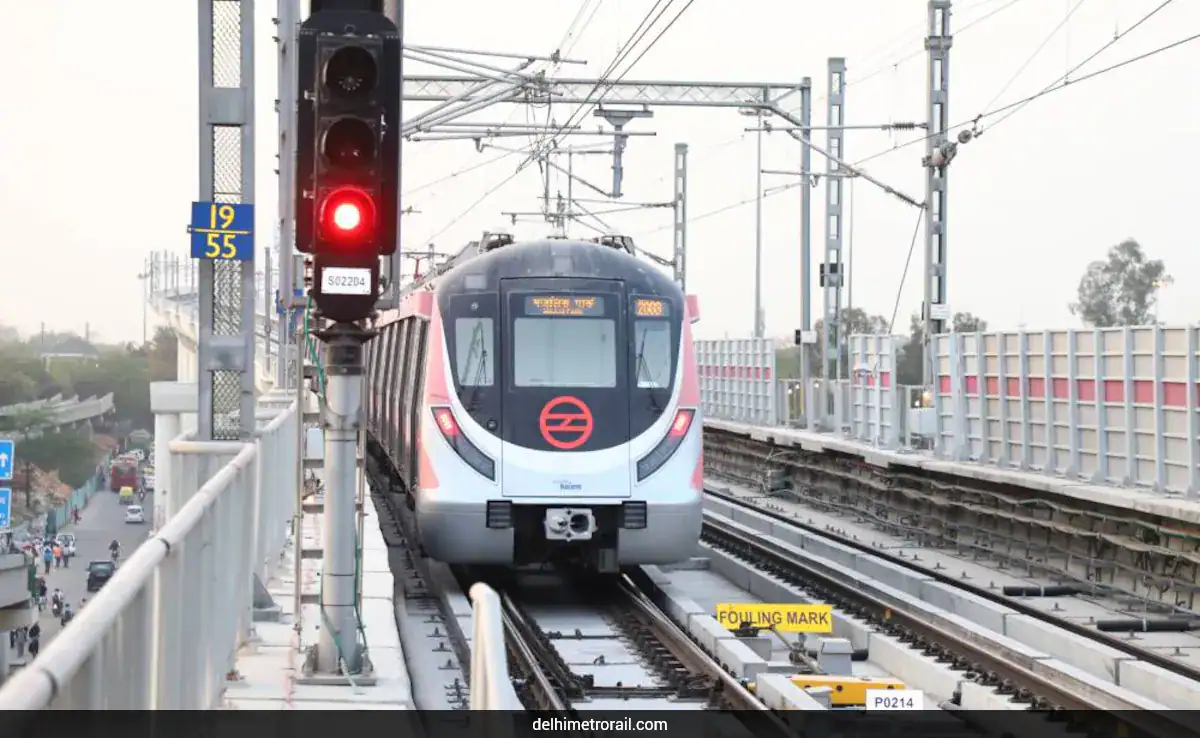
Delhi Metro Expansion Strengthens Capital Ring Network
Delhi’s urban rail system has entered another phase of expansion with the opening of new metro sections and the launch of additional construction works aimed at strengthening the capital’s circular connectivity. The latest Delhi Metro expansion adds more than 22 kilometres of operational track while initiating further extensions that will widen the network’s reach across key transport corridors. Two newly operational segments have significantly improved connectivity on the network’s semi-circular routes. One of the extensions forms part of the Magenta Line alignment, linking northern neighbourhoods with western districts through a cluster of newly constructed stations. Transport planners say the route helps integrate residential areas previously outside the metro grid into the broader transit network.
Another major section completes the loop of the Pink Line, one of the capital’s orbital metro routes designed to reduce travel through the city centre. The newly opened stretch connects several stations across northern and eastern Delhi, enabling passengers to move between different parts of the city without transferring through already congested central interchange stations. Infrastructure features along this section include a bridge crossing the Yamuna river corridor and a double-deck elevated structure carrying both metro tracks and a road flyover. Engineers say such multi-level infrastructure solutions are becoming increasingly common in dense cities where space for transport expansion is limited. The progress forms part of a broader Delhi Metro expansion strategy under successive phases of network growth. Officials have also initiated construction work on additional extensions that will further strengthen connectivity to major transport hubs and employment districts. One upcoming section will extend the Magenta Line eastward from a central Delhi station toward the Indraprastha area, improving links between central government zones and emerging residential neighbourhoods.
Meanwhile, two short extensions have been launched on another corridor that will improve access to the city’s international airport terminals while also connecting southern districts more effectively to the rapid transit grid. Urban mobility experts note that airport connectivity is increasingly a key feature of metro planning in global cities. Direct rail links can reduce road congestion around major airports while offering travellers faster and more reliable transit options. The expansion programme is also supported by new rolling stock and advanced signalling systems designed to increase network capacity and operational efficiency. Modern communication-based train control technology is expected to allow closer train headways, improving passenger throughput during peak hours. Transport economists suggest that continued Delhi Metro expansion plays a critical role in shaping sustainable urban mobility across the National Capital Region. By strengthening orbital routes and expanding corridor connectivity, planners aim to encourage greater use of public transport while reducing dependence on private vehicles.
As construction progresses on upcoming sections, the capital’s metro network is gradually evolving into a more integrated transit system. For a metropolitan region facing rising congestion and environmental pressures, the growing rail network is expected to remain central to Delhi’s long-term mobility and climate resilience strategy.