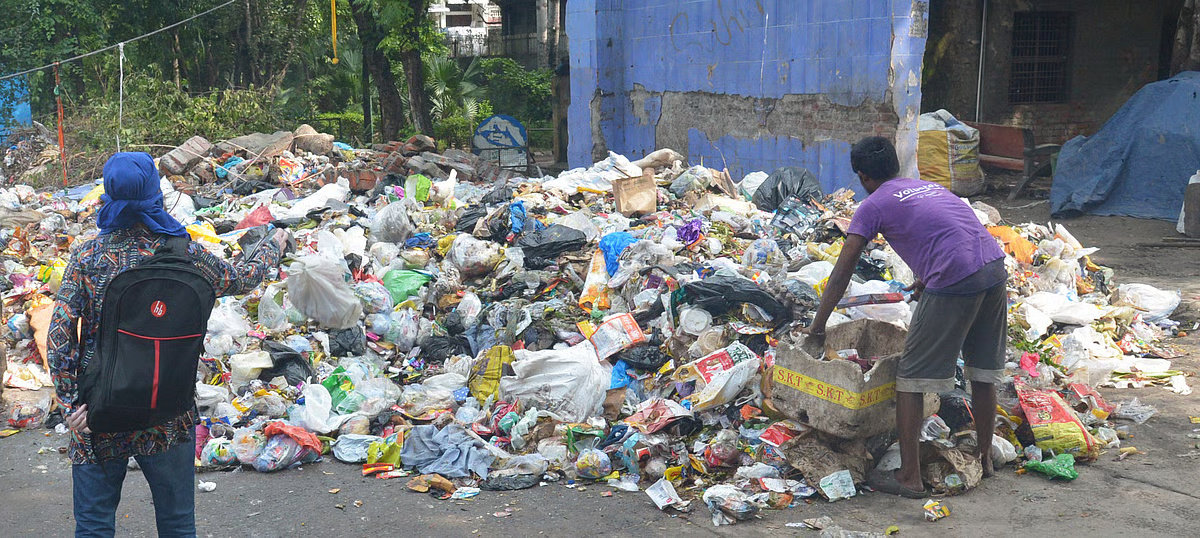
Delhi Expands Waste Management Infrastructure Across City
Delhi’s administration has initiated a broad overhaul of urban sanitation systems, directing municipal authorities to accelerate improvements in waste management infrastructure as the capital grapples with mounting waste volumes and environmental pressures. The effort includes new waste processing facilities, upgraded sanitation amenities, and tighter enforcement against public littering. Officials overseeing city administration have asked the municipal corporation to strengthen sanitation operations and expand waste processing capacity across several districts. The initiative is expected to focus on modernising ageing landfill-linked facilities while developing alternative systems capable of reducing the capital’s dependence on open dumping grounds.
Among the proposed measures is the development of advanced waste-to-energy facilities at key waste disposal locations in eastern and southern Delhi. These plants are intended to process municipal solid waste into electricity while shrinking landfill volumes. Urban infrastructure specialists note that such facilities, if effectively managed, can play an important role in cities struggling with limited land availability for waste disposal. In addition to large-scale processing plants, authorities are also planning to deploy decentralised bio-energy units in select areas of the city. These facilities convert organic waste—such as food scraps and agricultural residue—into biogas that can be used as a renewable fuel source. Experts say such systems can significantly reduce the burden on centralised landfills while helping neighbourhoods manage biodegradable waste more efficiently. Sanitation infrastructure at the neighbourhood level is also under review. Municipal authorities have been instructed to upgrade more than a thousand public sanitation blocks across the capital. Urban planners suggest that improved sanitation facilities are critical not only for hygiene but also for gender-inclusive access to public spaces, particularly in densely populated areas and informal settlements.
Officials are also examining stricter enforcement measures to discourage littering and illegal dumping. Administrative departments have been advised to implement stronger accountability frameworks, including penalties for waste disposal violations. At the same time, urban development agencies are expected to work more closely with the municipal corporation to improve waste management practices in high-footfall commercial markets. Industry observers say that coordinated action between city planning agencies and municipal bodies will be crucial if the capital is to modernise its waste management infrastructure. Fragmented governance has historically slowed sanitation reforms in large Indian cities, where multiple authorities share responsibility for land use, waste collection and urban services. Alongside sanitation reforms, the city government has also emphasised the need for better road construction and maintenance practices, particularly in rapidly growing neighbourhoods where infrastructure demand continues to rise. Urban policy analysts believe that strengthening waste management infrastructure could have wider implications for Delhi’s climate resilience and urban liveability.
Efficient waste processing reduces methane emissions from landfills, improves air quality, and contributes to cleaner neighbourhoods—key priorities for a city frequently battling pollution challenges. As these projects move from planning to implementation, the effectiveness of inter-agency coordination and transparent monitoring will likely determine whether Delhi can transition toward a more sustainable and resilient urban waste system.