


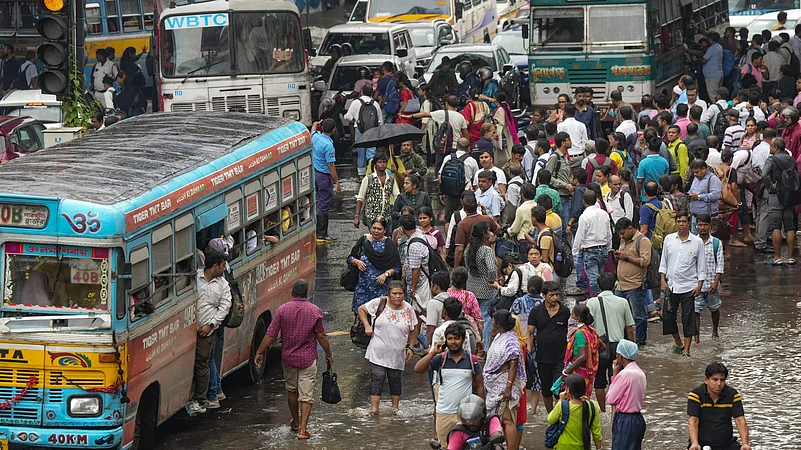
Kolkata’s public transport system is witnessing a sharp shift in commuter patterns as disruptions in LPG supply impact the city’s auto-rickshaw network, pushing more passengers towards buses and straining capacity on key routes.
The emerging trend, now central to the Kolkata bus overcrowding crisis, reflects how fuel-linked disruptions in one segment of urban mobility can quickly cascade across the broader transport ecosystem. With many auto-rickshaws operating on LPG, supply constraints have reduced fleet availability, limiting last-mile connectivity in several areas.In response, commuters are increasingly relying on bus services operated by agencies such as the West Bengal Transport Corporation. While buses have stepped in to fill the gap, the sudden surge in demand has led to overcrowding, particularly during peak hours on high-density corridors.Transport experts note that the Kolkata bus overcrowding crisis highlights structural imbalances in urban mobility systems. When a significant portion of last-mile transport becomes unavailable, primary transit modes are forced to absorb excess demand, often without adequate capacity or flexibility.For daily commuters, the impact is immediate.Overcrowded buses can lead to longer wait times, reduced comfort, and safety concerns, especially for women, elderly passengers, and children. The situation also raises questions about the resilience of transport systems in handling sudden shocks.From an economic perspective, disruptions in mobility affect productivity and workforce efficiency.
Workers dependent on reliable transit may face delays, while businesses experience indirect impacts due to inconsistent employee attendance and logistical challenges.There is also an environmental dimension. While buses are generally more efficient in terms of emissions per passenger, overcrowding and operational stress can reduce service efficiency. At the same time, reduced availability of shared autos may push some commuters towards private vehicles, potentially increasing congestion and emissions.Urban planners emphasise the need for integrated transport planning that accounts for interdependencies between different modes. Strengthening multimodal connectivity, ensuring fuel supply stability, and maintaining buffer capacity within public transport systems are critical to managing such disruptions.Experts also suggest that diversifying fuel sources and promoting electric mobility could reduce vulnerability to supply shocks.Transitioning to cleaner and more reliable energy options would not only enhance system resilience but also support long-term sustainability goals.Officials are expected to monitor the situation and consider measures such as increasing bus frequency, deploying additional vehicles, or coordinating with alternative transport providers to ease pressure on the system.
As Kolkata navigates the current disruption, the episode underscores a broader lesson for urban mobility planning: resilience must be built into systems to absorb shocks without compromising commuter experience. Ensuring reliable, flexible, and inclusive transport networks will be essential as cities face increasingly complex operational challenges.
Also Read:Bengaluru Hesaraghatta Biodiversity Highlighted By Rare Bird Sighting
