


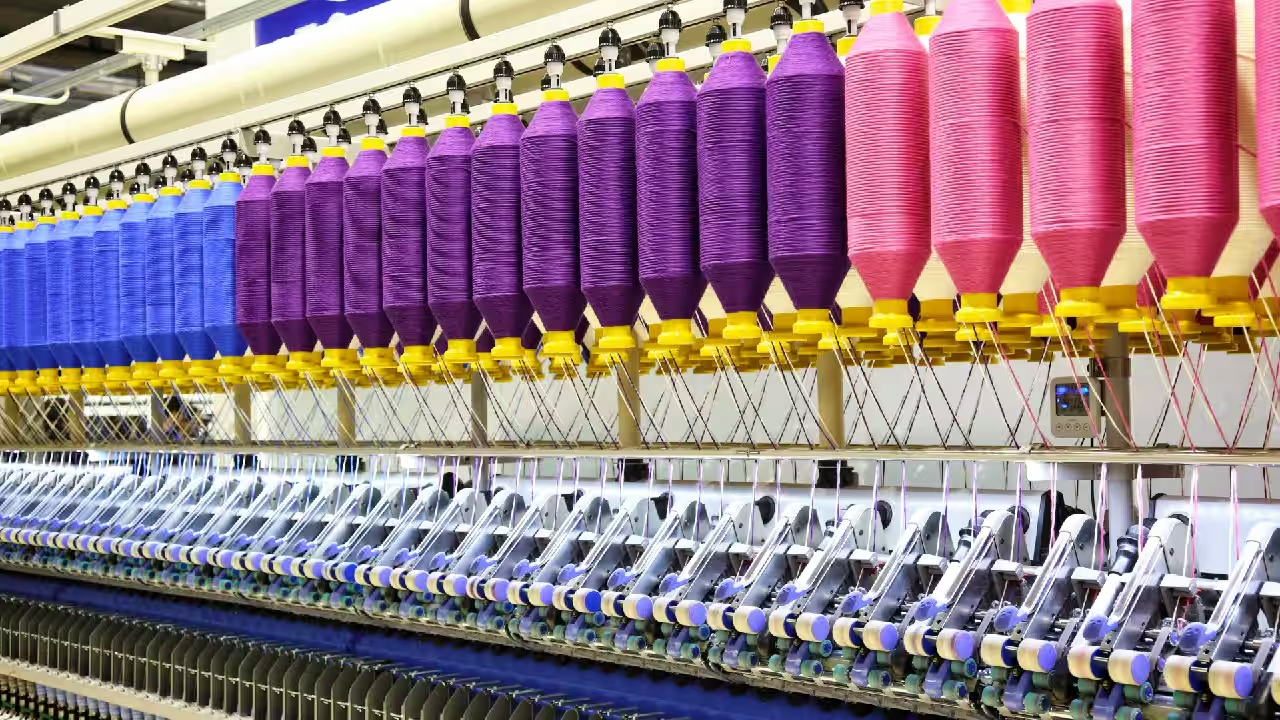
Surat’s vast textile manufacturing ecosystem is confronting a dual disruption as rising raw material costs and the departure of migrant workers force several weaving units to scale down production. Industry stakeholders say the slowdown in the Surat textile industry has already reduced output across parts of the city’s fabric manufacturing clusters. Surat is widely regarded as the backbone of India’s synthetic fabric production, hosting thousands of power loom units and textile processing facilities. However, traders and manufacturers report that unstable yarn prices and reduced workforce availability are making it difficult for many units to sustain normal operations.
Industry representatives indicate that fabric production in several clusters has fallen significantly as weaving units struggle to maintain continuous manufacturing cycles. The Surat textile industry relies heavily on skilled migrant workers who operate weaving machines and carry out finishing processes. When labour availability drops, production schedules can quickly collapse. Manufacturers say rising raw material costs have compounded the situation. Synthetic yarn, the primary input for Surat’s textile sector, has witnessed price volatility that makes it difficult for small and medium-sized units to manage operating expenses. Many producers operate on thin margins and depend on stable input prices to remain competitive. Urban economic analysts note that the Surat textile industry functions as a highly interconnected production network. Yarn suppliers, weaving units, dyeing houses, traders, and garment manufacturers all form part of a supply chain that supports domestic apparel markets and export demand. When disruptions occur at either the labour or raw material stage, the entire ecosystem can experience cascading impacts. Reduced production in weaving units affects dyeing facilities, transport operators, and textile traders who rely on steady supply flows. The labour challenge reflects a broader pattern across industrial clusters where migrant workers often move between cities based on employment conditions and cost pressures. Rising living expenses, uncertain work schedules, and production slowdowns can encourage workers to return to their home regions or seek employment in other sectors. For Surat, the slowdown in the Surat textile industry carries wider economic implications. The textile sector is one of the city’s largest employment generators and plays a central role in its urban economy. Industry associations have expressed concern that prolonged disruptions could weaken Surat’s competitiveness within the global synthetic fabric market. Competing manufacturing hubs in other regions may benefit if production instability persists. Urban development specialists emphasise that maintaining stable industrial ecosystems requires not only infrastructure but also workforce stability and predictable supply chains. Industrial clusters thrive when manufacturers can rely on consistent labour availability, affordable utilities, and steady input markets.
Some industry participants are calling for policy measures aimed at stabilising raw material prices and supporting the operational continuity of small manufacturing units. Improved supply chain coordination and workforce retention strategies may also help restore production levels. Despite the current challenges, stakeholders remain cautiously optimistic about the resilience of the Surat textile industry, which has historically adapted to shifting market conditions. However, manufacturers say restoring stability in labour availability and raw material supply will be essential to ensuring that the city’s textile sector continues to operate at full capacity.
ALSO READ – Indore Water Deficient Status Triggers Groundwater Ban
Surat Textile Industry Faces Labour And Raw Material Strain
