


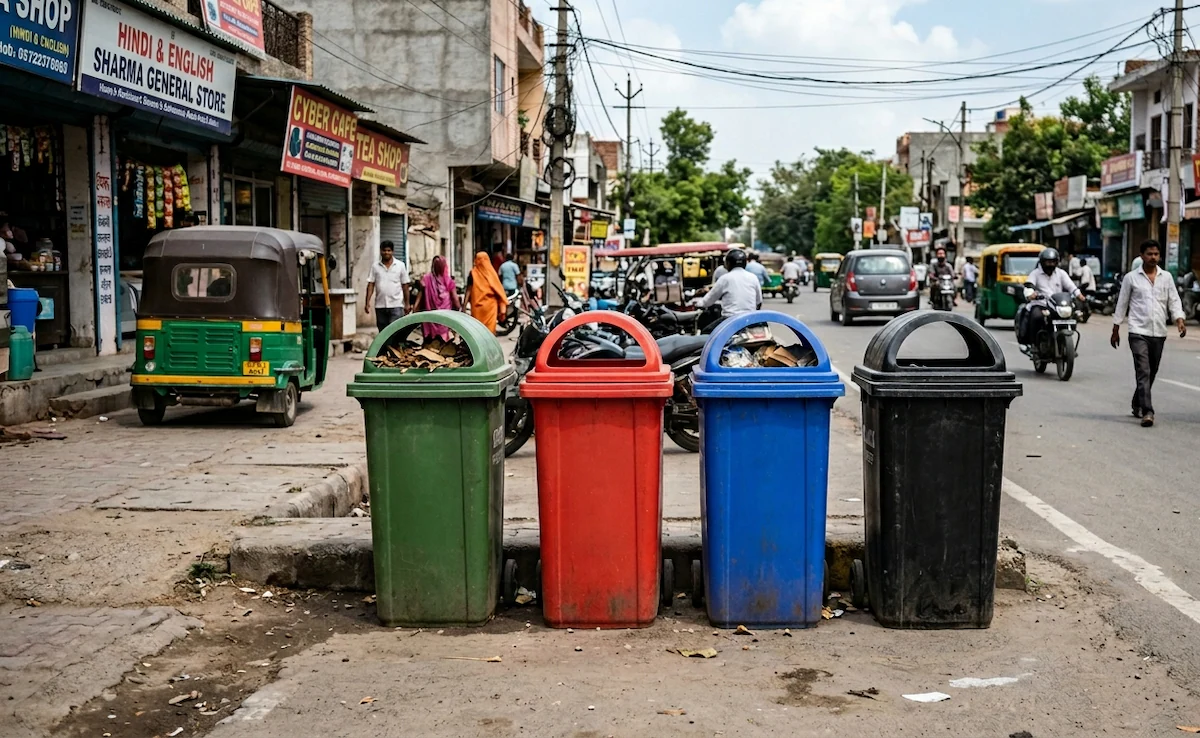
Indore’s approach to managing municipal waste is increasingly being recognised as a practical example of how circular systems can transform urban sanitation while supporting economic activity. The Indore waste management model has gained attention for integrating waste segregation, recycling, and resource recovery into a citywide system that prioritises efficiency and environmental responsibility. Municipal authorities have developed a multi-layered waste management framework that begins with segregation at the household level and continues through organised collection, sorting, and processing. By ensuring that waste streams are separated early, the city has been able to divert a large portion of municipal waste away from landfills and channel it into recycling and composting processes.
Urban sustainability experts say the Indore waste management model demonstrates how cities can treat waste not merely as a disposal challenge but as a resource that supports a circular urban economy. Organic waste collected from households and markets is processed into compost, while recyclable materials are channelled into industrial supply chains. The system also relies on extensive community participation, with residents encouraged to separate waste into different categories before collection. Municipal workers, sanitation teams, and private recycling operators form part of an integrated ecosystem designed to ensure that waste materials are processed efficiently. A key component of the Indore waste management model is its emphasis on decentralised waste processing. Instead of relying solely on large landfill sites, the city has developed multiple treatment facilities that manage different categories of waste. This reduces transportation requirements and lowers the environmental impact associated with long-distance waste hauling. Urban planners note that such decentralised systems also create economic opportunities within local communities. Recycling operations, composting units, and waste sorting centres generate employment while supporting small-scale businesses involved in material recovery. Indore’s waste management strategy has also prioritised technological innovation and data-driven monitoring. Digital tracking systems help municipal authorities monitor collection routes, measure waste volumes, and ensure operational accountability across sanitation services. Environmental analysts highlight that the Indore waste management model aligns closely with global efforts to reduce landfill dependence and promote circular resource systems. Cities worldwide are exploring similar approaches to reduce greenhouse gas emissions from waste while recovering valuable materials from discarded products. The city’s experience also illustrates how governance, citizen participation, and infrastructure investment must work together to create effective waste management systems. Without consistent public engagement and administrative oversight, even well-designed infrastructure can struggle to deliver results. As Indian cities confront rising waste volumes driven by urbanisation and consumption patterns, Indore’s experience is increasingly being studied by policymakers and urban planners seeking scalable solutions.
Experts say the Indore waste management model demonstrates that sustainable urban sanitation requires both behavioural change and institutional coordination. When implemented effectively, circular waste systems can improve environmental health, reduce landfill pressure, and strengthen the resilience of urban ecosystems. For growing cities, the lessons from Indore suggest that waste management strategies rooted in circular economy principles can contribute not only to cleaner streets but also to healthier, more sustainable urban environments.
ALSO READ – Indore Manmad Rail Project Gains Planning Momentum
Indore Waste Management Model Strengthens Circular Urban Systems
