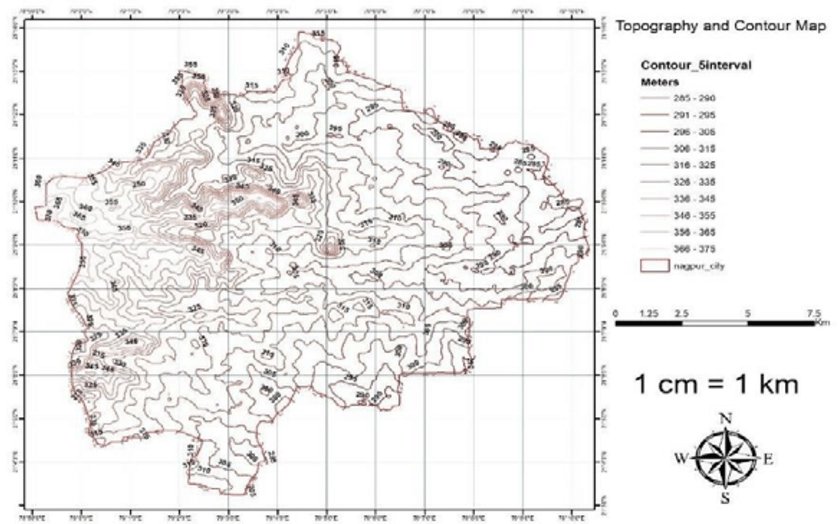
Nagpur GIS Mapping Plan Targets Civic Infrastructure Gaps
A citywide Nagpur GIS mapping initiative is set to digitally catalogue civic infrastructure, marking a significant shift toward data-driven urban governance as the municipal corporation seeks to improve service delivery, planning accuracy, and revenue management.
The proposed platform will integrate spatial data across departments, enabling authorities to map roads, drainage networks, water supply systems, public assets, and land records onto a unified digital interface. Officials indicate that the move is aimed at addressing long-standing gaps in asset visibility and coordination between civic departments.The push for Nagpur GIS mapping comes at a time when Indian cities are increasingly turning to geospatial technologies to manage complex urban systems. In Nagpur, fragmented records and incomplete asset databases have historically limited the efficiency of infrastructure planning and maintenance. A comprehensive GIS-based system is expected to bridge this gap by providing real-time, location-based insights for decision-making. The initiative also builds on earlier experiments with GIS-led urban management in the city. Previous mapping exercises—such as the digitisation of sewer networks—have demonstrated how spatial data can help identify infrastructure gaps, improve maintenance planning, and reduce service disruptions. From a governance perspective, the platform could play a crucial role in strengthening financial sustainability. By identifying unrecorded properties and underutilised civic assets, the system may help expand the municipal tax base and improve revenue collection. This is particularly relevant as urban local bodies face increasing pressure to fund infrastructure upgrades while dealing with constrained fiscal resources.
Urban planners note that GIS-based systems can also enhance climate resilience. Mapping drainage networks, flood-prone zones, and green spaces allows cities to better prepare for extreme weather events—an increasingly urgent priority as rainfall patterns become more unpredictable. In Nagpur, where stormwater management challenges persist, such tools could support more proactive planning.The Nagpur GIS mapping platform is also expected to improve transparency and citizen engagement. With accurate, accessible data, civic authorities can respond more effectively to public grievances related to roads, water supply, or sanitation. Over time, this could enable the development of integrated dashboards and real-time monitoring systems, aligning with broader smart city objectives.However, experts caution that technology adoption alone will not resolve systemic issues. The effectiveness of the platform will depend on data accuracy, regular updates, and institutional capacity to interpret and act on insights. Past reliance on external consultants for technical functions has raised concerns about long-term sustainability and internal capability within the civic administration. The initiative also highlights a broader transition in urban management—from reactive maintenance to predictive, data-led planning. As cities expand and infrastructure networks grow more complex, such systems are becoming essential tools rather than optional upgrades.
Looking ahead, the success of the Nagpur GIS mapping effort will depend on how seamlessly it integrates across departments and whether it translates into measurable improvements in service delivery, financial health, and environmental resilience.If effectively implemented, the platform could redefine how Nagpur plans, monitors, and sustains its urban infrastructure—setting a precedent for mid-sized cities navigating rapid growth and climate pressures.