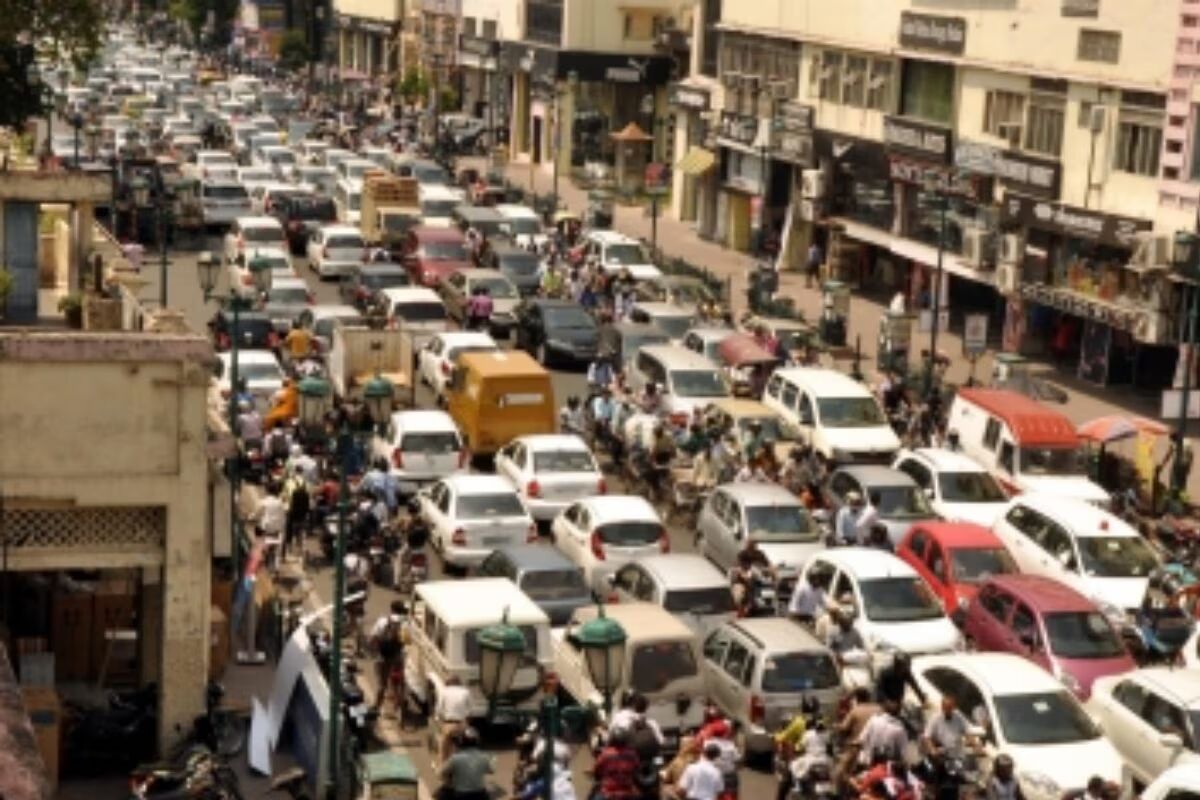
Lucknow has emerged as the operational anchor for a new artificial intelligence-led traffic management strategy being rolled out across 20 districts in Uttar Pradesh, signalling a shift towards data-driven urban mobility governance. The initiative, aimed at easing congestion on key urban corridors, reflects growing pressure on cities to manage rising vehicle volumes and shrinking road capacity.
The programme—designed under a technology-backed framework—targets 172 high-traffic routes identified through a state-wide assessment of congestion patterns. These routes, including several in Lucknow, have been selected based on peak-hour delays, traffic density, and variability in travel time. At the core of the system is an AI-enabled monitoring mechanism that analyses minimum, maximum and average travel times across routes, generating real-time insights for traffic authorities. The platform visualises congestion points and enables dynamic decision-making, allowing officials to respond quickly to bottlenecks and disruptions. A key operational feature is the introduction of a “one route, one marshal” model. Under this system, each identified corridor is assigned a designated traffic officer responsible for maintaining flow, identifying choke points, and coordinating with local enforcement units. This decentralised accountability model is expected to improve on-ground responsiveness in cities like Lucknow, where congestion is often hyper-localised. The initiative also incorporates a broader “5E” strategy—combining enforcement, engineering improvements, education, evaluation, and the use of emerging technologies. Officials indicate that the goal is not only to reduce travel time but also to lower fuel consumption and vehicular emissions, linking traffic management with environmental outcomes.
Urban mobility experts view Lucknow’s central role in the rollout as significant. As a rapidly expanding state capital with rising vehicle ownership and increasing commuter pressure, the city presents both a challenge and a testing ground for scalable traffic solutions. Successful implementation here could shape replication strategies across other urban centres. The broader implications extend into urban planning. Persistent congestion in Indian cities has economic costs—lost productivity, delayed logistics, and increased pollution—while also affecting emergency response times. By integrating AI into traffic systems, authorities are attempting to move from reactive traffic control to predictive mobility management. However, experts caution that technology alone cannot resolve structural bottlenecks. Road design, encroachments, public transport availability, and land-use planning remain critical factors influencing traffic conditions. Without parallel improvements in these areas, AI systems may optimise flow but not fundamentally reduce congestion levels. There are also governance challenges. Ensuring interoperability between traffic police, municipal bodies, and transport departments will be essential for the system’s effectiveness. Data accuracy, system maintenance, and staff training will determine whether the initiative delivers measurable outcomes.
The programme is being implemented as a pilot, with performance reviews expected after an initial phase. If successful, it could pave the way for wider adoption of intelligent transport systems across Uttar Pradesh, aligning with national trends towards smart, sustainable urban mobility. For Lucknow, the initiative represents more than a traffic solution—it signals a transition towards technology-enabled city management. Its long-term impact will depend on how effectively digital tools are integrated with physical infrastructure and inclusive mobility planning.