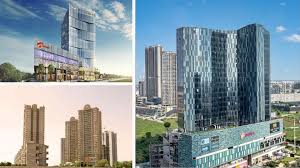
A ₹750 crore integrated township planned in Ludhiana is set to reinforce the city’s position as a rising real estate and industrial hub, reflecting a broader shift of organised development into tier-two markets. The project, spread across nearly 150 acres, signals increasing investor confidence in Punjab’s non-metro urban centres and their long-term growth potential.
The development will combine multiple residential formats—including group housing, plotted developments and low-rise independent floors—across an estimated 6 million sq ft of built space. This diversified housing mix is aligned with evolving demand patterns, where buyers are increasingly seeking gated, community-oriented living environments with integrated infrastructure. Industry analysts note that the Ludhiana township project is not just a real estate investment but a strategic response to shifting urbanisation trends. As metropolitan regions become saturated and expensive, cities with strong industrial bases and migrant linkages are attracting both developers and end-users. Ludhiana, known for its manufacturing ecosystem and NRI-driven housing demand, fits this profile. The entry of large-scale integrated townships into such markets reflects a transition from fragmented, plot-led growth to more structured urban expansion. Planned developments typically include internal road networks, utility infrastructure, and community amenities, reducing pressure on municipal systems while improving liveability standards.
From an economic standpoint, the Ludhiana township project is expected to generate multiplier effects. Construction activity, ancillary services, and local employment are likely to benefit in the short term, while long-term gains may emerge through increased property values and improved urban infrastructure. Experts suggest that such developments often act as anchors for further investment, attracting retail, hospitality, and institutional projects in surrounding areas. The timing of the project also reflects improved financial positioning among developers, with expansion strategies increasingly targeting high-growth regional markets. For Punjab, this aligns with efforts to decentralise urban growth beyond the Chandigarh–Mohali corridor and build new economic clusters across the state. Urban planners, however, caution that large-scale township developments must be integrated with city-level planning frameworks. Without adequate external connectivity—such as public transport, arterial roads, and drainage systems—such projects risk becoming isolated enclaves rather than contributing to cohesive urban growth.
Environmental considerations are equally critical. As cities like Ludhiana expand, incorporating green infrastructure, water-sensitive planning, and energy-efficient design will be essential to ensure that growth remains sustainable. Integrated townships, if designed with these principles, can serve as models for climate-responsive development in emerging urban regions. The Ludhiana township project underscores a broader transformation in India’s real estate landscape—where scale, planning, and infrastructure integration are becoming central to development strategies. Its success will ultimately depend on execution, market absorption, and how effectively it aligns with the city’s long-term urban vision.