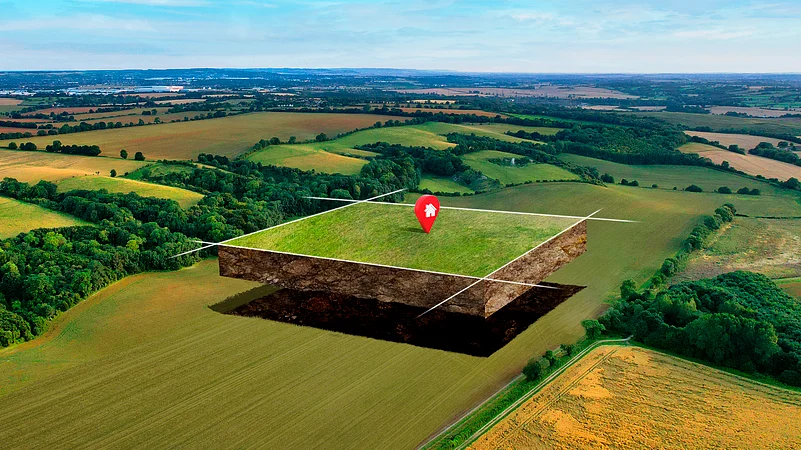
Punjab’s revised land pooling framework in the Mohali region is redefining how agricultural land transitions into urban real estate, offering farmers a more flexible stake in the state’s expanding urban economy. The updated policy, implemented across areas governed by the Greater Mohali Area Development Authority (GMADA), marks a shift from compulsory acquisition towards a consent-based, asset-sharing model.
At its core, the policy allows landowners to exchange agricultural land for developed urban plots rather than relying solely on monetary compensation. Farmers can choose between receiving residential, commercial, or industrial plots—or opt for a cash payout under existing land acquisition laws. For every acre contributed in residential zones, landowners are eligible for a combination of developed plots, including residential parcels and commercial sites, with alternative configurations available depending on preference. In industrial zones, equivalent developed land is offered with conversion flexibility. This approach effectively transforms landowners into stakeholders in urban development rather than one-time sellers. A defining feature of the revised framework is its voluntary nature. Unlike earlier acquisition models, participation is not mandatory, allowing farmers to assess long-term value before committing land. This consent-based mechanism is intended to reduce conflict while aligning land monetisation with individual financial strategies.
Urban development experts view the model as part of a broader transition in Indian city-building—from state-led acquisition to partnership-based planning. By integrating landowners into the development cycle, the policy attempts to address one of the most contentious aspects of urban expansion: equitable compensation. The implications for Mohali’s growth trajectory are significant. As the region evolves into a major residential, commercial and institutional hub adjoining Chandigarh, access to contiguous land parcels is critical for planned urbanisation. Land pooling enables consolidation without immediate displacement, supporting large-scale infrastructure such as roads, utilities, and public facilities. From a real estate perspective, the policy could accelerate supply in organised sectors while increasing land value for original owners. Developed plots typically command higher market prices than raw agricultural land, creating opportunities for long-term wealth generation. This aligns with the state’s strategy to position Mohali as a high-growth urban node, including ambitions in IT and industrial expansion. However, the policy operates within a complex socio-economic landscape. Previous iterations of land pooling triggered protests over perceived inequities, particularly among small landholders. Concerns have centred on plot size allocation, valuation transparency, and the timing of returns. These issues underscore the need for consistent communication and equitable implementation.
Urban planners also highlight environmental considerations. As peri-urban land is converted into built-up areas, integrating green infrastructure, water management systems, and low-density planning becomes essential to maintain ecological balance—particularly in regions witnessing rapid real estate expansion. The revised framework signals an evolving governance approach, where land is treated not just as an acquisition target but as a shared asset in urban growth. Its success will depend on execution—ensuring timely delivery of developed plots, transparent valuation, and alignment with broader sustainability goals. For Punjab, the Mohali model may serve as a template for future urban expansion—one that balances infrastructure needs with farmer participation, while shaping more inclusive and resilient city regions.