


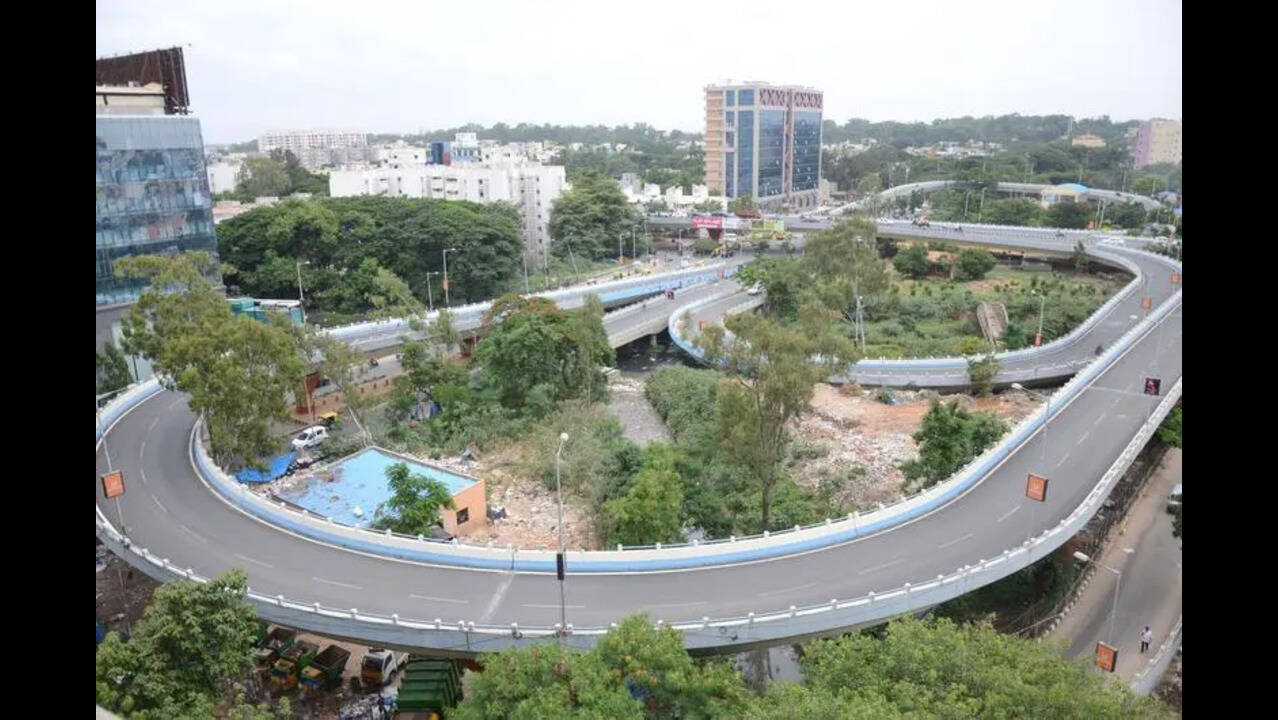
Bengaluru is preparing an ambitious overhaul of its road infrastructure, with plans to introduce a network of flyovers, underpasses, and pedestrian skywalks aimed at easing congestion and improving traffic flow across the city.
The proposal signals a renewed push towards grade-separated mobility solutions in one of India’s most traffic-choked urban centres.The initiative, being shaped with inputs from the Bengaluru Traffic Police, forms the backbone of the Bengaluru mobility infrastructure plan, which seeks to reconfigure key intersections and corridors. The strategy includes dozens of new flyovers and underpasses alongside a large number of pedestrian skywalks designed to separate vehicular and foot traffic.Officials suggest that the plan is intended to address long-standing congestion bottlenecks by improving traffic movement at critical junctions. Bengaluru’s rapid growth, driven by its technology sector and expanding residential zones, has placed immense pressure on its road network, often leading to prolonged travel times and inefficiencies.However, urban mobility experts caution that the Bengaluru mobility infrastructure plan must be evaluated within a broader transport framework. While grade separators can ease congestion at specific points, they may also shift traffic pressure to other parts of the network if not integrated with wider planning measures.There are also concerns about prioritisation. Large-scale investments in road infrastructure can sometimes overshadow the need for strengthening public transport systems, which are essential for sustainable urban mobility.
Experts argue that balanced planning should include investments in metro expansion, bus networks, and non-motorised transport infrastructure.From a pedestrian perspective, the inclusion of skywalks represents an attempt to improve safety and accessibility. In high-traffic areas, grade-separated pedestrian pathways can reduce accident risks and facilitate smoother movement. However, their effectiveness depends on design quality, location, and user convenience.The economic implications of the plan are significant. Infrastructure projects of this scale can stimulate construction activity, create jobs, and improve connectivity for businesses. Reduced congestion can enhance productivity and lower logistics costs, benefiting the broader urban economy.There is also an environmental dimension. While smoother traffic flow can reduce idling emissions, expanding road infrastructure may encourage greater vehicle use over time, potentially offsetting environmental gains.Integrating green mobility solutions and promoting public transport will be crucial to maintaining sustainability goals.Urban planners highlight the importance of data-driven decision-making in implementing such projects. Traffic studies, demand forecasting, and impact assessments can help ensure that infrastructure investments deliver measurable benefits.Public consultation and stakeholder engagement will also play a key role. Ensuring that projects address the needs of diverse user groups—including pedestrians, cyclists, and public transport users—is essential for creating inclusive urban spaces.
As Bengaluru moves forward with its mobility overhaul, the challenge will be to balance immediate congestion relief with long-term sustainability. The proposed network of flyovers, underpasses, and skywalks reflects the scale of the city’s transport challenges—and the urgency of finding solutions that support efficient, equitable, and future-ready urban mobility.
Also Read:Bengaluru Blood Donation Decline Strains Healthcare System Supply
