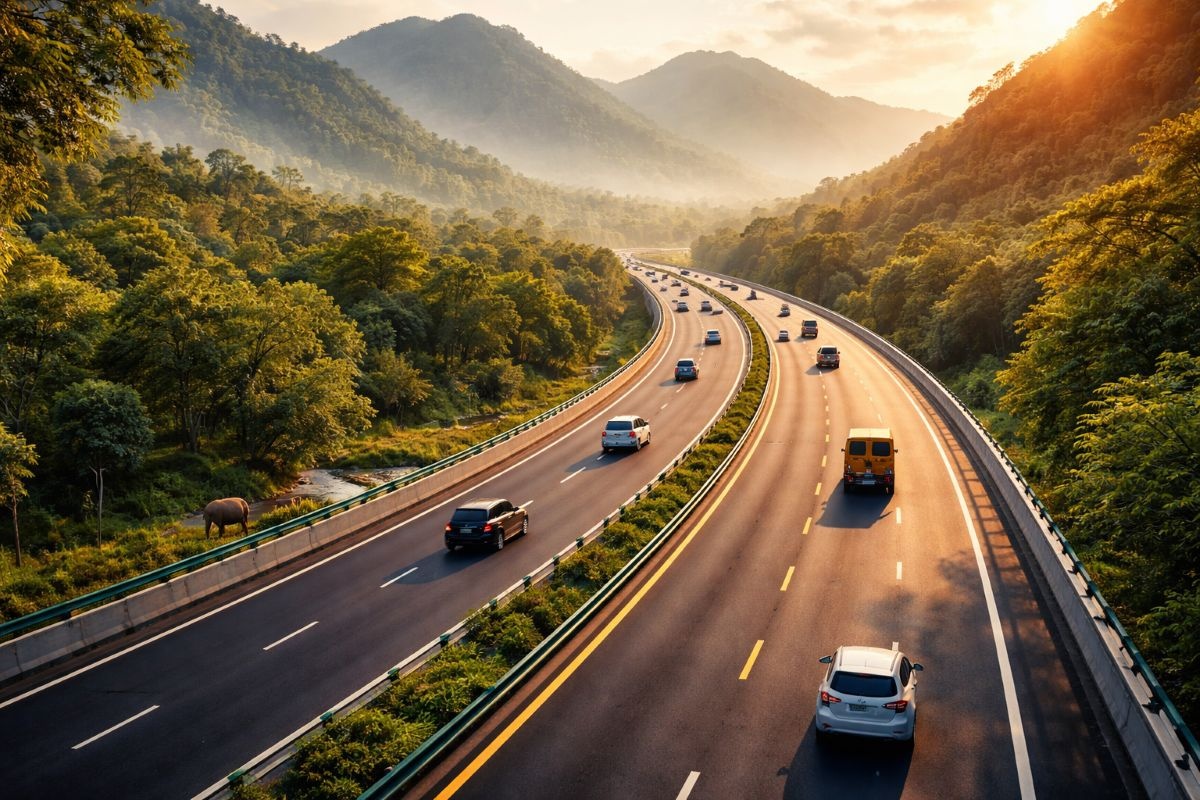
A major intercity transport corridor connecting the national capital with Uttarakhand’s capital is nearing completion, with authorities preparing to open the Delhi Dehradun Expressway, a high-speed highway designed to significantly reduce travel time between the two cities. The project, stretching more than 200 kilometres, is expected to cut the journey from over six hours to around two and a half hours once fully operational. The six-lane, access-controlled Delhi Dehradun Expressway begins near eastern Delhi and passes through several districts in neighbouring Uttar Pradesh before entering Uttarakhand. Officials involved in the project say the highway is part of a broader strategy to strengthen regional connectivity in northern India while easing congestion on older national highways that currently handle most of the traffic between the two states.
Infrastructure planners highlight that the expressway integrates several advanced engineering features aimed at improving safety and travel efficiency. The corridor includes multiple interchanges designed to streamline entry and exit points for vehicles, as well as bridges and railway overpasses that ensure uninterrupted traffic movement along the route. Controlled access design means vehicles can enter only at designated points, reducing bottlenecks commonly seen on traditional highways. Environmental considerations have also shaped portions of the Delhi Dehradun Expressway, particularly where the route passes through ecologically sensitive areas. Engineers have incorporated wildlife passages beneath the roadway to allow safe movement of animals across forest zones. Such design measures are increasingly being adopted in major infrastructure projects to minimise disruption to biodiversity while maintaining transport connectivity. A notable segment of the expressway runs on an elevated structure through protected forest terrain in Uttarakhand. Urban infrastructure specialists say elevated corridors are often used in environmentally sensitive landscapes to reduce ground-level disturbance while allowing wildlife movement below.
The highway also includes a dedicated connection to the pilgrimage city of Haridwar, providing improved access for religious tourism and regional travel. Authorities believe the corridor will support economic activity by facilitating faster movement of goods and passengers between Delhi, western Uttar Pradesh and Uttarakhand’s tourism and industrial hubs. Regional planners note that the Delhi Dehradun Expressway forms part of a wider network of highway modernisation projects aimed at improving road transport efficiency across northern India. Better highway connectivity is expected to benefit tourism in the Himalayan foothill region, where visitor numbers often fluctuate due to long travel times and congestion on existing routes. However, mobility experts also caution that improved road access can lead to increased vehicle volumes unless supported by sustainable transport planning. Integrating highway infrastructure with regional public transport networks and managing traffic demand will remain critical for maintaining environmental balance in sensitive hill regions.
Once operational, the Delhi Dehradun Expressway is likely to reshape travel patterns between the national capital and Uttarakhand. For commuters, tourists and logistics operators alike, the corridor promises faster journeys and improved connectivity, while also illustrating the growing emphasis on modern highway infrastructure in India’s regional development strategy.