



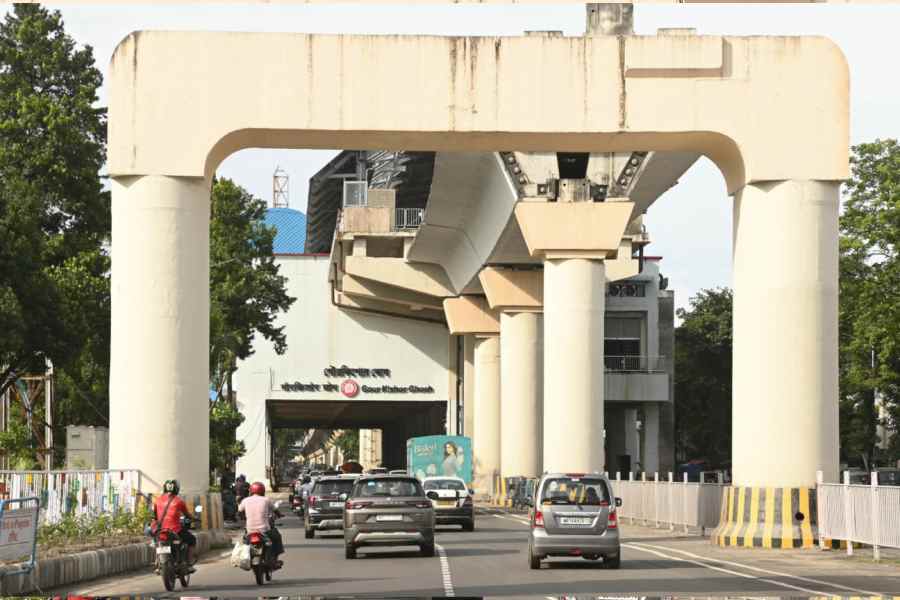
Traffic movement in a key eastern corridor of Kolkata is set to undergo significant changes as metro construction activity intensifies near Chingrighata, with authorities planning phased diversions to manage congestion and ensure commuter safety.
The upcoming adjustments, linked to ongoing expansion of Kolkata Metro, will come into effect from mid-May and are expected to impact one of the city’s busiest intersections connecting residential zones, IT hubs, and arterial road networks. The Chingrighata traffic diversion is being designed to accommodate construction work while maintaining traffic flow across the corridor.Urban mobility experts note that such diversions are often unavoidable in large-scale transit infrastructure projects, particularly in dense urban environments where space constraints limit construction flexibility.However, the success of these measures depends on clear planning, real-time traffic management, and effective public communication.The Chingrighata traffic diversion is likely to affect daily commute patterns, especially for office-goers travelling between eastern Kolkata and business districts. Longer travel times, route unfamiliarity, and increased congestion on alternative roads are expected during the initial phase of implementation.From a planning perspective, the situation highlights the trade-offs inherent in infrastructure development. While metro expansion promises long-term benefits such as reduced congestion, lower emissions, and improved connectivity, the construction phase can temporarily disrupt existing mobility systems.
Managing this transition efficiently is critical to maintaining public confidence in urban projects.Transport analysts suggest that integrating technology-driven solutions—such as adaptive traffic signals, GPS-based route updates, and real-time advisories—can help minimise disruption. Encouraging staggered work hours and promoting public transport use during peak construction periods may also ease pressure on road networks.The economic implications are also noteworthy. Delays in travel can affect productivity, logistics operations, and service delivery, particularly in areas with high commercial activity. Small businesses located along affected routes may experience fluctuations in customer footfall due to reduced accessibility.There is also an environmental angle. Increased congestion on diversion routes can lead to higher fuel consumption and emissions in the short term.However, once completed, the metro expansion is expected to contribute significantly to sustainable urban mobility by reducing reliance on private vehicles.Officials indicate that traffic police and civic agencies will coordinate closely to manage the transition, with periodic reviews to adjust diversion plans based on on-ground conditions. Public awareness campaigns are expected to guide commuters through alternative routes.
As Kolkata continues to invest in expanding its metro network, the Chingrighata diversion underscores the complexities of building future-ready infrastructure within an already congested cityscape. The coming months will test the city’s ability to balance short-term disruption with long-term gains in connectivity and sustainability.
Also Read:Kolkata Admission Criteria Relief Sought By Minority Colleges
