Bengaluru Development Approvals Show Shifting Growth Hubs
Bengaluru’s urban expansion is increasingly being mapped through its layout approvals, offering a long-term view of how the city has evolved in response to land availability, economic activity, and infrastructure investment. Over five decades, planning data indicates a clear spatial transition in growth patterns, with implications for housing density, mobility, and sustainable land use.
Official records show that more than a thousand layouts have been cleared since the early 1970s, with a significant concentration in the southern parts of the city during the initial decades. Large land parcels and proximity to established civic infrastructure made the southern belt a natural anchor for early planned development. Even today, this region retains a substantial share of total approvals, underlining its continued residential relevance. By the late 20th century, however, Bengaluru layout approvals began reflecting a broader geographic spread. Northern localities emerged as new centres of activity, driven in part by cooperative housing initiatives and expanding transport linkages. Urban planners note that this phase marked a gradual decentralisation of residential planning, as the city began to push beyond its traditional core.
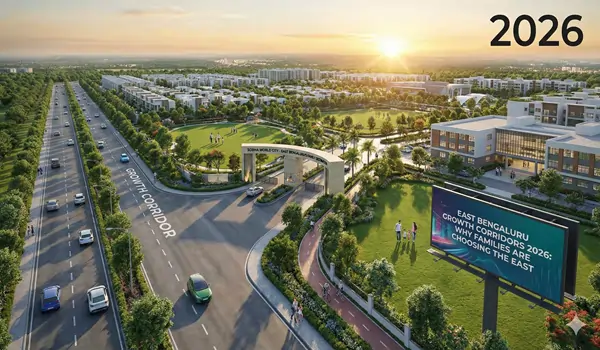
The most decisive shift came in the early 2000s, when eastern corridors gained prominence alongside the rise of the technology sector. Areas once considered peripheral saw a surge in planning activity, mirroring the growth of employment clusters and improved connectivity. This transition highlights how economic geography particularly job locations continues to shape land development decisions.A senior planning official indicated that Bengaluru layout approvals are closely tied to evolving demand patterns and regulatory scrutiny. Applications undergo multiple layers of evaluation to ensure compliance with planning norms, reflecting an increasingly formalised and transparent approval process. At the same time, the spread of applications across different zones suggests a more distributed model of urban growth.
One of the most consistent trends across decades is the dominance of residential layouts. The overwhelming majority of approvals cater to housing, while industrial and commercial developments remain limited within city limits due to their larger land requirements. This imbalance raises important questions about land-use efficiency and the integration of mixed-use planning in a rapidly growing metropolis. Recent data also points to a gradual shift towards higher-density development. A rise in plan approvals for individual and clustered plots suggests that vertical expansion is gaining traction as land becomes scarcer. Urban experts argue that this trend, if managed well, could support more efficient infrastructure use and reduce urban sprawl key factors in building climate-resilient cities.
Frequent revisions to approved layouts further underline the dynamic nature of Bengaluru’s planning landscape. Adjustments in design and infrastructure reflect changing market needs, but also highlight the need for adaptive planning frameworks that can accommodate growth without compromising environmental and civic priorities. As Bengaluru continues to expand, the trajectory of its layout approvals offers more than a historical record it provides a roadmap for balancing growth with sustainability, inclusivity, and long-term urban resilience.