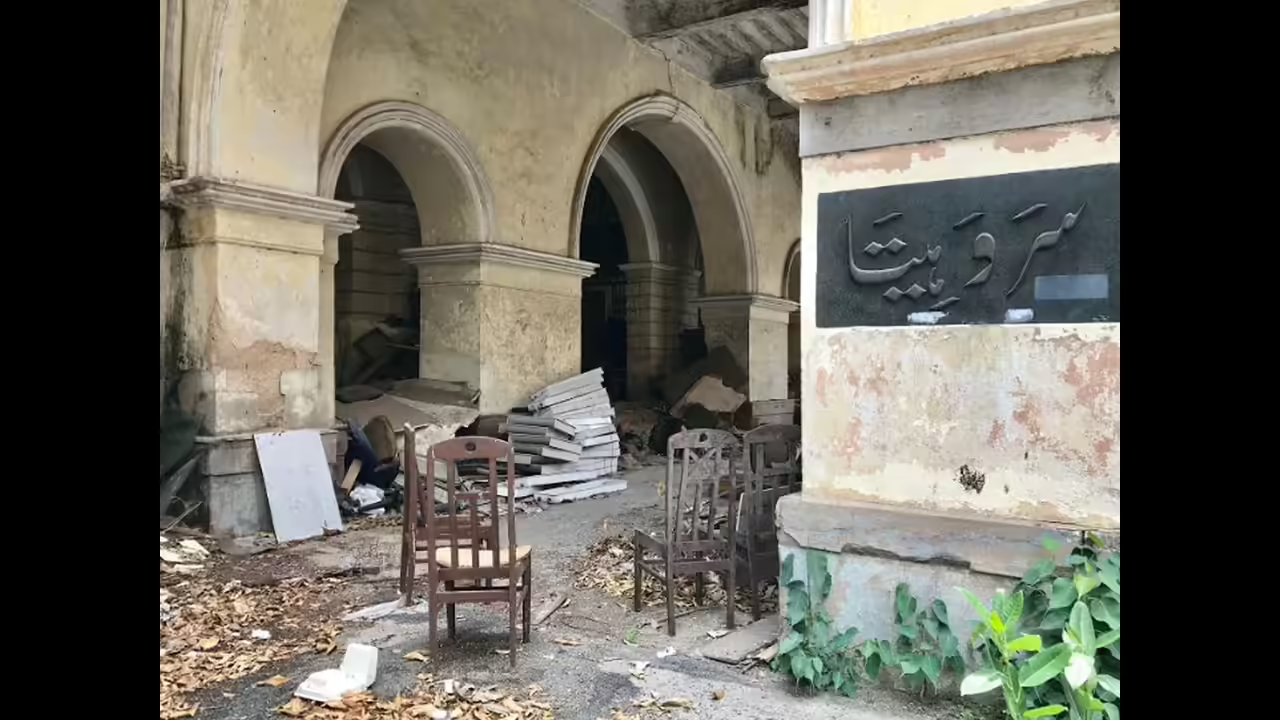
A reported demolition of a 135-year-old Paigah-era structure in Hyderabad has triggered fresh concerns over the protection of heritage assets amid rapid urban expansion. The incident, brought to light by heirs claiming ownership of the property, has reignited debate around the enforcement of conservation norms and the vulnerability of historic buildings in the city.
The structure, believed to be part of the Paigah legacy, was located in a zone witnessing increasing redevelopment activity. Allegations suggest that demolition work was carried out without adequate clarity on ownership rights and heritage status, raising questions about regulatory oversight and due process in urban redevelopment.The episode underscores the growing tension within the Hyderabad heritage conservation landscape, where historic properties are often caught between preservation needs and real estate pressures. As land values rise and redevelopment accelerates, older structures—especially those not formally protected—face heightened risk of alteration or loss.Urban planners note that Hyderabad’s heritage inventory includes a wide range of buildings beyond officially listed monuments, many of which contribute to the city’s cultural identity and architectural diversity. However, gaps in documentation and enforcement mechanisms often leave such properties exposed to unregulated interventions.
The Hyderabad heritage conservation challenge is compounded by overlapping jurisdictions and limited coordination between civic authorities, heritage bodies, and revenue departments. In cases where ownership disputes exist, enforcement becomes even more complex, delaying action and increasing the likelihood of irreversible damage.From an urban development perspective, the incident highlights the need for integrating heritage protection into mainstream planning frameworks. Historic structures are not only cultural assets but also play a role in shaping urban character, tourism potential, and community identity. Their loss can lead to homogenisation of cityscapes and erosion of historical continuity.The situation also raises broader questions about accountability in redevelopment processes. Experts suggest that clearer guidelines on heritage classification, mandatory impact assessments, and stricter penalties for unauthorised demolition could strengthen safeguards. Digitisation of heritage records and public access to information may further improve transparency.At the same time, balancing conservation with development remains a key challenge. Cities like Hyderabad are under pressure to accommodate growing populations and economic activity, often leading to competing land-use priorities. Innovative approaches such as adaptive reuse, heritage-sensitive zoning, and incentives for preservation are increasingly being explored to address this tension.
The alleged demolition also brings attention to the role of citizens and stakeholders in safeguarding urban heritage. Community engagement and awareness can play a critical role in identifying and protecting vulnerable structures before irreversible actions occur.Looking ahead, the trajectory of Hyderabad heritage conservation will depend on how effectively policy frameworks are enforced and integrated into urban planning processes. As the city continues to expand, ensuring that development does not come at the cost of its historical fabric will be essential in creating a balanced and culturally resilient urban environment.