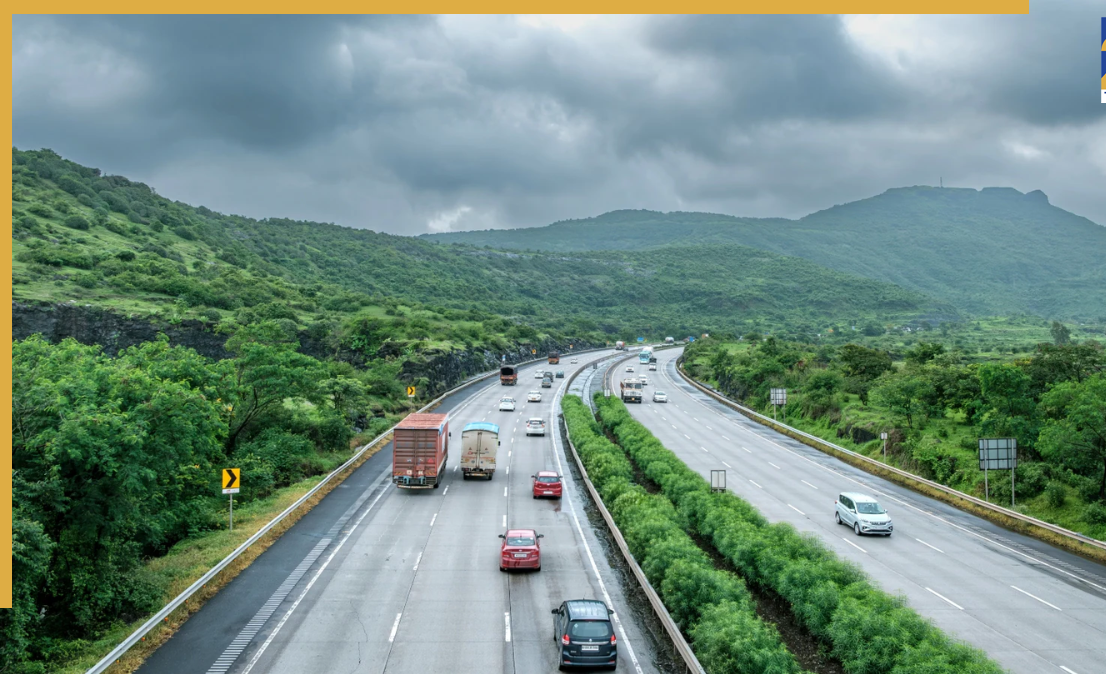
A major capacity upgrade is being planned for the Mumbai–Pune corridor, with authorities preparing to widen the existing expressway to 10 lanes in response to sustained traffic growth and rising intercity travel demand.
The proposal, led by the state’s road development agency, aims to address congestion along one of India’s busiest economic corridors. The move is expected to improve travel reliability between Mumbai and Pune—two key urban centres that anchor Maharashtra’s industrial and services economy—while supporting long-term regional mobility. Officials indicate that preparatory work is underway, with construction expected to begin after the monsoon season. The expansion is likely to be executed in stages to minimise disruption to current traffic flows. Once completed, the project is expected to significantly enhance carrying capacity and reduce bottlenecks that frequently occur during peak travel periods and holiday traffic surges.
The Mumbai Pune expressway expansion is also being aligned with parallel infrastructure improvements, including the near-complete missing link project in the ghat section. This stretch is designed to streamline the alignment by bypassing winding hill routes, thereby reducing travel distance and improving safety in a terrain historically prone to congestion and accidents. Together, these interventions are expected to deliver measurable time savings for commuters and freight operators. Logistics experts highlight that improved corridor efficiency could lower transit times and fuel consumption, contributing to more predictable supply chains between western India’s manufacturing hubs and port-linked markets.
However, the financing model raises important questions for long-term users. The project is expected to be funded through institutional borrowing, with repayment mechanisms linked to extended toll collection. Current projections suggest that tolling could continue well beyond the originally planned horizon, potentially extending into the next decade and a half. Urban economists note that while extended toll periods can help fund large-scale infrastructure, they also shift cost burdens onto users over a longer timeframe. This underscores the need for transparent pricing frameworks and service benchmarks to ensure value for commuters.
From a planning perspective, the Mumbai Pune expressway expansion reflects a broader trend of scaling highway infrastructure to match rapid urbanisation and vehicle growth. Yet, mobility experts caution that capacity augmentation alone may not be sufficient to address congestion in the long run. Integrated transport strategies—including rail upgrades, public transport investments and demand management—remain critical for sustainable outcomes. The project also intersects with climate considerations. While smoother traffic flow can reduce idling emissions, expanding road capacity may encourage higher private vehicle usage unless complemented by low-carbon transport alternatives.
As execution timelines firm up, the focus will be on balancing efficiency gains with affordability and sustainability. For a corridor that underpins economic activity across western Maharashtra, the next phase of development will play a defining role in shaping how the region moves people and goods in the years ahead.
Mumbai Pune Commute Set To Improve With Wider Expressway Plan