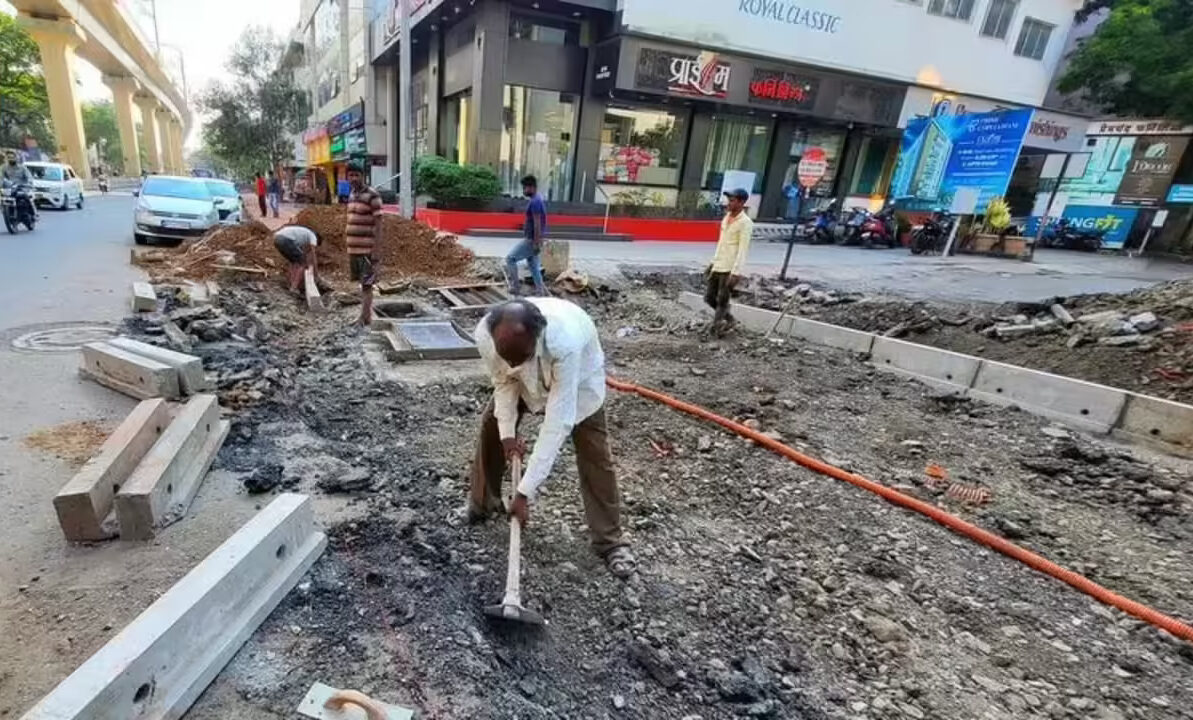
A growing payment backlog in Maharashtra’s public works ecosystem has triggered a phased slowdown in infrastructure activity, threatening timelines for key road and government building projects across major urban centres including Mumbai, Pune and Thane.
Contractor bodies representing firms engaged in state-funded projects have initiated a gradual withdrawal of services over a nine-day period beginning early April, citing unresolved dues and limited engagement from authorities. The disruption is expected to affect ongoing works under multiple departments, including roads, public buildings, water supply and tourism infrastructure. Industry estimates indicate that the Maharashtra contractor dues burden has crossed ₹96,000 crore, reflecting persistent delays in bill clearances despite partial payments over the past year. Contractors say the financial strain has intensified after the close of the financial year, with working capital cycles tightening and smaller firms facing liquidity risks.
Urban infrastructure experts point out that such payment bottlenecks can have cascading impacts across the construction value chain. Delays in disbursements affect not only contractors but also subcontractors, material suppliers and labour networks, many of whom operate on thin margins. In cities with dense infrastructure pipelines, even a short-term slowdown can disrupt project sequencing and escalate costs. The Maharashtra contractor dues issue is particularly significant at a time when the state is pursuing large-scale investments in urban mobility, housing and climate-resilient infrastructure. Projects ranging from road upgrades to water supply systems depend heavily on consistent execution cycles. Any prolonged disruption could affect service delivery outcomes and delay benefits to citizens.
Officials in the sector suggest that the payment backlog spans multiple departments, with substantial liabilities linked to public works, rural infrastructure and water management schemes. While some payments were cleared in recent months, contractors argue that the pace has not kept up with accumulated dues, leaving a substantial gap. There are also concerns around the impact on labour. Construction activity in Maharashtra supports a large informal workforce, and interruptions in project execution can lead to delayed wages and job uncertainty. This has broader implications for urban livelihoods and economic stability, particularly in peri-urban and infrastructure-intensive districts.
From a governance perspective, the situation underscores the need for more predictable financial planning in public infrastructure delivery. Experts recommend measures such as ring-fenced project funding, time-bound payment mechanisms and digital tracking systems to improve transparency and accountability. The slowdown also raises questions about investor confidence in the state’s infrastructure ecosystem. Consistent payment cycles are critical for maintaining contractor participation and ensuring competitive bidding for future projects.
As discussions between contractor associations and state authorities continue, the immediate priority remains restoring workflow continuity. In the longer term, addressing the Maharashtra contractor dues challenge will be essential to sustain infrastructure momentum while aligning with broader goals of resilient, inclusive and efficiently managed urban development.
Pune Road And Building Projects Face Shutdown Over Payment Delays