


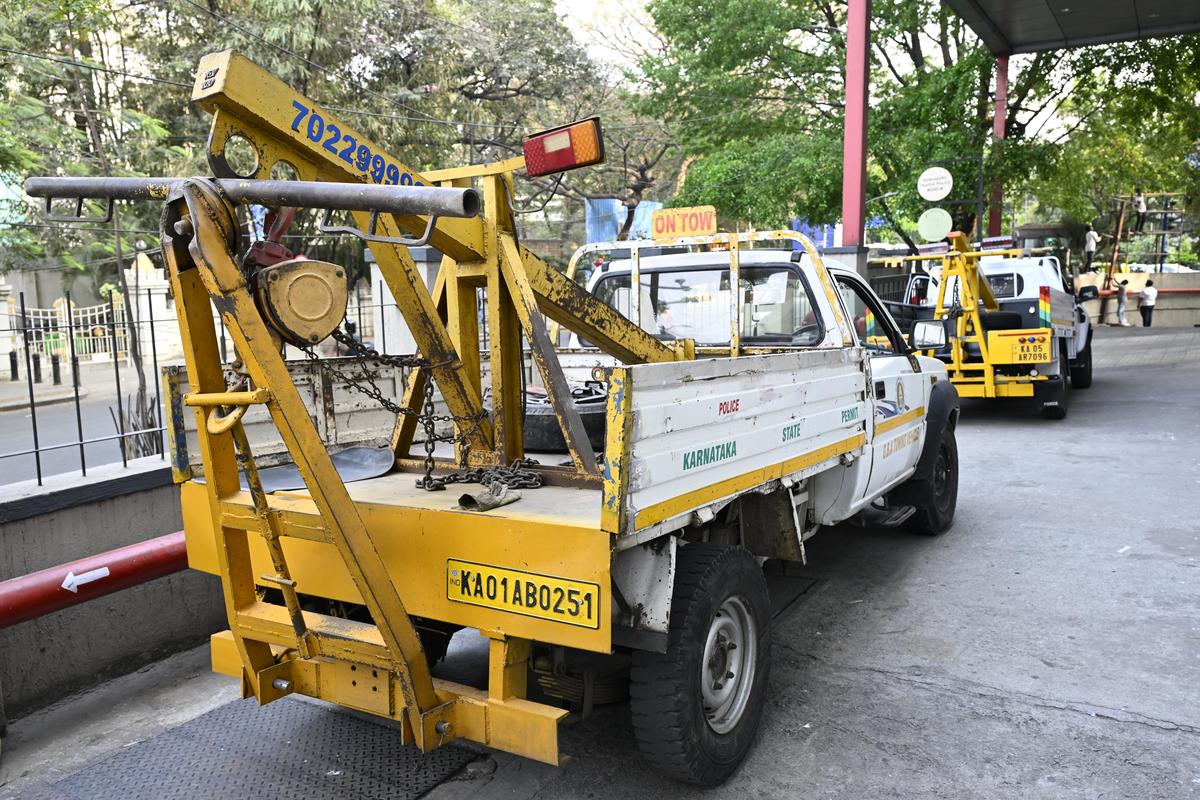
Vehicle towing operations have resumed across Bengaluru, marking a renewed push by civic and traffic authorities to address illegal parking and ease mounting congestion across key corridors.
The enforcement drive, centred on the Bengaluru towing operations, targets vehicles parked in no-parking zones, on narrow streets, and along high-traffic stretches where obstruction significantly reduces road capacity. Officials indicate that the resumption is aimed at restoring discipline on roads that have increasingly struggled under rising vehicle volumes.Urban mobility experts view the move as a necessary intervention in a city where parking violations have become a major contributor to traffic bottlenecks. Bengaluru’s rapid growth, coupled with high private vehicle ownership, has outpaced the development of formal parking infrastructure, leading to widespread reliance on on-street parking.The Bengaluru towing operations are expected to improve traffic flow, particularly in commercial and residential areas where illegal parking often narrows carriageways and disrupts public transport movement. By clearing obstructions, authorities aim to enhance road efficiency and reduce travel times during peak hours.However, the enforcement drive also raises questions about long-term solutions. While towing acts as a deterrent, experts argue that sustainable urban mobility requires a more comprehensive approach.
This includes expanding off-street parking facilities, implementing dynamic parking pricing, and improving public transport accessibility to reduce dependence on private vehicles.From an economic perspective, better traffic management can have a positive impact on productivity. Congestion in Bengaluru is known to cause significant time losses, affecting businesses, logistics operations, and daily commuters. Streamlined road usage can improve efficiency across sectors, particularly in high-density commercial zones.There is also a sustainability angle. Reduced congestion can lower vehicle idling time, leading to decreased fuel consumption and emissions. However, without parallel investments in mass transit and non-motorised transport infrastructure, enforcement measures alone may not deliver long-term environmental benefits.Residents and motorists have expressed mixed responses. While many support stricter enforcement to reduce chaos on roads, concerns remain about consistency, transparency, and the availability of alternative parking options. Clear communication, signage, and fair enforcement practices will be crucial to maintaining public trust.Urban planners emphasise that enforcement must be integrated with data-driven planning.Mapping high-violation zones, analysing traffic patterns, and aligning towing operations with broader mobility strategies can improve effectiveness while minimising disruption.
As Bengaluru continues to grapple with congestion challenges, the return of towing operations signals a shift towards stricter regulation of urban space. The success of this initiative will depend not only on enforcement intensity but also on the city’s ability to create a balanced system where mobility, accessibility, and sustainability are addressed together.
Also Read:Bengaluru Ticket Tout Crackdown Targets Rail Fraud
